
The traditional banquet hall is outdated. It should be for those who see hosting as an art, not a task.
We’ve moved away from generic rooms. Now, we focus on creating unique celebrations at home. This change isn’t about size. It’s about making an experience that’s personal and customizable.

Your home’s social areas are now the canvas. This is social engineering with better furniture. It’s about creating connections.
Great party planning areas think of everything—from the main event space to the cozy nook where memories are made. So, where do you start? You need a vision. Choose the right spot in your home. Pick a theme that feels real. Think about how guests will move from one area to another.
Home theater design: acoustics, seating, and technology integration
A bad home theater is just a fancy room. A great one is a portal to movies. It’s your own cinema, designed for total immersion. It’s not just a TV on a wall.
It’s about acoustics, seating, and tech working together. Get it wrong, and you’ll have bad sound, uncomfortable seats, and a confusing remote. Get it right, and your movies feel like classics.
Acoustics: The Invisible Architecture. Sound is the heart of the room. You’re not just blocking noise; you’re shaping it. Good acoustics make every word clear, not muffled.
Bass traps, diffusers, and panels are key. They make sound clear and dialogue sharp. Without them, no amount of speakers can fix it.
Seating: The Ergonomics of Bliss. Comfort is key. This isn’t your college futon. Theater seats are designed for both comfort and view.
The material matters a lot. Choose breathable fabrics for long movies and easy-clean leather for messes. Recliners with USB ports are a must. Every seat should be the best.
Technology Integration: The Silent Magic. The best tech is hidden. Wires should be invisible. Components should blend in. A single control system that dims lights and starts movies is the goal.
This is where “home” in home theater design shines. It’s not just black boxes. It’s a system. The projector, speakers, and streamers should work together quietly.
When these elements come together, the room vanishes. You’re not watching a movie; you’re in it. That’s the magic. It turns a room into an experience.
Wine cellar and tasting room design considerations
Designing a wine cellar today is about creating an experience, not just storing wine. It’s a way to slow down in a world of fast delivery. Your wine cellar is the stage for this special moment.
It’s all about the science. It’s not just a fancy closet. You need the right humidity and temperature to keep your wine perfect. This is not a fridge; it’s a terroir time capsule. Get it wrong, and your wine could turn bad.
The design of your wine cellar is key. Good lighting makes your wine bottles shine. It’s all about creating drama, not just showing off your collection.
The tasting room is where the magic happens. It’s like the main stage. Every detail here is important. The table should invite you to lean in and enjoy.
Accessories add to the experience. A crystal spit bucket is more than useful; it’s a work of art. Having a sommelier or a knowledgeable host makes the tasting special. They help you understand the wine’s story.
| Design Principle | Scientific (The Engineer’s Domain) | Theatrical (The Director’s Cut) |
|---|---|---|
| Core Objective | Preservation and organization of the collection. | Creating an immersive, sensory experience and narrative. |
| Climate & Environment | Precise humidity (55-75%) and temperature (45-65°F) control systems. | Ambiance crafted through subtle scent (cedar, stone) and a palpable “coolness.” |
| Lighting Scheme | UV-filtered, low-heat lighting to prevent damage. | Dramatic accent lighting, pin spots, and backlighting to highlight bottles and create mood. |
| Material & Aesthetic | Non-reactive materials (redwood, steel), vapor barriers, insulated doors. | Luxurious finishes (leather, marble, glass), thematic decor that tells a story (rustic, modern, old-world). |
| Focal Point | The integrity of the wine itself, ensuring perfect storage conditions. | The ritual of tasting—the table, the glasses, the shared moment of discovery. |
So, what are you really building? You’re creating a place for slow pleasure. In our fast world, that’s luxury. It’s a space for attention, conversation, and memorable moments. The best wine cellars are destinations, not just places to grab a bottle. They’re designed to be enjoyed.
Game room and recreation space planning
Start by figuring out what your friends like to do. Do they enjoy strategic games like Texas Hold’em or the excitement of arcade games? Maybe they like playing pool or solving puzzles together. The best game rooms offer a mix of activities for everyone.
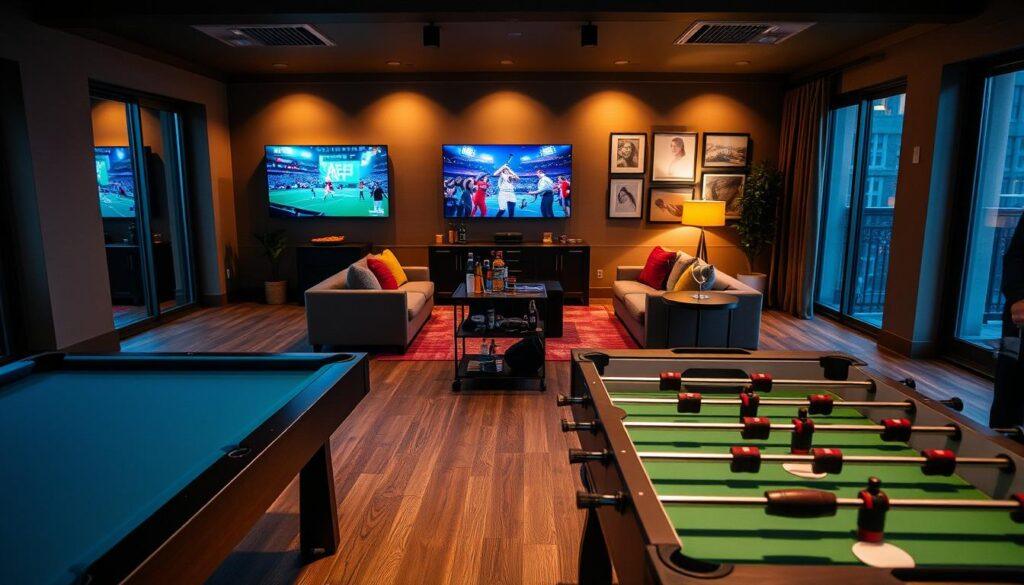
Think about using furniture that can change its purpose. A pool table that turns into a ping-pong or dining area is smart. Set up a cozy corner for card games and another area for VR or arcade games. This way, the room can change with your mood.
The decor should be fun and different from the rest of the house. Use bold colors, exposed brick, or industrial lights to show it’s a place to have fun. It’s where you can be silly and make new friends through games.
Here are the main things to think about when planning your game room:
- The Competitive Arena: Pool, foosball, air hockey, or dart boards. These are for friendly competition.
- The Cerebral Corner: A well-lit table for board games, puzzles, or poker. You’ll need storage for game boxes.
- The Digital Domain: A setup for console gaming or VR. Good acoustics and cable management are important here.
- The Flexible Foundation: Mobile seating, durable surfaces, and smart storage. These allow the room to change quickly.
Great game rooms are about creating a fun atmosphere. It’s where laughter is louder, strategies are made and broken, and memories are made. Don’t just build a room. Create an experience.
Outdoor entertainment areas: patios, decks, and pavilions
Why settle for a barbecue on the lawn when you can create an alfresco lounge? It can be as comfortable as any indoor salon. The villa’s greatest asset is the view. We design outdoor rooms that rival indoor spaces.
The patio becomes your lounge. The deck turns into a dining stage. The pavilion is your weather-defiant grand hall. This is the heart of outdoor entertaining spaces.
Think in zones. A big terrace needs a plan. Use deep seating and low tables for conversations.
Elevate the deck for dining. It becomes a stage for meals. Anchor it with a big table and task lighting. The pavilion or pergola is your flexible center. It houses the grill, bar, and provides a roof.
Battling the elements is stylish. A flapping tent is not the answer. Use retractable awnings or heaters for weather-proofing. Your outdoor entertaining spaces should work all year.
Lighting shapes your space. String lights create cozy conversation areas. A fire pit is a gathering point.
Use path lights to guide guests. The goal is to light up the space. From the deck to the patio, light tells the story.
Remember the backdrop. A villa’s value is in its view. Your furniture should frame the view, not block it. Create a flow from indoors to outdoors. The landscape is your decor.
| Structure Type | Primary Function | Key Weather Considerations | Ideal Material & Flow Tip |
|---|---|---|---|
| Patio (Ground Level) | Casual Lounge & Conversation | Drainage is critical. Use permeable paving. | Stone or textured concrete. Connect directly to living rooms for seamless flow. |
| Deck (Elevated) | Dining & Grilling Stage | Requires shade solution (pergola, umbrella) and wind screening. | Composite or tropical hardwood. Position with best view for dining ambiance. |
| Pavilion/Pergola | All-Weather Hub & Bar Area | Need for retractable covers or fixed roof. Incorporate heaters/fans. | Structurally integrated with house. Acts as a transitional “airlock” between inside and out. |
| Poolside Terrace | Recreation & Sunny Relaxation | Heat-resistant materials, slip-resistant surfaces when wet. | Travertine or cool porcelain. Zone with sun loungers away from active dining areas. |
The secret to great outdoor entertaining spaces is zoning, comfort, and respect for nature. It turns sunlight, breeze, and landscape into active parts of every gathering.
Bar design: wet bars, wine bars, and cocktail stations
Think of your home bar as the heart of your social gatherings. It’s not just for drinks; it’s the pulse of the party. A well-designed bar can turn an evening into unforgettable memories.
Let’s explore the different types of bars. The wet bar is for the busy host. It needs a sink, fridge, and ice maker for quick service. It’s all about keeping the party flowing.
The wine bar is for those who love to savor. It focuses on wine storage and tasting. It’s perfect for small gatherings where wine is the star.
The cocktail station is where mixology meets showmanship. It’s all about the setup and tools. It’s where guests gather to watch the bartender create magic.
Whether you’re mixing drinks yourself or hiring a pro, this station is key. It’s where you create signature cocktails. Hosting a mixology class here can be more fun than any game.
Where you place your bar is important. It should be easy to get to but not in the way. A good spot can lead to more outdoor fun, blending indoor and outdoor spaces.
The materials you choose matter too. Marble for martinis, wood for whiskey. Your bar’s design sets the mood for every drink.
Lighting for entertainment: dimming systems and mood lighting
The right lighting can make a game night feel like a movie, without words. It’s like a secret language of your home. Harsh overhead light is like shouting, it’s loud and doesn’t set a good mood.
What you want is a soft, inviting glow. This is where layered lighting comes in. It lets you control the mood of your evening. Think of yourself as the director of your own movie.
Your foundation is intelligence, not brute force. Start with a whole-home dimming system. Dimmable switches are key for any entertainment space. They let you adjust the light, not just turn it on and off.
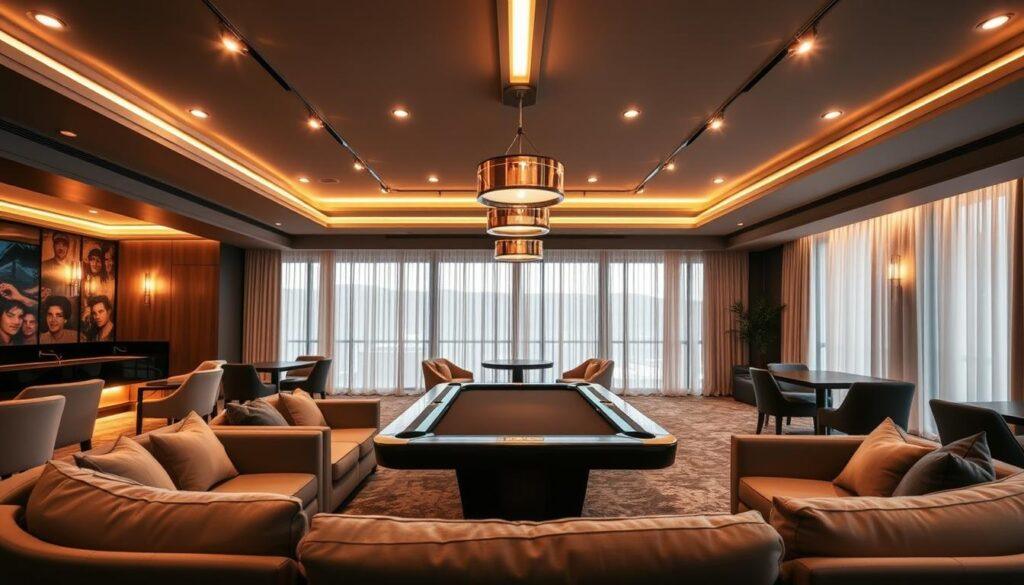
With control, you can add the finishing touches. Mood lighting is all about creating atmosphere. Use soft, ambient lights like wall sconces or LED strips. Add candles, string lights, or uplighting in plants for a magical touch.
Avoid harsh, blue LEDs. You’re creating an experience, not a sterile environment. Use pool lights or spotlights to add drama to your space.
This is even more important in game rooms. The lighting should change with the activity. You need a flexible plan.
| Activity | Lighting Goal | Recommended Setup |
|---|---|---|
| Poker Night | Clear visibility for cards and chips, minimal glare. | Bright, focused task lighting over the table (a classic shaded pendant), with lower ambient light around the room’s perimeter. |
| Billiards / Pool | Dramatic, functional illumination of the table surface. | A dedicated billiard light hung low over the felt, with very low ambient or accent lighting elsewhere to heighten focus. |
| Arcade / Video Games | Reduce screen glare without plunging the room into total darkness. | Controlled, low-level ambient lighting (like dimmed cove lights) behind screens and consoles to prevent eye strain. |
| Board Games & General Socializing | Warm, even light that fosters conversation and easy reading. | A combination of dimmed overhead cans and several table lamps at different heights to create a soft, enveloping glow. |
Mastering lighting is key to being a great host. It’s a powerful tool that can make your game rooms unforgettable. Get it right, and your spaces will leave a lasting impression.
Audio-visual system integration throughout the home
Luxury isn’t just about a big TV. It’s about having music follow you everywhere, smoothly. We’ve moved beyond just one stereo. Today, a sonic ecosystem is needed, blending sounds to set the mood.
The boombox was a statement. Today, AV integration is about being absent. It should be like oxygen, always there but unnoticed. This creates a seamless experience, from chill-hop by the pool to dinner jazz and dance beats later.
The magic is in the hidden tech. In-wall and in-ceiling speakers blend into the walls. A strong network keeps signals flowing without visible wires. Control is easy, through a wall panel, app, or voice command.
The real magic is in zone isolation. You don’t want the theater music to interrupt a wine tasting. Each area needs its own sound bubble. This ensures the right mood in each space.
Creating the perfect soundtrack is an art. And if you have live music, the system must support it. Always test everything before the event. A bad sound in a corner can ruin a moment.
Think of your AV checklist as a rock star’s rider:
- Zone Scans: Check audio and video in each area. Is the pool speaker working?
- Playlist Curation: Choose music that fits the event’s mood.
- Volume Presets: Set baseline levels to avoid loud surprises.
- Control Briefing: Make sure someone else knows how to use the system.
When done right, the audio-visual system integration disappears. What’s left is pure atmosphere, guiding your gathering’s harmony. Your home theater design might shine, but the AV system keeps everything in sync.
Catering and service considerations for large gatherings
The difference between a great party and a disaster often comes down to service and catering. Even with the best wine and home theater, bad food and slow drinks are what guests remember. It’s not just about being hospitable; it’s about the logistics.
Trying to be both host and kitchen manager is a bad idea. It’s like trying to do heart surgery on yourself. Your main job is to be there, not to be stuck in the kitchen. This is the first step in mastering your critical party planning areas.
Let’s look at the big decision: buffet or plated service. Each has its own strategy.
| Service Style | The Vibe | The Logistics | Best For |
|---|---|---|---|
| Buffet | Casual, abundant, interactive. Guests mingle and choose. | Requires less staff but more space. Food must be kept at perfect temps. | Larger, more relaxed gatherings where flow is key. |
| Plated | Formal, curated, paced. Feels like a restaurant experience. | Demands precise timing, more servers, and detailed coordination. | Intimate dinners or events where a seated, elegant feel is desired. |
| Station-Based | Energetic, specialized, engaging. | Combines buffet’s freedom with focused expertise (e.g., pasta bar, carving station). | Crowds that enjoy spectacle and customization. |
Choosing the right staff is key. Hiring professional waitstaff and a bartender is not a waste. They make your party run smoothly, so you can enjoy it.
Now, let’s talk about the menu. It should impress everyone and be flexible. Work with your chef to create dishes that everyone can enjoy, like a grain bowl with various proteins or gluten-free hors d’oeuvres.
Being a good host means planning for everyone’s needs. Talking to your caterer about special diets is important. It’s not a hassle; it’s a way to make sure everyone has something they like.
Think about the flow of your party. Where will the staff be? How will dishes get cleaned up? Planning these details is as important as the food and drinks. Good catering services make these things seem easy.
The goal is to have a great party without stress. When everything runs smoothly, your guests will feel special. And you can relax and enjoy your own party. That’s the best part of hosting.
Flexible spaces that adapt to different event types
What makes a villa truly special? It’s not just about the tech. It’s about a space that can change with the day. Imagine a room that’s perfect for yoga in the morning, family talks at noon, and fancy parties at night. It’s all about design that’s open to anything.
Take your formal dining room, for example. With the right furniture and storage, it can turn into a meeting room. Your game room can become a presentation space with just a few changes. Even your wine cellar can host important meetings, turning into a cozy spot for deals.
This magic happens with smart design. Think sliding walls and furniture that folds up. It’s all about making transitions smooth. Your villa should feel alive, changing to meet every need.
In today’s fast-paced world, a home that adapts is priceless. Instead of fixed rooms, create spaces that can evolve. Your home should be a canvas, ready for anything.