

Architecture often treats “modern” and “traditional” like rival parents. Yet, today we see a 16th-century Tuscan masseria and a sleek glass-box extension living together. This is what a hybrid villa is all about.
True fusion isn’t just about mixing styles. It’s a deep conversation between old and new. Think of enjoying a Barolo in a Zalto glass; the wine stays the same, but the experience is richer.
In this article, we’ll look at how these spaces get their timeless feel. It’s not about giving up; it’s about making each style better. We’ll talk about the key principles, creative ideas, and even the small details that matter. Building a home that looks to the past and future needs a good reason. And it’s not just for selling later.
Key Takeaways
- The fusion of styles creates a unique architectural dialogue.
- Timeless character arises from a blend of history and modernity.
- True fusion goes beyond superficial design choices.
- Understanding the aesthetics can enhance the living experience.
- Building with purpose is essential for long-term value.
Why fusion works continuity with place plus modern performance
Fusion is all about blending old and new. It’s called rooted modernism. This way, we honor traditional designs and welcome new ideas. It’s a balance between keeping it local and pushing architecture forward.
For example, the modern Mediterranean villa is more than just pretty. Its design, like whitewashed walls and shaded pergolas, is practical. These features help it survive the climate. By adding modern glazing and energy-saving systems, we make these designs work better today.
A villa that doesn’t fit its setting is like a stranger at a family event. But a design that respects its roots, like a finca in Ibiza, becomes part of the landscape. A modern pavilion can blend with nature, showing how well old and new can work together.
Here’s a table that shows what makes a fusion villa successful:
| Element | Traditional Aspect | Modern Adaptation |
|---|---|---|
| Walls | Thick stone for insulation | High-performance glazing for energy efficiency |
| Roofing | Overhanging eaves for shade | Solar panels integrated seamlessly |
| Outdoor Spaces | Shaded pergolas | Open-plan layouts with natural flow |
It’s not a fight between old and new. It’s a team effort. We find out what the place needs and use modern tech to meet those needs. This way, we avoid building something out of place.
“A building that ignores its context is a narcissist; one that slavishly replicates the past is a taxidermist’s dream.”
Framework pick a primary style add two accents palette and proportion rules
Building a fusion villa without a plan is like trying to make a soufflé without a recipe. It’s a mess. First, pick your main style. It could be a fancy Palladian villa or a cozy Tuscan farmhouse. After choosing your style, add two accents to the mix.
Imagine a contemporary classic mix with sleek steel windows and a bold modernist volume. This mix adds excitement without getting too wild. The accents should match the main style, not take over.
Now, let’s talk about colors. Stick to three timeless materials like travertine, raw plaster, and blackened steel. These materials talk to each other, making the design richer.
Proportion is key in design. A classic column can turn into a slim steel post. A traditional courtyard might become a tall light well. The main style sets the beat, and the accents add flair.
Make a mistake, and you might end up with a big, confused house. But get it right, and you’ll have a place where old and new meet beautifully. I’ve seen this in a London mews house, where old walls meet a modern glass staircase. It’s perfect.
| Element | Description | Example |
|---|---|---|
| Primary Style | The main architectural influence | Palladian symmetry |
| Accents | Two additional styles that complement | Sleek steel windows, bold modernist volume |
| Palette | Materials that resonate through time | Travertine, raw plaster, blackened steel |
| Proportion | How elements relate in size and scale | Slender steel post instead of a classical column |
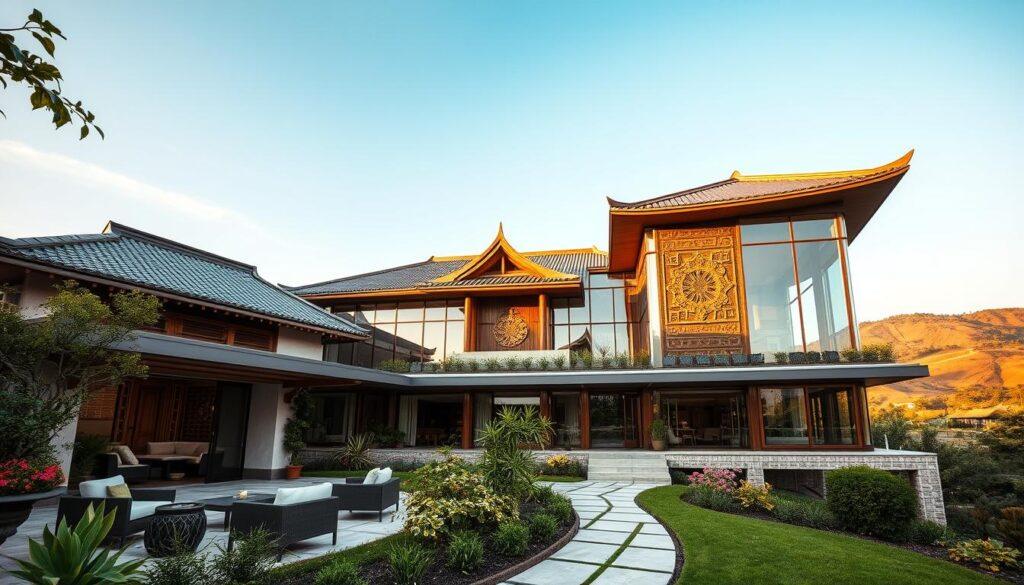
Facades stone base crisp plaster slim metal windows controlled ornament
The facade of a villa is like a handshake, connecting with the viewer. In fusion villa concepts, the exterior should show what’s inside. A stone base is key; it grounds the building like good shoes.
On top, we have crisp plaster. It’s smooth, like a Morandi painting, catching light beautifully. This adds depth and beauty to the villa.
Then, there are the slim metal windows. They’re modern and minimal, unlike wood. These windows let in light and keep the look sleek.
Next, we have controlled ornamentation. A carved frieze or iron balcony adds elegance. But too much can make it look like Disneyland.
wabi sabi luxury is all about beauty in imperfection. Think of a plaster wall with slight curves or a bronze downspout with age. These details are quiet and intimate.
Take a villa in Porto with an azulejo panel and a sharp concrete portal. The tiles look aged but not worn out. This shows time passing while staying present.
| Element | Description | Impact |
|---|---|---|
| Stone Base | Provides stability and connection to the earth | Creates a sense of permanence |
| Crisp Plaster | Smooth finish that reflects light | Enhances visual appeal |
| Slim Metal Windows | Minimalist design that maximizes light | Maintains sleek aesthetic |
| Controlled Ornament | Subtle decorative elements | Adds elegance without excess |
Interiors heirloom joinery minimalist lines and lighting as mediator
Step into a fusion villa and see history and modernity blend. These spaces can feel like a symphony or a garage band tuning up. The key is heirloom joinery, like solid oak shelves, mixed with minimalist lines.
Joinery adds the scent of history, while clean lines offer modern comfort. Lighting is the true diplomat, making old furniture look new and bright. A hidden LED strip can make an old armoire seem to float, and a Murano glass chandelier can turn a concrete ceiling into the sky.
In eclectic villas, a rustic table meets bare Edison bulbs, feeling both simple and grand. The goal is to create a lived-in space, not a museum. Here, a Danish chair and a Persian rug can talk without needing an interpreter.
It’s about mixing textures and eras. Let your eye move from linen curtains to polished walls, then to a sleek steel fireplace. The space should feel natural, not arranged. If guests can’t tell if you bought or inherited something, you’ve succeeded.
| Element | Style | Impact |
|---|---|---|
| Heirloom Joinery | Traditional | Adds warmth and character |
| Minimalist Lines | Modern | Creates a sense of space |
| Lighting | Eclectic | Enhances ambiance and focus |
Kitchens baths artisan tile with contemporary fixtures warm metal finishes
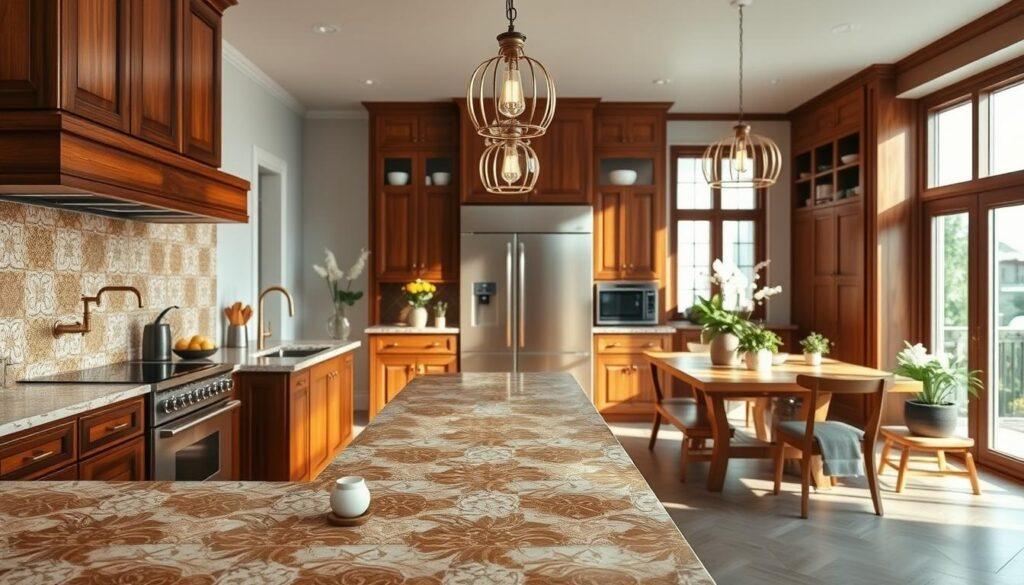
The kitchen and bathroom are key in any hybrid villa. They need to be both beautiful and functional. Imagine artisan tiles from the 12th century next to modern faucets.
Hand-painted zellige tiles on your kitchen backsplash are stunning. Add a monolithic quartzite island for a mix of old and new. It’s a perfect fusion villa concept.
Warm metal finishes like brass and copper connect the past and present. In the bathroom, a stone tub meets a tumbled limestone floor. A glass shower and digital valve keep it modern.
A hybrid villa’s charm comes from blending old and new. I saw a Provençal kitchen with a La Cornue range and concrete countertop. The brass and concrete looked amazing together.
Don’t make your space too uniform. A Tuscan kitchen can feel like an Olive Garden. Let artisan pieces be the highlights, with modern fixtures as the timeless chic.
Outdoor rooms classical axes with modern firewater features and pools
Imagine stepping into an outdoor room where indoor and outdoor living blend perfectly. This is what fusion villa concepts are all about, perfect for a modern Mediterranean setting. Here, life flows outside as naturally as wine from a carafe, creating a space for relaxation and connection.
At the heart of these outdoor spaces are classical axes, like those found in Renaissance gardens. Picture a cypress-lined allée leading to a distant hill, or a pergola framing a stunning sea view. These elements give your outdoor oasis its structure.
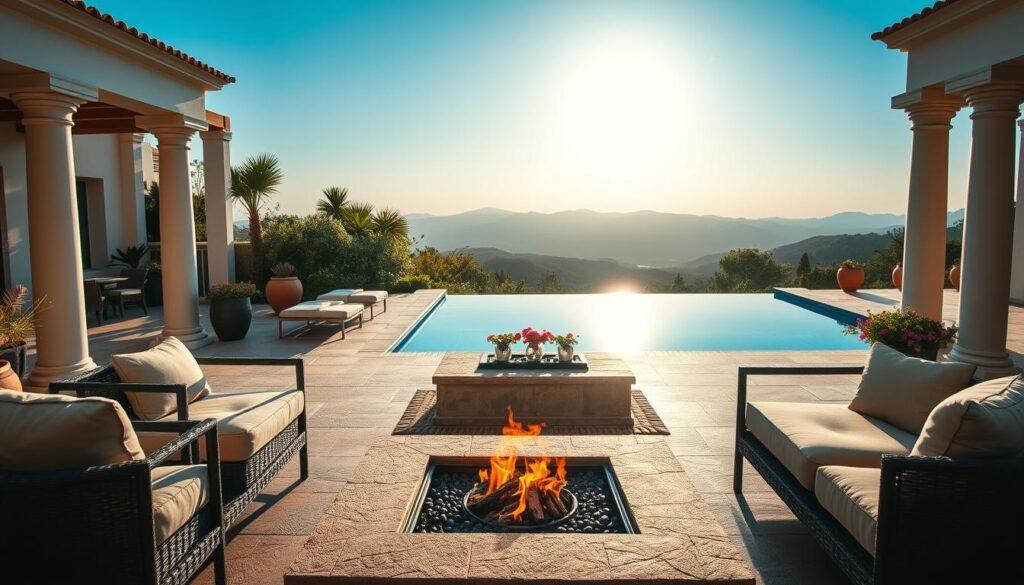
Modern fire and water features add a special touch. A linear gas fire pit, set into a travertine plinth, offers warmth and ambiance. Imagine an infinity pool with a glass edge, or a water wall that creates a soothing microclimate. The beauty is in balancing the old with the new for drama and excitement.
Consider a villa in Mykonos, where a traditional whitewashed courtyard is flanked by sleek, black-bottomed pools. At night, submerged LEDs make the water mirror the stars, making the ancient tree appear to float. This is the magic of outdoor rooms: the old tells the story, while the new adds the wow factor.
But, be careful with fire features. One flame can spark a conversation, while too many might turn your gathering into a fire show. And always watch out for the wind. Smoked guests are not fun.
In summary, outdoor rooms in fusion villas are more than just spaces. They are experiences that blend classical elegance with modern sophistication. The result? A setting that invites both tranquility and celebration, capturing the essence of modern Mediterranean living.
Detailing dos and donts respect scale avoid theme park pastiche
In fusion villas, details are key, not just extras. The first rule is to respect scale. A big classical pediment looks wrong if it’s too big. And a small modernist window in a huge stone wall looks like a peephole.
This is where the contemporary classic mix really comes into play. Every detail must fit together perfectly. This includes the size of windows and the look of baseboards.
Do: use modern materials in old styles. For example, a fiberglass column that looks like stone but keeps you cool. It’s smart and respectful of both styles.
Don’t: just slap foam “keystones” on a flat arch and say it’s Palladian. That’s like a bad theme park trick. It won’t last as long as a reality TV star’s fame.
I’ve seen a villa that used a traditional stone base and then smooth stucco. The transition was seamless, thanks to a thin shadow gap. It was modern yet respectful of tradition.
Another no-no: don’t copy old buildings unless you’re restoring them. A fake “Tuscan villa” with perfect shutters and tile roof is just a costume. The aim is to suggest, not copy. It’s like wearing a blazer with jeans—it works because each piece is true to itself.
Sample formulas modern plus Tuscan modern plus Balinese modern plus Palladian
Let’s explore the world of fusion villa concepts that mix modern with timeless. These styles are like a perfect match, where each part makes the other better. For example, the modern plus Tuscan mix is fascinating. Imagine a farmhouse with old-world charm and a sleek, modern glass wall.
Next, we look at the modern plus Balinese mix. Here, wabi sabi luxury really stands out. Traditional Balinese designs meet modern touches like polished floors and cantilevered roofs. It’s like a tropical retreat with a touch of Zen simplicity.
Lastly, we have the modern plus Palladian mix. This is for those who love classic designs but also modern simplicity. Start with Palladio’s symmetry, then add modern touches like steel columns and flat roofs. It’s a classic look with a modern twist.
Each mix works because the modern part enhances the traditional, not hides it. This blend of styles creates a unique look and deepens our appreciation for architecture. So, which fusion will inspire your next villa project?
| Fusion Type | Key Features | Visual Impact |
|---|---|---|
| Modern + Tuscan | Heavy masonry, terracotta roofs, glass walls | Ancient yet aerodynamic |
| Modern + Balinese | Open pavilions, polished concrete, cantilevered roofs | Tropical retreat with serene details |
| Modern + Palladian | Symmetry, slender steel pilotis, flat roofs | Ghostly classical elegance |
For more villa design ideas, check out this guide to Bali villa design trends.
Budget planning where to splurge on authentic craft and save smartly
Creating an eclectic villa that blends different eras can be tricky. Money is a big concern. To make your home stand out, spend wisely on authentic details. Think about hand-troweled plaster walls, custom steel windows, and artisan tiles.
These touches will make your home special. But, don’t overspend on everything. Choose budget-friendly options for parts that don’t need to be fancy. For example, use basic drywall in rooms you don’t use often.
Mid-range plumbing fixtures are a good choice. They can be changed later if needed. I like using IKEA cabinets with custom fronts. It’s a smart way to save money.
Local stone for your driveway is another cost-effective option. It looks great and saves money. Avoid spending too much on smart-home systems. Instead, invest in insulation and windows that will last a long time.
It’s all about finding a balance. Your villa should feel like it’s been carefully put together over time. Spend on the basics and add accessories that tell stories. For more tips on creating a fusion villa, check out this guide. Your wallet and your design sense will appreciate it.