
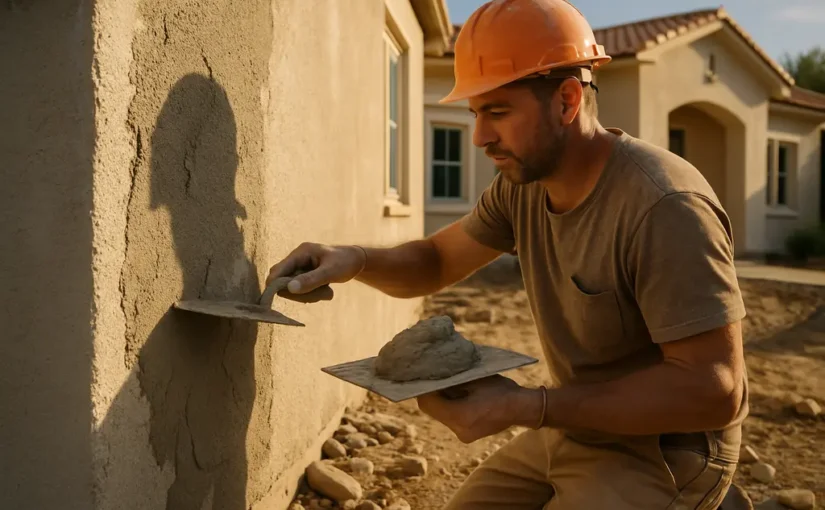
Exterior Materials are not moving in one neat direction. The 2025 new-home data shows a split market, with vinyl, stucco, and fiber cement all holding meaningful shares rather than one material taking over. For villa owners planning a remodel, that matters: the safest choice is rarely the trendiest sample board. It is the wall system that suits the climate, structure, budget, maintenance tolerance, and local code requirements.
Market Signals Behind Exterior Materials
The current siding market looks balanced rather than settled. Among newly started U.S. single-family homes in 2025, vinyl siding was used as the principal exterior wall material in 27.7% of homes, stucco in 24.1%, and fiber cement siding in 22.6%, according to Eye On Housing. Those numbers are close enough that homeowners should be cautious about any claim that one cladding is the only modern answer.
Another useful market signal is fragmentation. Industry reporting noted that no single exterior siding material captured more than about 28% of the U.S. new-home exterior wall material share in 2025, as reported by the FBMA blog. That supports what many architects see in practice: builders are choosing by region, price band, labor availability, and performance expectations rather than by appearance alone.
New-Home Share Does Not Equal Best Choice
Market share can show where labor crews and supply chains are active, but it does not prove suitability for your house. A material used widely in one region can be a poor fit for a different exposure, drainage detail, or wall assembly. Stucco may suit some dry or warm-climate designs, but poor water management can still create damage. Fiber cement may be a strong candidate for many facades, but it still depends on correct clearances, flashing, fastening, and joint treatment. The product is only one part of the assembly.
Exterior Materials By Region
Regional variation is one of the strongest lessons in the 2025 data. Stucco dominated in the Pacific division at 65% and was also prominent in the South Atlantic division at 33%. Fiber cement surpassed stucco in the Mountain division with roughly 42% market share. For homeowners, this does not mean copying the neighbor’s facade. It means asking why a material is common locally: climate, trades, wildfire concerns, moisture exposure, design tradition, and builder familiarity can all affect the result.
Stucco, EIFS, And Fiber Cement Compared
Traditional stucco remains popular because it gives a monolithic, mineral surface that works well with many villa styles. It can look quiet and permanent, but it is not a forgiving shortcut. Cement-based plaster absorbs water differently than panel siding, and it needs a correctly detailed drainage plane, control joints, lath, substrate preparation, and curing conditions. A small crack may be cosmetic; it may also be a signal that movement, moisture, or installation quality should be reviewed by a qualified professional.
Fiber cement has gained share over the long term. The research notes report that its market share has grown by nearly 20 percentage points over the past 25 years. That rise is understandable: many homeowners want crisp profiles, paintable surfaces, and a siding category that can work across a range of architectural styles. Still, it is not maintenance-free. Paint systems, caulked joints where specified, cut edges, clearances from roofs and paving, and fastening methods all affect service life.
Stucco Is Not EIFS
Stucco and EIFS can look similar from the street, but they are not the same wall system. Stucco is a cement-based plaster. EIFS is a multilayer exterior insulation and finish system built around insulation, with different weight, moisture behavior, and performance characteristics. That difference should shape your questions before hiring anyone. Ask whether the proposal is hard-coat stucco, one-coat stucco, EIFS, or another proprietary assembly. Ask for manufacturer details, drainage strategy, and warranty terms in writing.
EIFS with specialty finishes has become more common in 2026 industry reporting, partly because it can imitate stone, brick-look finishes, or plaster-like surfaces while integrating insulation and moisture-control layers. That does not make it automatically better than stucco. It means the design review should focus on the entire wall section, not the finish texture alone.
Fiber Cement’s Practical Appeal
Fiber cement often appeals to homeowners who want a straighter, board-based look than stucco provides. It can be used in lap siding, panels, or trim-like elements depending on the product line. The key safety point is that installation details are not optional. Cutting, dust control, fastening, and clearances should follow the manufacturer’s instructions. Homeowners should not assume a general handyman can install it correctly without training or documented experience.
If your villa combines plaster, stone, timber, and panels, think about the full material palette before committing. This related article on villa material palettes is useful for seeing cladding as part of a broader composition rather than a single finish choice.
Planning A Safer Remodel

Exterior cladding is not just decoration. It is part of the rain-control, air-control, vapor-control, and thermal-control strategy of the home. That is why a siding or stucco replacement should start with diagnosis, not color selection. Look for staining below windows, soft trim, interior damp spots, cracked sealant, bulging plaster, or siding too close to grade. These signs do not identify the cause by themselves, but they justify a professional inspection before new material covers old problems.
DIY Boundaries For Homeowners
There is useful DIY work in the planning stage. Homeowners can photograph each elevation, note where splashback occurs, collect product data sheets, compare maintenance requirements, and request samples to view in sun and shade. Renters should avoid exterior alterations unless their lease and owner approval clearly allow them. For anyone, the following checks are reasonable before signing a contract:
- Ask whether the proposal includes removal, sheathing repair, flashing, weather-resistive barrier, and disposal, not just visible finish work.
- Confirm whether permits or local approvals are needed before work starts.
- Request manufacturer installation instructions for the specific stucco, EIFS, or fiber cement system.
- Clarify who is responsible for window and door flashing, especially where water has stained the wall.
- Keep a care file with paint colors, finish names, warranty documents, and maintenance intervals.
High-risk work should be left to qualified trades. That includes replacing cladding above one story, repairing structural sheathing, altering window openings, working near electrical service equipment, correcting major water damage, or modifying fire-rated assemblies. Ladder falls and hidden moisture damage are common ways a simple-looking project becomes unsafe and expensive.
Professional Checks Before Signing
A good contractor should be willing to discuss the wall assembly, not just the final look. For stucco, ask about drainage, reinforcement, control joints, curing, and transitions to rooflines and paving. For EIFS, ask whether it is a drained system and how penetrations are treated. For fiber cement, ask about clearances, flashing, joint treatment, fasteners, and cut-edge protection. If the answer is mostly visual language, keep asking.
For custom-build references and builder-side examples, visit J. Siemering Homes, a related site in the same network. Use examples as conversation starters, not as proof that a specific cladding will suit your site.
Practical Decisions For Exterior Materials
The strongest choice is the one that balances appearance with risk control. If your villa is in a region where stucco is common, you may benefit from experienced crews and familiar detailing. If fiber cement is widely used nearby, local contractors may be better prepared for its fastening, trim, and repainting cycle. If EIFS is proposed, the insulation and moisture-control strategy should be reviewed as a system.
Budget should be handled as a life-cycle question. A lower bid that excludes flashing repair, sheathing replacement, or drainage correction may not be cheaper once water intrusion appears. A higher bid is not automatically better either. Compare scopes line by line, and ask each contractor to identify exclusions. If one proposal includes wall repair and another simply covers the existing surface, they are not bidding the same job.
For villas, the best exterior decisions often come from restraint. Use durable cladding where exposure is harsh, reserve higher-cost finishes for entries and outdoor rooms, and avoid mixing too many systems unless the transitions are well detailed. Exterior Materials should help the house shed water, age predictably, and remain repairable. Style matters, but the wall behind the finish matters more.