

Imagine a place where ancient mountains watch over lush grounds. Inja Estate in Queensland’s hinterland is this sanctuary. It’s a hidden gem where nature and architecture blend perfectly. This property spans eleven acres, with a never-to-be-built-out forest and views of Mount Cooroy.
Every detail here is designed for privacy and a deep connection with nature. Let’s explore the beauty of cascading pools and elegant terraces. But first, we must understand the masterplan.
A good design is more than looks; it’s about knowing the land. How does morning light move across the property? What’s the wind direction in August? These questions help create a garden that feels natural, not just expensive.
Walking through many villa gardens, I’ve seen the best ones share a secret. They use microclimates and sightlines to speak their own language. The right design doesn’t just block out neighbors; it welcomes views and breezes. It’s a balance the Romans knew centuries ago, a lesson for us today.
Key Takeaways
- Understanding the land is key for garden design.
- Privacy comes from sightlines, not just walls.
- Microclimates make outdoor spaces more useful.
- Historical designs can guide modern landscaping.
- A masterplan is vital for a welcoming environment.
Structural Bones Axes Hedges Allees Stairs Walls Terraces Belvederes
In villa landscapes, structural bones are key. They help outdoor spaces flow and function well. Without them, gardens might look like messy experiments, not peaceful retreats.
Axes bring order to the landscape. They don’t have to be grand, like Versailles. A simple gravel path and a distant cypress can guide you. Walking this path, you feel like you’re moving into the heart of the garden.
Hedges are vital in this design. They add structure without needing building permits. A row of pleached hornbeam or olive trees creates a light-filled path. It’s where nature meets design beautifully.
Stairs add drama to the landscape. A wide limestone stair leading to a water feature is more than a path. It’s a journey to something special.
Terraces solve the problem of sloping land. They create different outdoor areas. Whether for dining, sunbathing, or secret spots, each terrace has its own charm. They invite you to stay and enjoy the view.
Belvederes offer special views. They make a good view a destination. At Inja Estate, the main path organizes the house, and terraces blend indoors and outdoors. It shows careful planning.
Mediterranean landscapes know how to use these elements. Terraces, walls, pergolas, and views framed by stone pines are more than decorations. They define outdoor living. Without them, plants just stand there, unsure what to do.
Water Types Rills Scuppers Fountains Troughs Cascades Mirror Pools and Filtration
Water features are key to a villa’s charm, adding life and calm to outdoor spaces. The sound of water flowing can turn a simple garden into a peaceful oasis. Let’s look at the many water types that can make your villa landscape special.
Rills are perfect for those who love simplicity. These narrow water channels, inspired by Islamic gardens, guide the eye and create peace. Picture a rill winding through your garden, its gentle sound making outdoor events more relaxing.
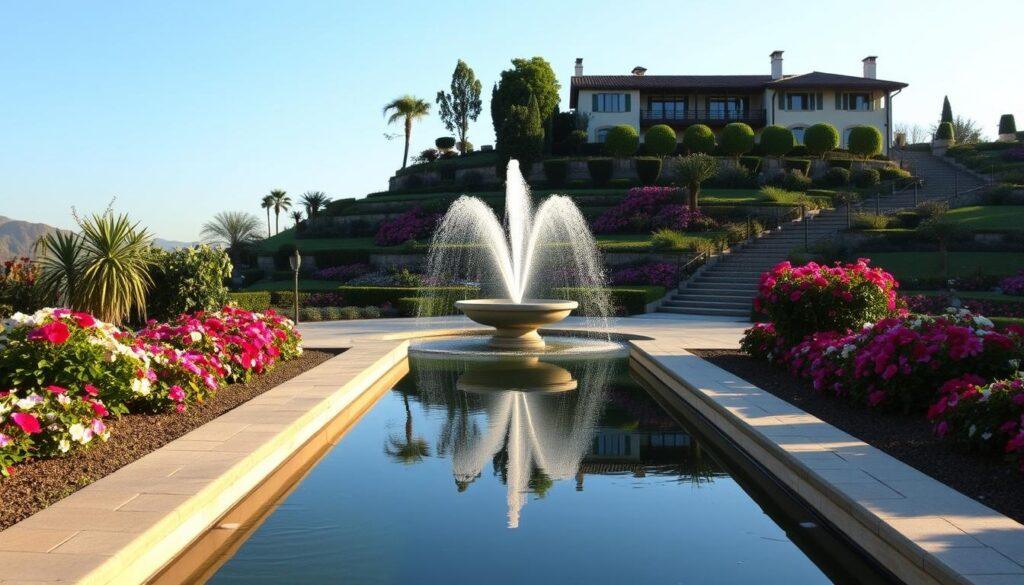
Reflecting pools act as mirrors for the sky, doubling its beauty. A well-sized reflecting pool can catch a sunset, giving you a moment to reflect.
Fountains vary from elegant to over-the-top. A single jet in a Mediterranean courtyard is lovely. But, a huge water display is better suited for tourists. The key is finding the right size and setting.
Cascades are great for sloped areas. They turn a problem into a beautiful feature. Imagine water falling down rocks, creating a soothing sound that blocks out the world.
Scuppers add drama with water flowing from spouts into basins. They’re not just useful; they also make your outdoor area look better.
Troughs and stock tanks add a rustic charm to modern gardens. They’re both practical and stylish, making a statement.
Don’t forget the importance of filtration systems. They keep your water features clean. Without them, you might end up with mosquito breeding grounds and algae, which is not what we want.
At Inja Estate, a permanent creek and spring-fed bore keep the landscape lush all year. For others, a good recirculating system with biological filtration can make maintenance easy while keeping the water clear and beautiful.
| Water Feature Type | Characteristics | Benefits |
|---|---|---|
| Rill | Narrow, linear channel | Creates tranquility and guides the eye |
| Reflecting Pool | Stil water surface | Enhances beauty and reflection |
| Fountain | Variety of styles | Provides auditory and visual interest |
| Cascade | Water flowing over rocks | Turns drainage issues into features |
| Scupper | Wall-mounted spout | Adds architectural drama |
Planting Palettes Mediterranean Xeric Tropical Temperate Shade Gardens
Crafting the perfect planting palette is like putting together a great movie cast. Each plant has its role, from main stars to supporting actors. At Inja Estate, where the parkland meets spring-fed irrigation, choosing plants is key to the look.
The Mediterranean palette has been loved for ages. Olive trees, Italian cypress, lavender, rosemary, and stone pines bring the dreamy Tuscan landscapes to life. They thrive in hot, dry places, making drought planting a must for those who hate watering.
Xeric gardens, named after the Greek word for dry, feature unique plants. Agaves, yuccas, sedges, and sculptural euphorbias add a minimalist touch. They are beautiful and don’t need much water, challenging the idea of lush gardens.
If you have plenty of water and humidity, go for the tropical palette. Palms, bird-of-paradise, and lush ferns make your garden feel like a resort. For temperate climates, flowering perennials, ornamental grasses, and deciduous trees offer a colorful canvas.
Shade gardens are often overlooked but have great possibilities. Turning shaded areas into cool, fern-filled spots can be a big change. The key is to repeat plants to create a cohesive look.
At Inja Estate, the beautiful grounds rely on a smart irrigation system. This shows that even the most natural-looking gardens need careful planning. By picking plants that do well in your area, you can enjoy your villa landscape water features with less upkeep.
| Plant Type | Ideal Conditions | Water Needs |
|---|---|---|
| Mediterranean | Hot, dry | Low |
| Xeric | Dry, well-drained | Very Low |
| Tropical | Humid, warm | High |
| Temperate | Varied | Moderate |
| Shade | Low light | Low to Moderate |
Edible Layer Orchards Herbs Kitchen Potagers Olive Groves and Citrus
Imagine walking through your own olive grove, with a cocktail in hand. You feel proud knowing those olives could make your next martini special. The edible layer of a villa landscape is more than just food; it’s about sensual abundance.
A potager, or ornamental kitchen garden, is a French term for a garden that’s both beautiful and edible. Vegetables, herbs, and flowers are arranged in patterns that are almost too pretty to eat—almost.
Citrus trees are the stars of the edible landscape. They have shiny leaves and fragrant flowers that decorate the garden for months. In warm climates, lemons, mandarins, and kumquats grow easily. They add beauty and flavor to your garden.
Olive groves bring structure and a silver look to the landscape. They connect you to a long history of farming. But, curing olives is a big job that shows your dedication. Are you ready for that commitment?
Herb gardens should be near the kitchen door for easy access. Rosemary, thyme, oregano, and sage are key Mediterranean herbs. Basil and parsley need a bit more care. Think of them as your kitchen helpers, always ready to make a dish better.
Orchards of stone fruit like peaches, plums, and apricots are a treat. They bloom beautifully in spring and give juicy fruit in summer. To make a villa landscape with edibles, treat them as design elements first. An espaliered apple tree against a wall is like living art. A row of citrus in pots can mark a terrace.
At places like Inja Estate, there’s a chance to grow unique foods. This shows a bigger truth: the best villa gardens feed all your senses, not just your eyes. So, why not create a landscape that’s as tasty as it is beautiful?

Nightscape Path Moonlighting Uplights Water Shimmer and Safety
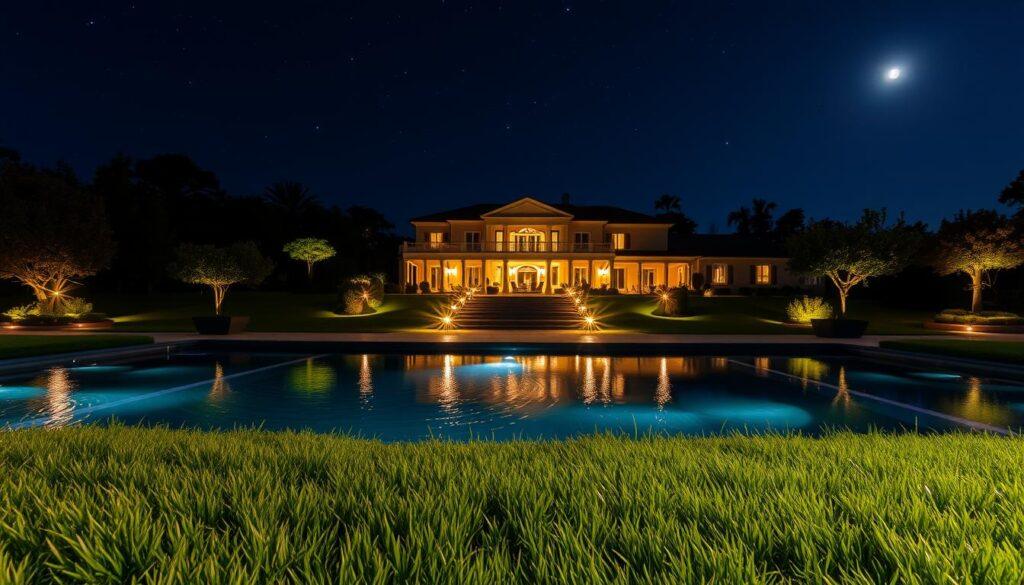
As twilight falls, your villa landscape comes alive with magic. The outdoor space turns into a mystical world, perfect for exploring under the stars. This change, called nightscaping, goes beyond just seeing things. It’s about creating a spellbinding atmosphere.
Moonlighting is a key technique. By placing lights in trees, you get a soft moon-like glow. This creates shadows that add mystery and depth. Guests will feel the enchantment, even if they don’t know where it comes from.
Uplights also play a big role. They highlight your villa’s features by shining light on them. This makes the structure stand out, even when daylight hides it. The shadows add drama, making your landscape feel vibrant at night.
Water shimmer is another magic trick. An underwater light in a pool or fountain turns water into shimmering light. Imagine your pool glowing like a turquoise jewel at night. It’s perfect for a midnight swim.
But safety is key, too. Path lighting guides guests through the garden safely. Use low, shielded lights to light the path, not the fixtures. This keeps the focus on the landscape’s beauty.
Also, safety lighting for stairs and levels is a must. It’s for both safety and to make guests feel welcome. At Inja Estate, evenings are for fun, with the mountains and stars adding to the magic.
To wrap it up, a well-done nightscape turns your villa into a magical evening spot. Here’s a quick look at different lighting techniques:
| Technique | Effect | Best Use |
|---|---|---|
| Moonlighting | Soft, natural glow | Creating ambiance in gardens |
| Uplighting | Highlighting features | Focal points like trees or walls |
| Water Shimmer | Dynamic reflections | Pools and fountains |
| Path Lighting | Safety and guidance | Walkways and stairs |
With careful planning, your villa can be a beacon of beauty at night. For more ideas on creating a resort-like vibe, check out luxury pool design for villas.
Outdoor Art Placement Plinths Niches Framed Sightlines and Routes
Art in the garden is more than just decoration. It’s a story waiting to be told. When we think about villa landscape water features, we often forget the importance of art placement. A well-placed sculpture can turn a calm terrace into a stunning focal point.
A plinth at the end of an axis can be a game-changer. It gives the eye a goal, making the walk worth it. Niches in hedges or walls are perfect for small art pieces, inviting a closer look. These are the treasures you notice when you pause.
Framed sightlines are a clever trick. Imagine a sculpture perfectly placed in an archway or between trees. It looks amazing from one spot, but move just a little, and it disappears. This is a deliberate choice that grabs your attention.
Routes also play a big role. The way you see a sculpture changes based on your path. A sculpture viewed head-on is different from one found around a corner. Each path offers a new view, making the journey as exciting as the end.
At Inja Estate, Mount Cooroy adds depth to the landscape. This site of Indigenous significance brings a story that art can’t match. The land itself becomes the art, showing the cultural history that makes the area special.
For those without sacred mountains, the idea is the same. Art in the garden should feel like it belongs. It should connect with the place, not seem out of place. Materials like weathering steel, stone, and bronze age well outdoors, earning their look over time.
| Art Element | Placement Type | Impact |
|---|---|---|
| Plinth | End of Axis | Visual Destination |
| Niche | Hedge/Wall | Intimate Gallery |
| Sculpture | Framed Sightline | Focused Attention |
| Pathway | Route | Dynamic Experience |
Irrigation and Greywater Smart Controllers Soil Sensors and Maintenance
A lush villa landscape needs more than just beauty. It needs smart irrigation. Inja Estate, with eleven acres, shows how water management can change a space. The estate uses a spring-fed bore, keeping it green all year.
Irrigation systems are not Instagram-worthy, but they’re essential. Smart controllers adjust watering based on weather. This prevents plants from getting too much water.
Soil sensors measure moisture at the root level. They water only when plants need it. Greywater systems use water from showers for plants, but edible gardens need cleaner water.
Drip irrigation is great for saving water. Spray systems are less efficient. Inja Estate’s bore is a key to its water security.
A well-designed irrigation system keeps your landscape looking good. It doesn’t need a full-time technician. For more on smart irrigation, check out this resource.
Wildlife Friendly Strategies Pollinators Birds and Safe Lighting Choices
Turning your outdoor space into a wildlife haven can make your villa landscape stand out. Imagine a garden buzzing with bees and filled with birdsong. This dream can become reality with thoughtful design choices.
A wildlife-friendly garden isn’t about chaos. It’s about making choices that welcome good creatures while keeping pests away. Pollinators like bees and butterflies need a variety of flowers all year. This variety attracts more visitors, making your garden lively.
Birds need food, water, and shelter. Adding berry bushes and leaving seeds on plants in winter feeds them. A simple birdbath near water features provides water, drawing in birds you never knew were around.
Lighting is important, but the wrong kind can harm wildlife. Artificial light at night messes with insect and bird navigation. Use warm-spectrum lights that shine down and turn off when not needed. This way, you can enjoy your garden at night without harming wildlife.
At Inja Estate, the garden meets the wild in a beautiful way. Even small gardens can have a wild corner. The goal is to share your garden with the creatures that make it alive.
| Wildlife-Friendly Strategies | Benefits | Examples |
|---|---|---|
| Plant Diversity | Attracts various pollinators | Native flowers, perennials |
| Food Sources | Supports bird populations | Berry shrubs, seed heads |
| Water Features | Provides hydration | Birdbaths, ponds |
| Safe Lighting | Minimizes disruption to wildlife | Warm-spectrum LEDs |
For more insights on creating a harmonious outdoor space, check out this guide on style decisions.
Seasonal Calendar Monthly Tasks Gardener Brief and Budgets
A villa landscape needs a seasonal calendar to thrive. It’s like a GPS for your outdoor space. Without it, your beautiful garden can turn into a mess.
In January, it’s time to prune. This is when deciduous trees are bare. By March, mulch and feed as new growth starts. June means adjusting irrigation for the heat. And October is for planting bulbs for spring.
A gardener brief is key. It turns big plans into doable steps. Instead of just saying “prune olive trees,” say “prune olive trees in late winter to maintain an open vase shape.” Clear instructions lead to great results.
Budgets are also important. For a garden with water features and plants, maintenance costs are 5-10% of the installation cost. Many don’t realize this. Tasks like winterizing irrigation and cleaning water features add up. For a big estate like Inja, managing these is like running a business.
For smaller gardens, a monthly task list and a budget talk can prevent chaos. Keep your garden beautiful and avoid neglect. A little planning keeps your outdoor space looking great.