
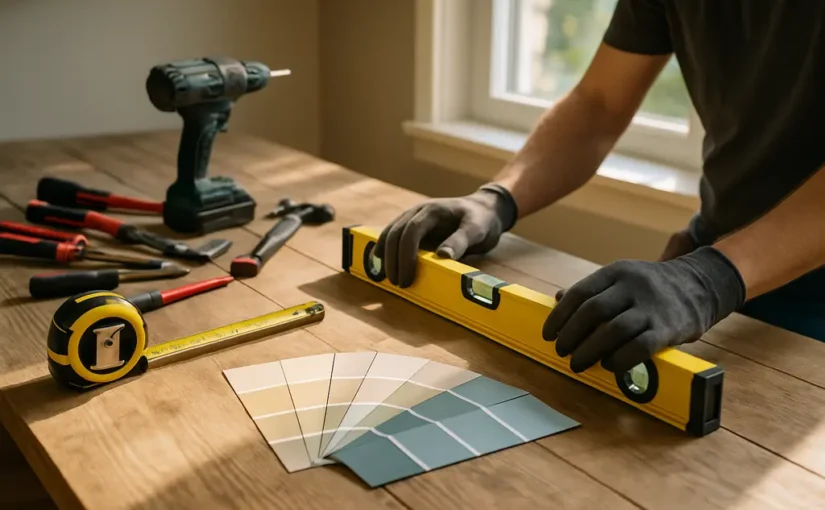
Tool Buying Guidelines should start with the project, not the tool aisle. A drill, level, sander, or smart measuring device is only a good purchase if it fits the work you can safely complete, the materials you plan to handle, and the number of times you expect to use it after this renovation.
Interior projects tempt homeowners because many tasks look small: hanging shelves, replacing cabinet pulls, assembling closet systems, painting rooms, or installing decorative trim. Yet the risk changes quickly once a project touches electrical wiring, plumbing, gas lines, structural framing, heavy stone, or built-in cabinetry that must be anchored correctly. My approach is practical: buy fewer tools, buy better where accuracy and safety matter, and hire qualified professionals for work where mistakes can harm the home or the people in it.
Tool Buying Guidelines For Project Scope
Project scope is the first filter. In 2025, 54% of U.S. homeowners reported undertaking renovation projects, the median renovation spend held at US$20,000, and high-end spending at the 90th percentile rose to US$150,000, according to the 2026 U.S. Houzz & Home Study. Those numbers do not mean every homeowner should buy more equipment. They suggest the opposite: as project spending rises, the cost of a poor tool choice, damaged finish, or unsafe installation also rises.
Match Tool Grade To Frequency
A tool used once for a narrow task has a different value equation than a tool used across several rooms. A quality tape measure, level, utility knife with a secure lock, drill/driver, and basic fastening tools can support many interior projects. A specialty saw, floor nailer, tile cutter, or high-capacity sander may make less sense as a purchase if it will sit unused after one weekend. Renting, borrowing from a tool library, or hiring a tradesperson can be the more careful choice for rare or high-risk work.
Frequency also affects comfort. A heavy tool may be acceptable for a five-minute task but poor for a day of trim work or cabinet assembly. Before buying, hold the tool in the position you will actually use. Check grip, trigger reach, balance, and whether the battery placement makes the tool nose-heavy. Fatigue is not just inconvenient; it can reduce control.
Tool Buying Guidelines For DIY Limits
Tool Buying Guidelines should include a clear stop line. Painting, hardware swaps, furniture assembly, simple patching, and some decorative wall treatments are often reasonable DIY candidates for careful homeowners. Electrical fixture changes, gas appliance work, concealed plumbing, structural changes, and stair or balcony work deserve professional review or professional completion. The tool does not make the task safe by itself.
Permits and local code rules vary by location, so homeowners should confirm requirements with the local building department before starting regulated work. A contractor may also already own the specialty equipment needed for cutting, dust collection, testing, anchoring, or finish protection. Paying for expertise can be more cost-effective than buying equipment and learning on finished walls, floors, or cabinetry.
Budget Durability And Smart Features
Budget pressure is real, especially for interiors where finishes, lighting, and hardware compete for funds. The same Houzz research reported that among homeowners renovating in 2025, 50% purchased new light fixtures; of those, 13% chose smart lighting while 37% chose standard fixtures. That split is useful because it shows that smart features are not automatic upgrades. They need a reason: control, accessibility, scheduling, or energy-use habits that the household will actually maintain.
Read Specifications Before Features
Use Tool Buying Guidelines as a check against feature overload. Tool buyers are commonly advised to weigh durability, safety features, and usability, including metal parts where practical, guards, emergency shut-offs, corded versus cordless format, weight, and balance, as outlined in this tool buying guide. Those criteria matter more than a long list of attachments if the tool is awkward, underpowered for the material, or missing basic safety controls.
Cordless tools are convenient for apartments, villas, and occupied homes because they reduce cord management. The tradeoff is battery planning. A homeowner who already owns one battery platform may save money by staying within it, provided the tool quality and capacity still fit the job. Corded tools may still make sense for stationary or longer-use work where constant power is useful. Neither format is superior in every room; the material, duration, and workspace decide.
Smart Tools And Lighting Choices
Smart measuring tools, layout apps, and AI-assisted design tools can help compare ideas before money is spent. They are less reliable as substitutes for site measurement, code review, or trade judgment. If you use visualization software to test paint, cabinetry, or furniture placement, treat it as a planning aid. Confirm dimensions in the room with physical measuring tools before ordering built-ins, wall panels, flooring, or window treatments.
For readers evaluating renovation priorities with respect to property goals, Jimmy Guthrie Real Estate LLC offers valuable insights within the same housing network. While design inspiration is plentiful, ensuring decisions are based on actual home conditions and professional recommendations is crucial when considering safety and resale implications.
Planning The Interior Tool Kit

A thoughtful tool kit grows in layers. Start with tools that help you measure, mark, fasten, protect surfaces, and check alignment. Then add specialty tools only after the design and material choices are settled. For example, a room with paint and shelves needs a different setup than one with new flooring, built-in storage, or trim with tight joints.
Essentials Before Specialty Tools
For small interior work, the practical first layer often includes a drill/driver, tape measure, level, screwdrivers or a multi-bit driver, utility knife with a safety lock, pliers, adjustable wrench, painter’s tape, drop cloths, and eye protection. This group supports layout and assembly without pushing the homeowner into risky building-system work. A stud finder can be useful, but it should not be treated as proof that a wall is safe to cut into; concealed wiring and plumbing are common reasons to slow down.
- Measure twice before buying: confirm room dimensions, clearances, and material thicknesses before ordering tools or supplies.
- Buy for the material: drywall, MDF, hardwood, tile, and metal trim each place different demands on blades, bits, dust control, and fastening.
- Check safety features: guards, locks, stable bases, and clear manuals matter more than extra accessories.
- Plan storage: tools that cannot be stored safely are a poor fit for small homes or rental units.
- Stop before regulated work: hire licensed pros where electrical, gas, plumbing, structural, or permit issues apply.
Renting Hiring And Design Coordination
Not every project deserves a purchase. A specialty tool used for one floor, one backsplash, or one built-in wall may be better rented if the homeowner has the skill to use it safely. If the learning curve is high, hiring the work out may reduce waste and prevent damage to expensive materials. For a closer look at smaller project decisions, this site’s article on remodeling tools for small projects pairs well with early planning.
Interior designers and contractors can also help sequence purchases. For example, there is little value in buying finish-installation tools before the wall condition, substrate, moisture concerns, and material lead times are known. A project plan should identify which tasks are DIY, which are professional, and which require a decision after demolition or inspection reveals the true condition of the room.
Evolving Tool Buying Guidelines
Evolving Tool Buying Guidelines are less about owning more equipment and more about matching tools to evidence: project scope, frequency of use, material demands, safety controls, and the homeowner’s skill level. Renovation budgets have stayed significant for many households, while smart features and planning software have added more choices. That makes restraint valuable.
Good Tool Buying Guidelines protect both the renovation budget and the finished room. Buy dependable basics first. Compare corded and cordless tools by how they will be used, not by habit. Treat smart tools as aids, not authorities. Rent or hire for specialty work where accuracy and risk are high. Most of all, separate cosmetic interior updates from building-system work. A beautiful room is not successful if the process damaged the home, voided a warranty, or created an unsafe condition behind the finish.