

The old way of luxury is outdated. Today, high-end living means living smart, not just big. Eco sustainable villas blend luxury with eco-friendliness beautifully.
Net-zero energy homes are now a reality. They make as much energy as they use each year. This is thanks to a smart three-part plan. They use less energy, then meet needs with efficient systems, and make their own energy.
Picture a home that shows off your style and cares for your health. Senior living places are now focusing on designs that boost community strength and cut costs.
In Australia, luxury homes are all about being green and smart. It’s not just about size anymore. It’s about living well without wasting resources.
Key Takeaways
- Net-zero homes balance energy consumption and production.
- Luxury living now emphasizes sustainability and self-sufficiency.
- Senior communities are prioritizing health-focused designs.
- Comfort is redefined through energy-efficient solutions.
- Architectural intelligence is key to modern luxury.
Site Orientation: Sun, Wind, Views, Fire, Flood, and Ecology Mapping
Imagine a world where your villa not only exists but thrives in harmony with its surroundings. This is the essence of site orientation. It starts with a compass and a topo map, where sustainable villa design comes alive.
Understanding the sun path and seasonal angles is key. It’s not just about placing solar panels on a south-facing roof. It’s about mastering solar shading to block harsh summer sun and welcome winter’s gentle warmth. This makes your villa a sanctuary, welcoming natural light without the heat.
Wind patterns are your silent allies. Correctly mapping them unlocks a natural ventilation system. Imagine operable windows that create cross-ventilation, a gentle caress without fans or compressors.
Views are important, but framing them without overheating your home is an art. A thoughtful design balances beauty with comfort, letting you enjoy the scenery without sacrificing livability.
Then, we face the less glamorous but essential tasks of fire and flood mapping. For example, Paradise Valley Estates in Fairfield, California, installed emergency sprinklers at the property edge to defend against wildfires. Frasier Meadows in Boulder, Colorado, learned from devastating floods in 2013 and now has floodgates encircling their campus.
Ecology mapping is where the real work happens. Identifying native plant stands and understanding microclimates for drought-tolerant planting can significantly reduce water usage. This isn’t just due diligence; it’s the difference between a villa that fights its site and one that works with it.
The best eco sustainable villas don’t impose; they insinuate themselves into the landscape. They show the balance of nature and design is not just a concept but a lifestyle choice.
| Aspect | Example | Benefit |
|---|---|---|
| Sun Path Analysis | Seasonal angle adjustments | Optimized solar gain |
| Wind Mapping | Operable window placement | Natural ventilation |
| Flood Preparedness | Floodgates installation | Property protection |
| Fire Safety | Emergency sprinklers | Wildfire defense |
| Ecological Considerations | Drought-tolerant landscaping | Water conservation |
Envelope Strategies: High-R Assemblies, Thermal Bridging, Shading, and Glazing Specs
Your villa’s envelope is like a shield against energy loss. It’s key to keeping your energy bills low and your home comfortable. A well-designed envelope keeps your home warm in winter and cool in summer.
Continuous exterior insulation is a big deal, reaching R-25 to R-40 wall performance. This is way better than what builders used in the 1990s! Airtight construction, checked by blower door tests, aims for ACH50 values under 1.0. This is important because air leaks can waste up to 40% of your energy.
Thermal bridging is like leaving your fridge door open, wasting energy. It’s important to stop heat from sneaking through studs and connections. It might not be exciting, but it’s vital.
Glazing specs are also important. Triple-pane windows with Ug values under 0.15 W/m²K work like walls but let in light. Add solar shading, and your glass walls won’t get too hot in summer.
The Energy Recovery Ventilator (ERV) is a game-changer. It brings in fresh air while keeping over 80% of heat inside. It’s like the lungs of your passive house, keeping air quality high without letting air out.
| Feature | Specification | Benefit |
|---|---|---|
| Continuous Insulation | R-25 to R-40 | Reduces energy loss |
| Airtight Construction | ACH50 | Minimizes air leakage |
| Triple-Pane Windows | Ug | Enhances thermal performance |
| Energy Recovery Ventilator | 80%+ heat exchange efficiency | Improves indoor air quality |
In summary, focusing on the envelope first is a smart choice for your eco sustainable villa. It ensures your home is comfortable and helps the planet. For more on sustainable building envelopes, see this resource.
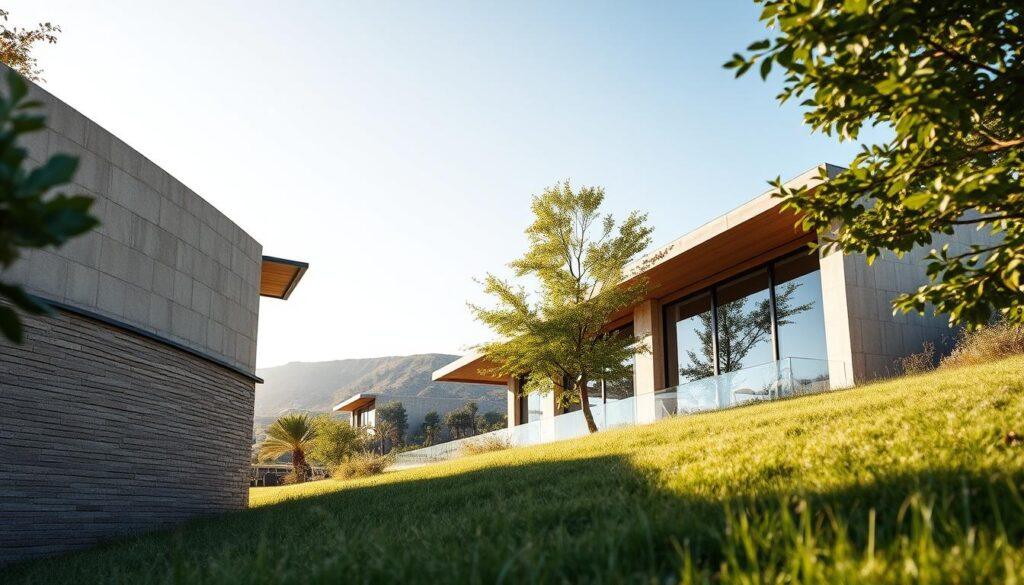
Energy Systems: Heat Pumps, PV Arrays, Batteries, Smart Controls, and EV Readiness
Imagine a villa where energy flows smoothly, like fine wine. In eco sustainable villas, advanced energy systems make net zero homes a reality.
Variable-speed heat pumps are key. They use less energy than traditional systems, making your home more efficient. This means you save money and use less energy.
In sunny places like DFW, PV arrays can generate a lot of energy. They can power your home and more, thanks to the sun’s power.
Battery storage is also important. It keeps your home running during power outages. Systems like the Tesla Powerwall keep your home safe and comfortable.
Smart controls make everything work better together. They help you use energy wisely. Heat pump water heaters are also great, making hot water more efficiently.
Being EV ready is smart. It makes your home future-proof. Charging your car with solar energy is good for the planet.
“This isn’t a collection of gadgets—it’s an integrated energy ecosystem that happens to look like a luxury villa.”
| Energy System | Efficiency | Benefits |
|---|---|---|
| Variable-Speed Heat Pumps | COP > 4.0 | High efficiency, reduces energy costs |
| PV Arrays | 1,200-1,500 kWh/kW | Reliable energy generation |
| Battery Storage | N/A | Backup power during outages |
| Smart Controls | N/A | Optimizes energy use |
| EV Charging Stations | N/A | Future-proofing, reduces carbon footprint |
In conclusion, these energy systems make your villa better and more luxurious. Welcome to the future of living, where being green is the new luxury.
Water Systems: Rain Harvesting, Greywater, Bioswales, and Drought-Tolerant Planting
Water management is key in luxury villa design. It affects both looks and sustainability. Advanced water systems can turn a regular house into an eco-friendly villa that values nature and luxury.
Rain harvesting is a big deal now. It’s not just a simple barrel anymore. We have integrated cisterns that catch roof runoff and filter it for use. This makes your villa its own mini-water system, boosting sustainability and adding charm.
Greywater systems are also important. They use water from showers, sinks, and laundry for gardens. It’s like your garden drinks from the same water twice. This is more than saving water; it’s combining efficiency with style.
Bioswales are vital too. They’re channels filled with plants that slow down and filter stormwater. They prevent runoff and look great as part of your landscape. Adding a green roof makes your villa a water celebration.
A green roof catches rain, lowers heat, and insulates. It keeps your floor cool in summer and warm in winter. It’s like having a rooftop meadow, showing your commitment to the environment.
Choosing the right plants is also key. Native species that don’t need much water are best. This approach is a big change in eco-friendly villas. It means water systems work with nature, not against it.
| Water System | Benefits | Impact on Luxury |
|---|---|---|
| Rain Harvesting | Reduces water bills, enhances sustainability | Increases property value, unique aesthetic |
| Greywater Systems | Recycles water, lowers consumption | Eco-friendly luxury appeal |
| Bioswales | Prevents runoff, improves drainage | Natural beauty, enhances landscape design |
| Drought-Tolerant Planting | Minimizes maintenance, conserves water | Eco-conscious luxury experience |
In conclusion, these water systems make your villa more sustainable and luxurious. It’s about caring for the planet, elegance, and a future where every drop is precious.
Materials: Low-Carbon Concrete, Mass Timber, Lime Plaster, and Recycled Metals
In eco sustainable villas, material choice is key. It’s not just about looks; it’s about leaving a lasting impact. Each piece, from beams to finishes, has a carbon footprint. This is why embodied carbon matters, showing true environmental commitment.
Low-carbon concrete is a game-changer. It uses fly ash and slag instead of traditional cement, cutting down on CO₂ emissions. It may not be as glamorous as limestone, but it’s a big step towards sustainability.
Mass timber is another standout. It looks amazing and absorbs carbon, unlike traditional materials. Its strength rivals steel, adding warmth to any space.
Lime plaster is also noteworthy. It lets air pass through and fights mold naturally, even absorbing CO₂. It’s a self-cleaning material that’s hard to beat.
Recycled metals offer durability without the environmental cost of new materials. They’re a sustainable choice that doesn’t sacrifice quality.
Interior finishes are just as important. Zero-VOC paints and natural insulation like sheep’s wool are healthier options. Bamboo and cork flooring regrow quickly, making them eco-friendly choices.
Choosing these materials means considering their entire life cycle. Where did they come from? How were they made? What happens when they’re no longer needed? Eco sustainable villas focus on the whole story, not just the end product.
| Material | Environmental Benefit | Embodied Carbon Impact |
|---|---|---|
| Low-Carbon Concrete | Reduces CO₂ emissions | Substitutes industrial byproducts for cement |
| Mass Timber | Sequesters carbon | Lower carbon footprint than steel |
| Lime Plaster | Reabsorbs CO₂ | Natural mold resistance |
| Recycled Metals | Durability without guilt | Closes the loop on material usage |
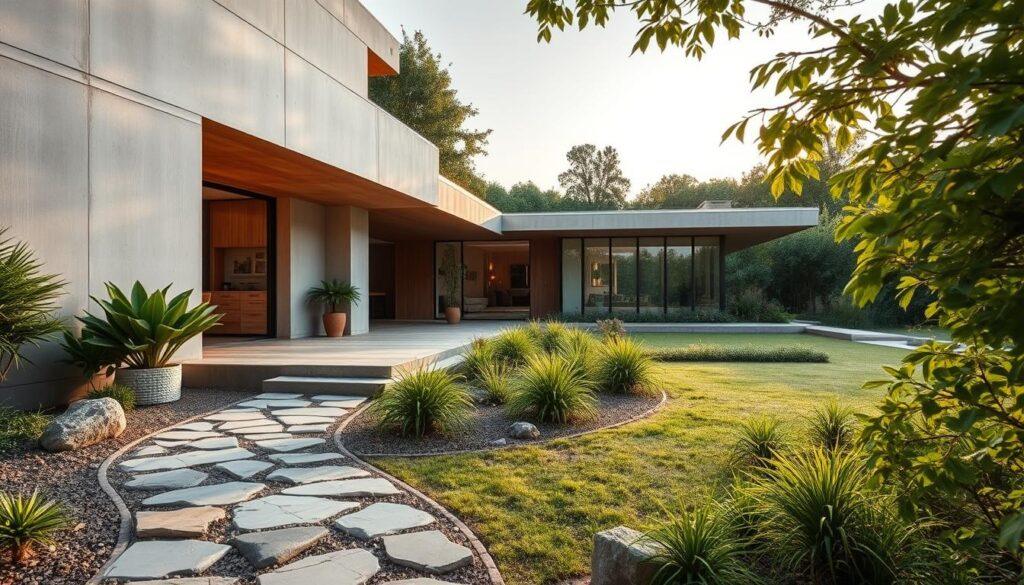
Healthy Interiors: Daylight, VOC Control, Filtration, Acoustics, and Biophilia
Imagine a home that’s a health haven, filled with natural light and fresh air. In eco sustainable villas, this dream comes true. Every part of these homes is designed to boost your health.
Daylight is key, not just for saving on lights. It helps our bodies stay in sync and keeps our mood steady. Picture stepping into a villa where sunlight flows freely, making artificial lights seem unnecessary at night. It’s more than saving energy; it’s a unique architectural experience.
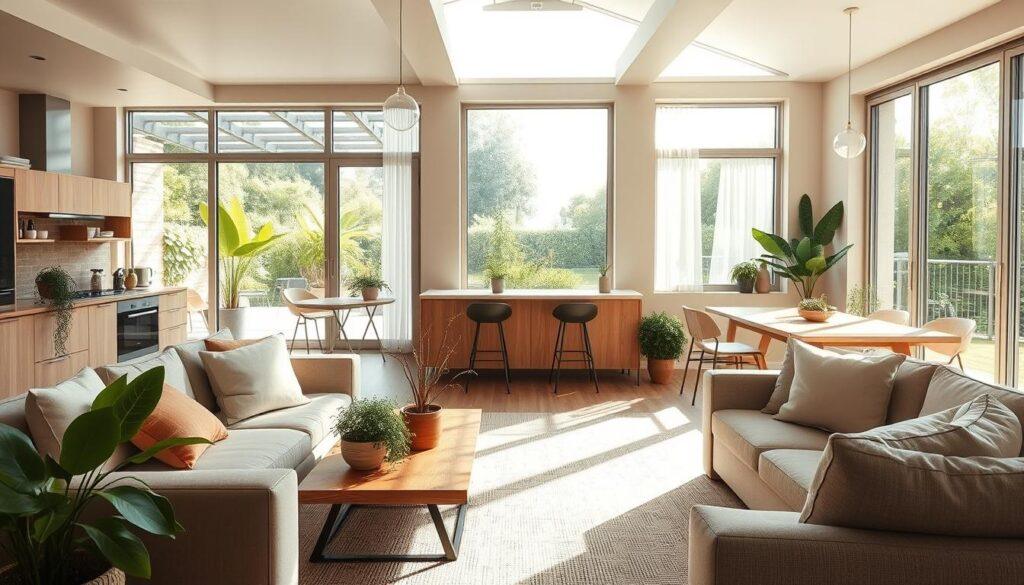
VOC control is also vital. Indoor air can be much dirtier than outside air. An eco villa uses special paints and materials that don’t release harmful gases. This creates a clean, healthy space for you to live in.
Filtration systems are important too. They bring in fresh air, removing harmful particles and pollutants. This system is like having a constant supply of fresh air, making your home feel invigorating.
Acoustics matter too. A quiet home lets you escape the outside world’s noise. Triple-glazed windows block out sounds, making your home feel luxurious and peaceful.
Biophilia is another key aspect. It’s about connecting with nature indoors. Green walls, gardens, and water features lower stress and boost brain function. The eco sustainable villa doesn’t just protect you; it enhances your indoor experience.
In summary, living in an eco villa is more than just having a place to stay. It’s about living a healthier, happier life.
Passive Cooling: Courtyards, Chimneys, Pools, Thermal Mass, and Night Purge
Imagine a world where comfort comes from nature and smart design, not just air conditioners. Welcome to the world of eco sustainable villas, where passive cooling is key. This approach uses sunshine, shading, and air flow to keep things cool, without mechanical systems.
Passive cooling uses clever elements like courtyards, thermal chimneys, pools, thermal mass, and night purge. These work together to make a space that breathes with the environment. Let’s look at how each helps save energy and keep things comfy.
| Cooling Strategy | Description | Benefits |
|---|---|---|
| Courtyards | Open spaces surrounded by walls that provide shade and promote evaporative cooling. | Lower temperatures and enhanced microclimates. |
| Thermal Chimneys | Structures that utilize the stack effect to draw hot air upwards, allowing cooler air to enter. | Natural ventilation without energy consumption. |
| Pools | Water features that cool the surrounding air through evaporation. | Lower ambient temperatures and aesthetic appeal. |
| Thermal Mass | Materials like concrete or stone that absorb heat during the day and release it at night. | Reduced temperature fluctuations and energy savings. |
| Night Purge | Opening windows or vents at night to expel heat accumulated during the day. | Resetting the thermal battery for the next day’s heat. |
Before air conditioning, buildings were smarter about cooling. Passive house ideas bring back this smart approach. It’s not about giving up comfort; it’s about using nature’s power.
Courtyards have been cooling buildings for centuries. They use shade and plants to create cooler spots. The Moors in Andalusia knew this trick long before air conditioning.
Thermal chimneys use the natural flow of air to cool homes. Hot air goes up, and cooler air comes in. It’s like your home is breathing, without any fans.
Pools and water features cool the air around them. They’re not just pretty; they’re also cooling engines. Your infinity edge is working hard to keep things cool.
Thermal mass, like concrete floors, absorbs heat and releases it slowly. This keeps temperatures steady. And at night, windows open to let in cool air and flush out heat.
In hot places, these strategies can cut cooling needs by half. Passive houses use these ideas to save up to 90% of energy. It’s a big change in how we build.
In conclusion, an eco sustainable villa that uses passive cooling works with its climate, not against it. By following these principles, we can create beautiful, energy-efficient spaces.
Cost, ROI, Incentives, Commissioning, Monitoring, and Resale Value
How much will your dream net zero home cost, and when will you see a return? Let’s explore the costs of eco sustainable villas. In luxury markets like DFW, net-zero homes cost 5% to 12% more than regular homes. This might seem high, but let’s look closer.
Utility savings can be $400 to $800 a month, with no gas bills. This means big savings that add up quickly. Your home can start making money in 7 to 12 years, before it’s old news.
But there’s more. Federal tax credits and Zero Energy Ready Home (ZERH) certification can lower costs. The Inflation Reduction Act even covers 30% of geothermal costs until 2032. This makes ground-source heat systems more affordable.
Also, a HERS score below 45 proves your home’s efficiency. It also makes your home more attractive to buyers. Real-time energy monitoring lets you keep your home running efficiently.
Now, let’s talk about resale value. Tighter energy codes and buyer demand for green homes make net zero homes a smart choice. Today’s higher build costs mean lower costs tomorrow. Your eco sustainable villa will be a valuable asset for future buyers.
In summary, a net zero home is a smart investment. It saves money, is more reliable, and reduces carbon emissions. Your sustainable villa will stand out and be a wise financial choice.
Case Snapshots: Desert, Coast, Alpine, and Tropical Solutions with Data
Let’s explore how eco sustainable villas work in real life. Each place has its own special needs. In the desert, like Scottsdale and Palm Springs, homes use thermal mass and deep shading. They cool down at night and use water features for cooling.
Coastal areas, such as Malibu and the Hamptons, face humidity and storms. Homes here manage moisture and use strong materials. They also have special windows and shading to control heat and glare.
In cold places like Aspen and Lake Tahoe, homes are super-insulated. They have high R-values and use Earth’s heat for warmth. This keeps them cozy without using fossil fuels.
Tropical spots, like Hawaii and Puerto Rico, focus on natural cooling. They use local materials and natural ventilation. Projects in Australia show how to create self-sustaining areas with native plants and rainwater.
Data shows the power of smart design everywhere. The Phoebe Ministries campus in Pennsylvania is a great example. It uses solar panels and gardens to be energy-neutral. Eco sustainable villas are about more than luxury; they combine beauty with practicality and resilience.