

Modern life often feels chaotic, like scrolling through a cluttered feed. Our homes shouldn’t be like that. There’s a new way to think about contemporary villas that’s all about simplicity.
This approach is about clarity, purpose, and elegance. It’s about creating spaces that are both functional and beautiful. Imagine your home as a peaceful, intentional place.
Every detail has a purpose. It’s like a haiku, where silence is as important as words. This isn’t just empty space. It’s curated emptiness with a lot of thought.
The aim is to move away from the idea that more is better. True luxury is about light, clarity, and leaving some things blank. This minimalist design asks a simple question: “What can we remove?”
Origins of Minimalist Villa Movement
The love for simple architecture is spreading fast. It’s not just the cool Scandinavians, though they play a big part. The real story is more complex.
This movement is a mix from all over. It combines the beauty of Japanese wabi-sabi with the German Bauhaus’s focus on function. It’s all about clean lines and simplicity, inspired by Silicon Valley’s values. Yet, it looks different everywhere it goes.
Why does this matter? It shows why a villa in Norway is different from one in Dubai, even if they both follow minimalism. The idea of removing the unnecessary is the same everywhere. But what’s seen as unnecessary changes with the location.
Let’s look at how it varies by region:
- Scandinavia: Minimalism is a way to cope with long, dark winters. It uses light wood and stone to make spaces feel airy. The colors are calm, creating a poetic feel against the darkness.
- The Gulf Region: Here, minimalism is about “soft luxury.” It keeps things simple but adds a touch of luxury. The focus is on refined surfaces and smart design, creating a serene atmosphere.
- India: In crowded, noisy places, minimalism is a bold statement. It blends cultural touches with smart space use. The aim is to create calm, not emptiness.
The minimalist villa movement didn’t start in one place. It’s a global mix of tastes. From Kyoto’s Zen gardens to Weimar’s clean lines and Stockholm’s light-filled homes, the quest for simplicity is universal. Our modern take is just the latest chapter. The true origin story is our global recognition that simple spaces are true havens in our busy lives.
Technology Integration in Minimal Design
Creating a minimalist villa is all about a clever mix. We want the latest tech to be hidden from sight. No wires, no fans, and no hunting for remotes. The magic happens when your space adapts to you, not the other way around.
Modern luxury has evolved. Forget about gold-plated items. Today, luxury means a faucet that pops out of the wall or climate control that changes based on who enters. It’s about tech that’s both silent and stylish.
Light switches used to be just a plastic box we tolerated. Now, they’re a key part of a room’s design. The goal is to blend these elements into the architecture seamlessly.
Products like the Unica X range show this philosophy in action. These ultra-slim switches look like shadows on the wall. They’re the essence of modern luxury, proving small details can greatly impact a room’s feel.
But they’re not just for looks. They’re packed with smart features. Think fast-charge USB ports, motion-sensor night lights, and hotel-style master controls. The tech is advanced, but it’s presented quietly.
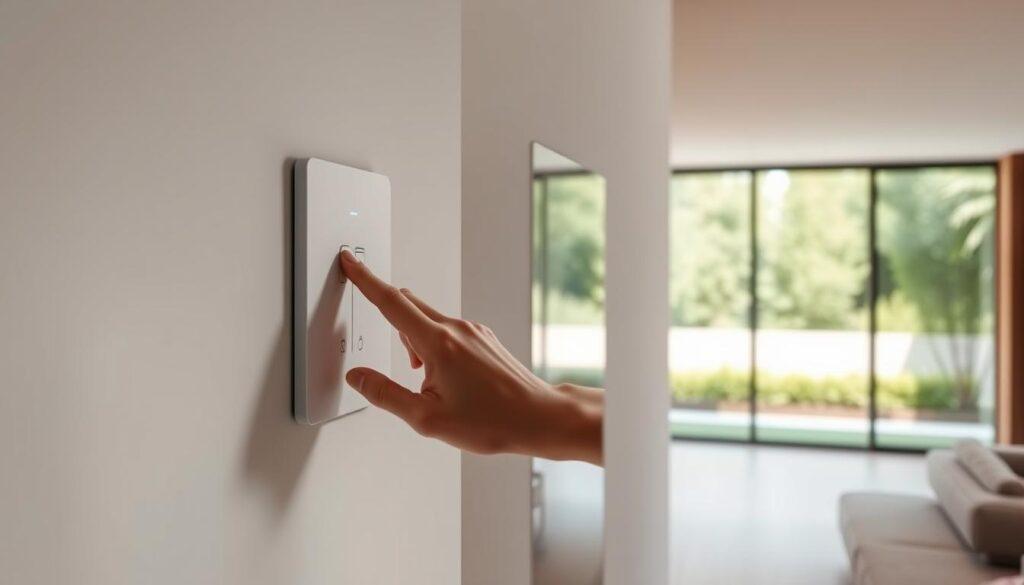
The outcome is a home that feels like a smart butler. Your villa learns, anticipates, and serves without making a sound. It’s like having a spaceship’s tech in a serene monastery.
To see the change, let’s compare old and new tech approaches.
| Feature | Traditional, Cluttered Tech | Integrated Minimalist Tech |
|---|---|---|
| Control Interfaces | Bulky plastic panels, multiple remotes | Ultra-slim, flush-mounted panels like Unica X; app-based control |
| Charging Solutions | Visible power strips and tangled cables | Built-in fast-charge USB ports within sockets and furniture |
| Ambient Lighting | Separate lamps, obvious switches | Motion-sensor night lights integrated into switches & architectural details |
| Aesthetic Impact | Functional but visually disruptive | Seamless; enhances the clean lines of the minimalist design |
| User Experience | Manual, often cumbersome interaction | Automated, intuitive, and anticipatory |
This table is more than specs. It’s a guide to a simpler life. The right tech integration makes daily tasks easy. The true modern luxury is about less hassle, more ease, and a home that’s a true sanctuary.
Cost Benefits of Minimalist Approach
Let’s talk about the real cost of minimalist design. It’s not just about spending money. It’s about making smart choices that save you money in the long run. The high upfront costs are often misleading.
By choosing minimalist design, you’re investing in quality over quantity. This means focusing on what truly adds value to your home. It’s a smart way to use your money.
Right away, you start saving money. You don’t need to buy as much furniture or decorations. This approach helps you avoid spending on things that don’t really matter.
The money you save goes towards important things. Like better insulation and windows that last longer. These are investments that pay off over time.
The real benefits of minimalist design show up over time. Think about how much you spend on heating and cooling. With a well-built home, these costs go down.
Having less space to clean and maintain also saves money. It’s like buying a car that gets better gas mileage. You save money every month.
The biggest benefit is mental clarity. Clutter takes up space in your mind. A minimalist home gives you more room to think.
This way of spending money is also good for the planet. It’s all about using resources wisely and making choices that last. Check out sustainable villa design for more on this.
Here’s a simple breakdown of the benefits:
- Upfront Savings: You spend less on things you don’t really need.
- Recurring Savings: Your energy bills and maintenance costs go down.
- Value Appreciation: Investing in quality materials makes your home worth more.
- Intangible ROI: You save time and feel less stressed.
In the end, minimalist design is about making smart choices. It turns owning a home into a thoughtful investment. The benefits are not just financial. They’re about having more space and peace of mind.
Measuring Impact on Lifestyle Quality
Forget square footage; the most valuable metric in a minimalist villa is psychic acreage. How do you measure the ROI on peace of mind? This is the grand, beautifully unquantifiable experiment. The impact isn’t about more space; it’s about better space—between your ears.
Think of it as the difference between an inbox with 10,000 unread emails and one that’s at zero. The minimalist design enforces a radical intentionality in daily life. Your things have designated places. Your sightlines are unobstructed. The environment stops screaming for your attention and starts whispering.
As the philosophy suggests, this translates to a focus on clarity, purpose, and elegance. These concepts sound abstract but feel incredibly concrete when you live them.
Clarity means reduced decision fatigue. You’re not wasting mental energy choosing a shirt from a packed closet or searching for a tool in a chaotic garage. Purpose means every object in your home has a reason to be there, which subtly reinforces your own sense of intention. Elegance is the daily, quiet pleasure of a clean line, an empty surface, a perfect beam of light.
It’s the lifestyle equivalent of switching from blaring talk radio to a carefully curated jazz album.
The effect is a cognitive tax refund. You reclaim attention and focus. Your home becomes a sanctuary that supports your life, not a storage unit that competes with it.
| Lifestyle Dimension | Conventional Home Experience | Minimalist Villa Impact |
|---|---|---|
| Morning Routine | Rummaging through clutter, multiple choices creating friction before the day even starts. | Streamlined, predictable flow. Fewer decisions lead to a calmer, more controlled start. |
| Mental Load | Constant, low-grade anxiety about cleaning, organizing, and managing “stuff.” | Significant reduction in background cognitive noise. Mental energy is freed for creative or deep work. |
| Visual Field | Competing colors, shapes, and objects create visual noise and subconscious stress. | Clean lines and intentional emptiness create visual calm, allowing the mind to rest and focus. |
| Object Relationships | Possessions own you. Maintenance, storage, and guilt dictate their place in your life. | You own your possessions. Each item serves a clear purpose, adding value without burden. |
| Social Atmosphere | Rooms feel busy; conversation competes with environmental distraction. | Space feels open and intentional, fostering more present, focused interaction with guests. |
This shift in lifestyle quality is profound, yet intensely personal. It’s annoyingly difficult to explain to your aunt with the porcelain figurine collection. You can’t gift-wrap psychic space. You can’t post a before-and-after photo of your reduced cognitive load on Instagram.
The impact is felt in the silence, in the ease, in the sudden realization that you’ve just spent an hour reading—actually reading—without once feeling the urge to tidy up. The minimalist villa doesn’t just change your decor; it upgrades your operating system.
Implementation Strategies for Homeowners
So, you’ve bought into the minimalist idea. Now, it’s time to break up with old habits. This is where theory meets reality. Think of it as editing your living space like a first draft.
Start with simple, open layouts that let in lots of natural light. Pick materials like a wine connoisseur picks wine. Opt for calm, neutral colors. Stone and wood add warmth without being too busy.
Don’t forget the tiny details. Light switches and sockets are like punctuation in your room’s story. Choose slim profiles and clean surfaces that enhance, not overwhelm. This is the heart of minimalist design: every piece must earn its spot.
Apply the “function-first” rule everywhere. Use furniture with built-in storage to fight clutter. Ask yourself, “Does this item serve a vital purpose?” If not, it’s time to say goodbye. Add smart tech for comfort, but keep the wires hidden. Your home should feel like a sanctuary, not a tech lab.
This approach is an ongoing process, not a one-time clean-out. The payoff is a space that feels alive. Cleaning becomes easy. Achieving visual balance means choosing wisely, not adding more. Your simpler, calmer future self is waiting. Start editing.