

Villa Savoye is a masterpiece by Le Corbusier. Built from 1928 to 1931 for the Savoye family, it’s more than a home. It’s a manifesto in concrete. The five points of architecture make it a work of art.
My first time seeing Villa Savoye was through a slide in class. It smelled of old coffee and dreams. My professor called it the “ur-text of modernism.” I thought it was just another modern house.
But it’s so much more. It’s a symphony of design, challenging old ways. Despite problems, it’s now a UNESCO site and a must-see for architecture fans. We’ll explore modernist design, from Corbu’s work to today’s homes.
Key Takeaways
- Villa Savoye is a landmark of modern architecture.
- Le Corbusier’s five points of architecture redefine building design.
- The villa faced significant challenges but is now a celebrated site.
- Understanding its design enhances appreciation for modernism.
- This exploration covers the evolution of architectural style.
Villa Savoye walk through ramps light wells and promenade architecturale
Exploring Villa Savoye is like being part of a dance, with architecture leading the way. Le Corbusier designed this masterpiece for an “architectural promenade.” You begin at the entrance, where the pilotis lift the house, sparking curiosity.
The entrance is dark and cramped, a clever trick by Corbu. It prepares you for the beauty that follows.
Next, you encounter the ramp. Le Corbusier chose ramps over stairs, finding them more fluid. The ramp’s gentle slope turns your walk into a story. Light wells cut through the concrete, and the ribbon windows open up, showing the Seine valley.
This shift from dark to light is both brilliant and a bit showy. It’s like a friend explaining an art film’s plot. Yet, it’s hard to deny the genius. The promenade architecturale transforms a country house into a journey from earth to sky.
Just watch out for the terrazzo floors; they can be slippery, thanks to the leaking roof.
Villa Savoye is more than a building; it’s an experience that changes how we move and see. For more on the evolution of columns in modern design, see this in-depth look.
Iconic peers Farnsworth House Glass House Barcelona Pavilion lessons for villas
The modernist villas show a mix of transparency and form. The Farnsworth House by Miesvan der Rohe is a prime example. It sits over the Fox River, blending with nature.
But is it a cozy living room or a transparent fishbowl? You decide.
The Glass House by Philip Johnson takes transparency further. It feels like part of the landscape. Johnson’s design merges the indoors with the outdoors, making it a living art piece.
Just remember to keep the windows clean!
The Barcelona Pavilion by Mies van der Rohe is a minimalist masterpiece. It’s simple yet deep. The Barcelona chairs inside? They’re pricey but worth it.
What do these icons teach us? Transparency is more than glass; it’s about merging with nature. But minimalism means more upkeep. Heating a glass house in winter is a challenge!
The international style was a new way to think about space. Each building has its own twist, showing architecture is about telling stories through space.
Materials and details concrete steel glass terrazzo thin profiles reveals
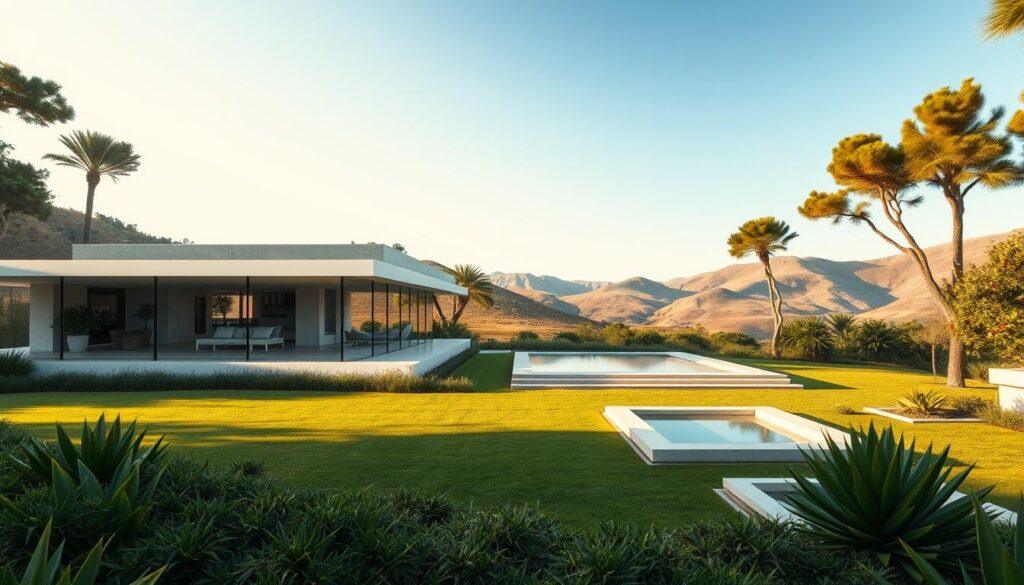
Let’s explore the hidden gem of modern architecture: the flat roof terrace. This design, popularized by Le Corbusier, was more than a roof. It was a “toit-jardin,” or a garden on the roof. It was meant to be a sunny paradise, but often became a waterproofing challenge.
Villa Savoye is a prime example. It had a stunning concrete structure with a white exterior and timber frames. The terrazzo floors added an industrial charm. Yet, the flat roof was infamous for leaks. Madame Savoye’s complaints about drips on her furniture show the practical issues of such designs.
The materials used were chosen for their beauty and honesty. Concrete, steel, glass, and terrazzo gave the buildings a sleek look. But, their minimalism means small mistakes can lead to big problems.
Today, we have better waterproofing solutions. But the beauty of the flat roof terrace remains. It’s a symbol of conquering nature, with a lounge chair as proof. Just remember to hire a good roofer and have a sense of humor for when the first storm comes.
If you’re interested in a Mediterranean villa design, learn more here.
Plan logic orthogonal grids served vs service zones circulation clarity
Imagine a world where walls are just suggestions, moving freely in a grid. The open plan is like a modernist villa’s special trick. It lets walls move anywhere or stay put. This freedom comes from a strong grid of columns, each 4.75 meters apart, like a metronome in jazz.
At Villa Savoye, this grid is more than just structure; it’s the design’s backbone. It supports the illusion of chaos from curving partitions and sliding screens. It’s like a solid rhythm section, letting soloists be creative. Le Corbusier, the modernist architecture master, divided spaces into “served” and “service” zones. The served zones are for lounging and impressing guests, while service zones, like kitchens and bathrooms, are hidden.
Circulation clarity is key in this design. The ramp is the villa’s spine, guiding movement. The staircase is the emergency exit for those who prefer not to climb. Today’s open-plan villas have taken this idea, sometimes stretching it too far. Do we need to see the kitchen from the bedroom? Yet, when done right, the grid becomes invisible, making life less cluttered and more fluid.
But let’s not forget: an open plan also means open smells, sounds, and arguments about whose turn it is to do the dishes. It’s all about finding balance between structure and spontaneity.
Indoor outdoor strategies roof terraces framed vistas and courtyards
Imagine your living room opening up to the sky. That’s what modernist villas offer. They merge indoor comfort with outdoor beauty, creating a perfect living space.
Villa Savoye is a great example. Its roof terrace is more than a deck; it’s a stage framed by walls that make the sky a work of art. When you open the huge glass door, it feels like your living room merges with the Seine valley’s greenery. It’s a magical experience.
Framed vistas turn the surroundings into beautiful views. You might see a tree or a hill in the distance. Not every view is perfect, but that’s what makes it special. Courtyards bring light and air into the villa, making even small spaces feel big.
Today’s modernist homes go even further with features like retractable glass walls. They create outdoor rooms that are perfect for living. A modernist villa is more than a home; it’s a way to see the world in a beautiful way. Just don’t forget the sunscreen!
Contemporary adaptations privacy acoustic comfort resilience smart tech
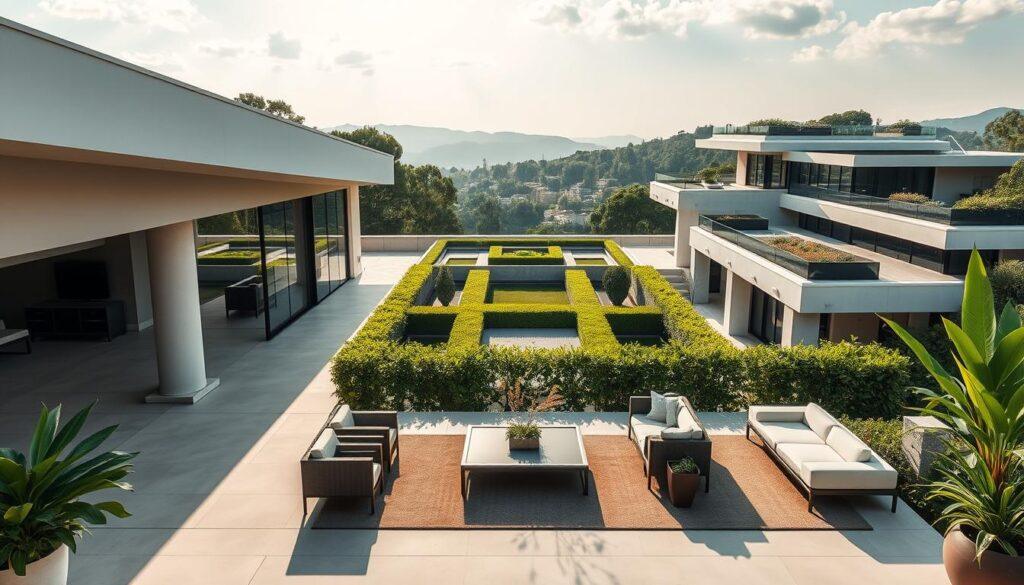
Today’s minimalist retreats have turned the open-plan design into a cozy, private space. The old modernist villas, with their big glass walls, felt like being in a fishbowl. But now, we’ve found a way to mix looks with practicality.
Privacy has gotten a big boost. Thanks to electrochromic glass, you can change how much you see outside with just a tap on your phone. This tech lets you enjoy your home without worrying about who’s watching.
Acoustic comfort has also improved a lot. No more echoing sounds off bare walls. Now, triple-glazed windows and sound-absorbing materials keep things quiet. It’s perfect for relaxing or getting work done.
Resilience is key in modern homes. Flat roofs now have strong membranes to keep out water. Plus, smart tech keeps an eye on humidity, stopping mold and other problems.
In today’s design world, you can have open spaces and privacy too. It’s like upgrading a vintage car with a modern engine. The old charm stays, but it’s now more comfortable and practical.
Budget tiers core moves at entry mid and luxe levels
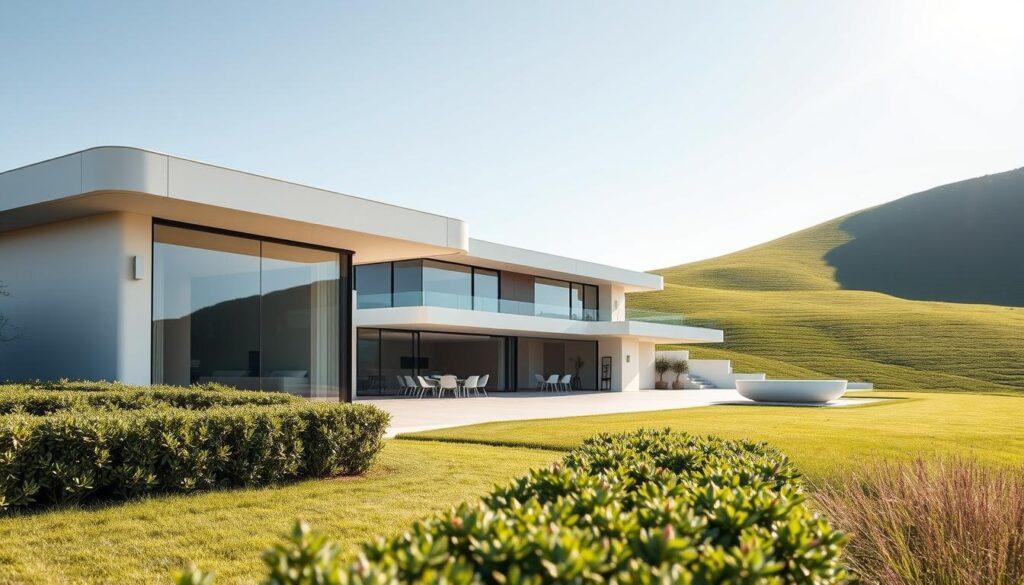
Not everyone can afford a big estate, but modernist design is flexible. The modernist villa look can fit any budget. You can achieve a sleek, minimalist style, whether starting small or building a luxury home.
At the entry level, think of it as a DIY project. Start with a simple grid, maybe just paint and trim. A flat roof is best—it needs cleaning, but it’s worth it for the clean look. Open up your space by removing a few walls. It’s like mixing IKEA’s style with a DIY spirit and a sledgehammer.
For the mid-tier, it’s time to hire a pro. Find an architect who knows “Towards a New Architecture.” Now, you can use real pilotis—slender steel columns that lift your space. Polished concrete floors add elegance, and ribbon windows bring in light without leaks.
In the luxe category, you’re aiming high. You want a home that would impress Mies van der Rohe. Think of floor-to-ceiling glass, cantilevered slabs, and a roof terrace with a pool. Add a smart home system for controlling shades while you enjoy cocktails.
The key is, modernism isn’t just for the rich. It’s about light, space, and order, adaptable to any budget. Even Le Corbusier overspent. So, add a 20% contingency for surprises, like what a “reveal” is.
Styling art and furniture how minimal spaces host collections
In the world of minimalism, the right art can turn a simple space into a lively story. Think of Villa Savoye, where Le Corbusier’s design is a blank canvas. This architectural wonder makes the art and furniture stand out, not clash with them.
Corbu’s use of color teaches us how to bring life to minimalist areas. A blue wall here, a pinkish panel there—these are not just decorations. They add depth and character to the space. His furniture, like the LC4 chaise and Grand Confort chairs, are more than useful; they are pieces of art that invite you to relax.
When decorating a modernist villa, see your art and objects as the main characters. A single Cy Twombly scribble on a white wall can be powerful, while a vintage Eames lounger becomes a special spot. The minimalist background makes these pieces shine.
But, don’t let the perfect look rule your space. You don’t have to live like a MoMA exhibit. A stack of favorite books or a quirky ceramic bowl from Oaxaca adds warmth and personality. Villa Savoye, for all its simplicity, was meant as a family weekend home, not a museum.
So, go ahead and hang that Basquiat print, but don’t forget the dog-eared copy of “The Great Gatsby.” Minimalism should have a heartbeat, mixing the curated with the personal. This way, your space feels both elegant and lived-in.
Travel list museums houses to visit books films to study
No modernist villa guide is complete without a pilgrimage itinerary. Start at Villa Savoye in Poissy. This architectural gem, managed by the Centre des Monuments Nationaux, welcomes over 50,000 visitors each year. A short train ride from Paris Saint-Lazare brings you to this iconic site. Stroll past quaint boulangeries before encountering the white cube that seems to float in the landscape.
Next, cross the Atlantic to the Farnsworth House in Plano, Illinois. Here, the concept of transparency takes on new meaning, though you might need to swat away a few mosquitoes. The Glass House in New Canaan, Connecticut, is another must-see. Philip Johnson’s design is a fascinating blend of inspiration and innovation, featuring a gallery that resembles a modern bunker.
Don’t miss the Barcelona Pavilion, a reconstruction that exudes the glamour of 1929. For your reading list, “Towards a New Architecture” by Le Corbusier is essential. This work captures the spirit of modernism with flair. Films like “The World of Buckminster Fuller” and “My Architect” offer engaging insights into the minds behind these masterpieces.
Pack your bags, a critical eye, and perhaps a healthy skepticism for flat roofs. The modernist trail awaits, filled with lessons in design, innovation, and the ever-elusive pursuit of beauty.