

Imagine a living space that tells you to “breathe deeper” instead of shouting “productivity hack”? We’re exploring how to turn ordinary houses into places that nourish your soul. This magic happens without needing a passport.
The secret is in a design philosophy that’s older than social media but feels as fresh as a pricey matcha latte.
Balinese villa design is like a three-act play. Nature is the star, materials provide harmony, and light sets the mood. Forget about open-concept spaces. Here, it’s all about the transitional areas.
The alang-alang roof is more than just a pretty face. It’s a 500-year-old cooling system that beats your smart thermostat.
We’ll see why this style beats Scandinavian minimalism. (No offense, IKEA.) It’s all about the placement of frangipani trees and stone carvings. Every detail has a purpose, not just to look good.
This design philosophy is like a cool cousin of feng shui. It’s about creating spaces that relax you, not just about energy flow.
Think of this as a break from the usual gray-on-gray interiors. By the end, you’ll see that empty wall as a chance to create tropical serenity. Ready to move from sterile to soulful? Let’s start with a bamboo screen.
What Makes Balinese Villas Unique?
Imagine Frank Lloyd Wright vacationing in Bali and rewriting his architecture manifesto after a few coconut cocktails. That’s what Balinese villa design is all about. It’s a mix of ancient spirituality and modern luxury. These structures feel like zen koans, not just buildings.
History and Philosophy
Long before #SelfCareSunday, Balinese priests were mastering work-life balance with Tri Hita Karana. This sacred concept harmonizes humans, nature, and gods. Village layouts mirror the human body, with temples as heads and homes as limbs.
Today, Bali architecture whispers these secrets. But some resorts trade spiritual alignment for Instagrammable infinity pools. They even have $800/night “authentic” meditation pods.
Integration of Nature
Balinese design seduces nature. Imagine villas as botanical Tinder profiles, with open-air pavilions for sunrise views. Courtyards invite tropical breezes indoors, and stone pathways encourage barefoot walking.
Modern designs sometimes miss the mark. There’s a fine line between “jungle-chic” and “colonialist treehouse fantasy.” The magic happens when architects let banyan trees guide floor plans, not bulldoze them for marble foyers.
Here’s the real test: does your villa make you forget where the walls end and the forest begins? If not, it’s just glamping with better plumbing.
Key Architectural Features
Balinese architecture is all about working with nature. It’s like Frank Lloyd Wright’s Fallingwater meets Survivor: island edition. Let’s look at three design elements that make tropical living real.
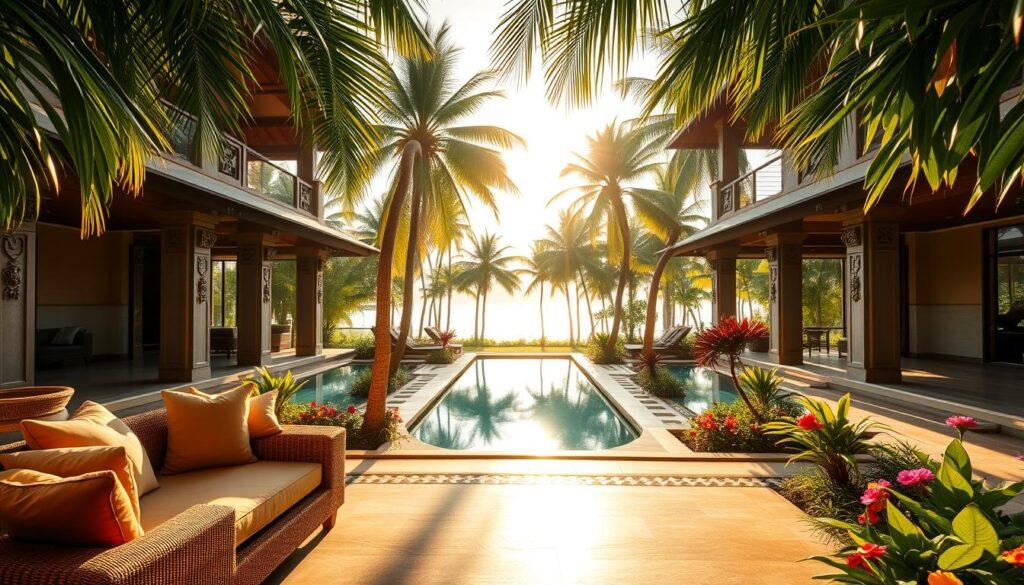
Open Floor Plans: The Original Social Distancing
Forget walls. In Bali, rooms flow like a prosecco fountain at a sunset wedding. These open-plan layouts are more than pretty. They help control the climate.
They use cross-ventilation as a natural AC. Every glance becomes a framed jungle postcard. Modern architects, take note: Bali’s design philosophy is centuries old.
As our guide to building a dream villa in Bali shows, these layouts are perfect for monsoon seasons.
Thatched Roofs: Nature’s Original Smart Home
Thatch isn’t just for tiki bars anymore. These organic canopies:
- Breathe better than your yoga instructor
- Insulate like a polar bear’s pajamas
- Biodegrade guilt-free
The real magic? They age like George Clooney – developing character without losing function. Compare that to modern materials in our sustainability showdown:
| Material | Lifespan | Carbon Footprint | Aesthetic Appeal |
|---|---|---|---|
| Traditional Alang-Alang | 15 years | 0.2 tons | ✓✓✓✓ |
| Modern Terracotta | 30 years | 1.8 tons | ✓✓✓ |
| Concrete Tiles | 50 years | 4.5 tons | ✓ |
Outdoor Bathrooms: Where Privacy Takes a Holiday
Showering under frangipani blossoms sounds romantic until you meet Bali’s mosquito air force. Yet these alfresco wet rooms persist – and for good reason:
- Steam becomes natural aromatherapy (jungle petrichor > eucalyptus oil)
- Natural light eliminates creepy hotel bathroom vibes
- Zero curtain mildew – just occasional gecko spectators
The secret? Strategic stonework and drainage that would make Roman engineers nod in approval. It’s sustainable villa design that turns daily routines into National Geographic moments – insects optional.
The Interior Aesthetic
Balinese interiors are like a jazz band – each piece plays its part in perfect harmony. Forget the usual showrooms. Here, teak and batik come together in a beautiful dance. It’s a world where your living room can have more soul and less instructions.
Furnishings, Textiles, Decor: Where Handmade Meets High Drama
True Balinese decor asks: “Would this piece survive a monsoon and look great on Instagram?” Imagine:
- Carved daybeds that become family treasures
- Batik cushions made with ancient recipes
- Singaraja baskets for your laundry
The table below shows the difference between real Bali decor and mass-produced items:
| Element | Artisanal (The Real Deal) | Mass-Produced (Ikea with Better PR) |
|---|---|---|
| Wood Carvings | 30-hour hand-chiseled mythology | Laser-cut plywood “tribal motifs” |
| Textiles | Natural indigo dyes that age like wine | Polyester pretending to be linen |
| Lighting | Bamboo lanterns casting jungle shadows | LED “ethnic-inspired” strip lights |
When Your Walls Date the Garden
Balinese design’s secret is making indoor and outdoor spaces flirt. The key moves are:
- Boundary Blurring 101: Use sliding teak doors thinner than your smartphone
- Material Continuity: Extend stone floors from living room to lotus pond
- Light Choreography: Position Bali villa design trends-approved sconces to make your shower area glow like a Javanese sunrise
Pro tip: Rattan is taking over. Pair those 70s chairs with concrete walls for a “jungle CEO” look. And don’t forget: your outdoor shower needs better lighting than a Kardashian’s selfie ring. Priorities.
Tropical Landscaping
Most “tropical” yards look like a Pinterest board exploded. Balinese landscaping is more than just adding palm trees and flamingo floats. It’s about creating a space where water and plants work together in harmony.
Forget about lawns that need constant care. In Bali, chaos and calm mix together beautifully, like a perfect mojito.
Pools, Ponds, and Gardens
Reflection pools in Bali are more than just water features. They’re like mood rings for your property. A well-designed pond should calm your mind faster than morning mist.
Pro tip: If your water feature sounds like a broken faucet, it’s not good. The goal is Silence that could make a monk jealous.
Modern villa landscaping often misses the mark. Natural pools with living filtration systems are key. Bonus points if dragonflies use it as a dating app hotspot. Gardens should be like nature’s gallery opening – curated but slightly wild.
Native Plants & Water Features
Your plant selection should be a love letter to Bali:
- Heliconias that look like Dr. Seuss illustrations
- Elephant ear plants doubling as natural umbrellas
- Bamboo groves that creak like a jazz band’s rhythm section
Water features should help you forget Zoom meetings. A tiered stone fountain is more than decoration. It’s white noise for the soul. Remember, manicured lawns are to Bali what socks with sandals are to fashion.
Go for mossy stepping stones and ferns that laugh at your attempts to control them.
Pro tip: Add a bale (traditional gazebo) overlooking your water garden. It’s cheaper than therapy and pairs beautifully with iced lemongrass tea.
Bringing Balinese Style Home
Bringing Bali’s spirit to suburban America is more than just hanging a sarong. It’s about cultural alchemy. This means turning sacred design principles into something that works in both Midwest winters and under HOA rules. Let’s move past the bamboo-print throw pillows and explore what truly makes this style endure.
Practical Tips for Adaptation
Want to bring authentic Balinese vibes without upsetting your neighborhood? Start with natural materials that whisper “tropical sanctuary” instead of shouting “tiki bar”. Here are some tips:
- Alang-alang roofing 2.0: Use synthetic thatch panels (fire-resistant, HOA-approved) instead of traditional grass
- Stone cold diplomacy: Local sandstone mimics Bali’s volcanic rock at half the shipping cost
- Indoor-outdoor chess: Install retractable glass walls instead of permanent open-air structures
Modern eco-technologies help you cheat the system. Solar-powered water features mimic jungle streams without breaking any rules. Reclaimed teak flooring? That’s sustainability even your Tesla-driving neighbor will love.
Combining With Other Trends
Fusion villa design is like a good cocktail – it’s all about balance. We looked at 127 “Balinese fusion” Pinterest fails to create this guide:
| Style Mashup | Win Factor | Fail Risk |
|---|---|---|
| Mediterranean-Balinese | Shared love of courtyards | Terracotta vs. teak color wars |
| Scandi-Balinese | Minimalist wood integration | Hyggelig vs. humidity clash |
| Industrial-Balinese | Exposed beams synergy | Concrete vs. carvings aesthetic whiplash |
The key is to let Balinese principles guide you. Add other styles like spices – a pinch of mid-century modern here, a dash of Japandi there. Your home should feel like Bali had a sophisticated exchange student phase, not like a United Nations of design.
Famous Balinese Villas and Modern Adaptations
What makes a truly Balinese villa stand out? It’s not just about looks. Bali’s Green Village is a prime example of indoor-outdoor living done right. It shows that true beauty lies in function, not just fancy decor.
Most “Bali-style” homes online don’t pass the slipper test. Can you really live in them without tripping over the decor? It’s a question many ask.
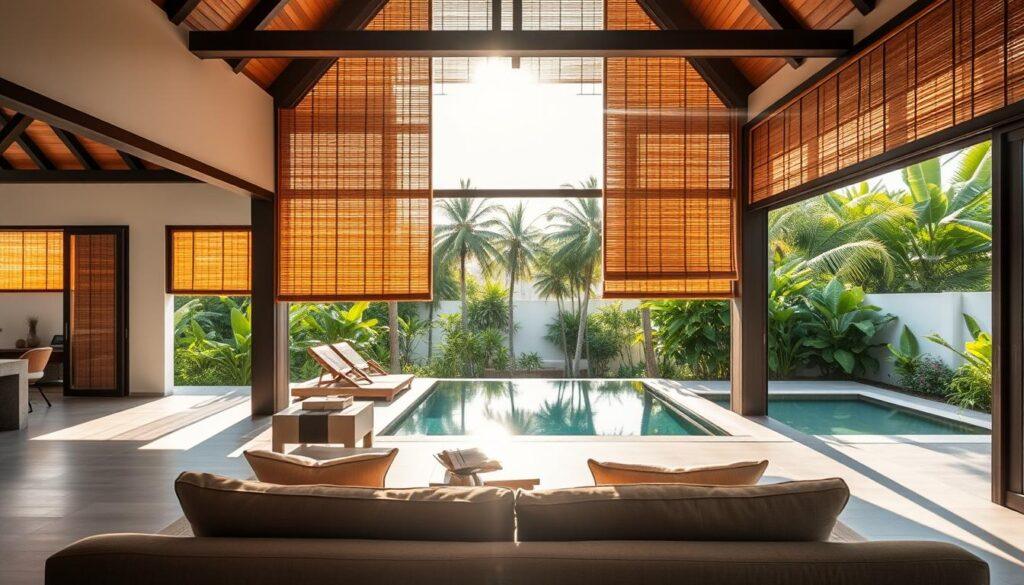
Real Examples
Villa Sungai in Costa Rica is a true Balinese gem. It combines Balinese design with surf culture. Its open-air showers offer a real wildlife experience, unlike staged photos.
On the other hand, Miami’s “Bali Haus” is a far cry from true Bali. It’s more about neon infinity pools than Balinese charm. Its Bali-ness score? A mere 2/10.
Modern villas succeed when they follow three key principles:
- Material memory: Using volcanic stone, even if marble is cheaper
- Flow over floorspace: Emphasizing breeze paths over square footage
- Sacred space hijacking: Never turning family shrines into wine cellars
The Alchemy Villa in Tulum is a perfect example. It blends Mayan stonework with Balinese roof angles. This shows that tradition can travel well, unlike trends.
Dubai’s “Nyang Nyang Palace” tries to capture Bali’s essence but fails. It serves poolside Bintang beers in gold-plated bottles. Some things just can’t be copied well.
Conclusion & Style Tips
True Balinese architecture is about what lasts, not just what’s trendy. It’s about building homes that tell stories to future generations. The best villas in Bali, like Four Seasons Resort Bali at Sayan or COMO Uma Canggu, show that lasting beauty is more important than fleeting trends.
Don’t focus on fleeting decor like bamboo chandeliers. Instead, pay attention to the craftsmanship of your home. Use materials like teak that only get better with age, just like a classic guitar. Let your outdoor shower develop moss patterns that are as unique as a face filter.
Modern tropical living is about staying true to local culture, not just looking good on Instagram. Mix open-air designs with smart ventilation to keep your home cool and comfortable. Choose plants that attract geckos and add to the natural beauty of your space. Design your home so that every detail, from the concrete to the wood, tells a story.
The true test of a great villa is how it stands the test of time. Can it charm guests even when there’s no Wi-Fi? Does it have a lasting appeal that goes beyond your Pinterest board? Building a home that lasts, like the 13th-century Tirta Gangga water palaces, is the key to creating spaces that are truly timeless.