

For decades, modern architecture has had a complicated relationship with nature.
We put glass boxes in deserts and build concrete bunkers to block the wind. Then, we’re shocked by sky-high AC bills every month.
This isn’t just about “going green.” It’s about making peace with nature.
A new approach is emerging. It’s about strategic symbiosis. Imagine your home talking fluently with the sun, wind, and rain.
The key isn’t just technology. It’s biophilia. Our deep desire to connect with nature, even from home.
True sustainable villa design combines smart analysis with a love for nature’s sounds.
Strategic Environmental Design Principles
Before you buy a solar panel, think about your villa’s direction. It’s like playing chess against the weather. The right direction can make your home work better with the sun and wind.
Let’s talk about the sun. Your home should face within 15 degrees of true south. This helps get more sun in winter and less in summer. The right design can block the sun in summer and let it in in winter.
Now, let’s talk about air flow. Good design lets your home breathe. Openings on opposite sides catch the breeze, cooling your home. It’s like a natural air conditioner.
True climate architecture goes beyond just design. It also considers how we feel. It uses design to make us feel safe and open at the same time.
Prospect is like a big view. It’s the open area that lets you see everything. It makes you feel in control and excited.
Refuge is the cozy spot. It’s the quiet corner or shaded patio. It’s where you can relax and feel safe.
The best homes mix both. A good home has a big view and a cozy spot. This makes it feel exciting and safe at the same time.
Designing a home is like playing chess. We use the sun and wind for physics. Then, we add design to make it feel right. It’s not just about saving energy. It’s about making a home that feels good.
Technology & Sustainable Materials
Let’s raid the toolbox. Building an eco-friendly home isn’t just about solar panels. It’s a mix of silicon and sandstone.
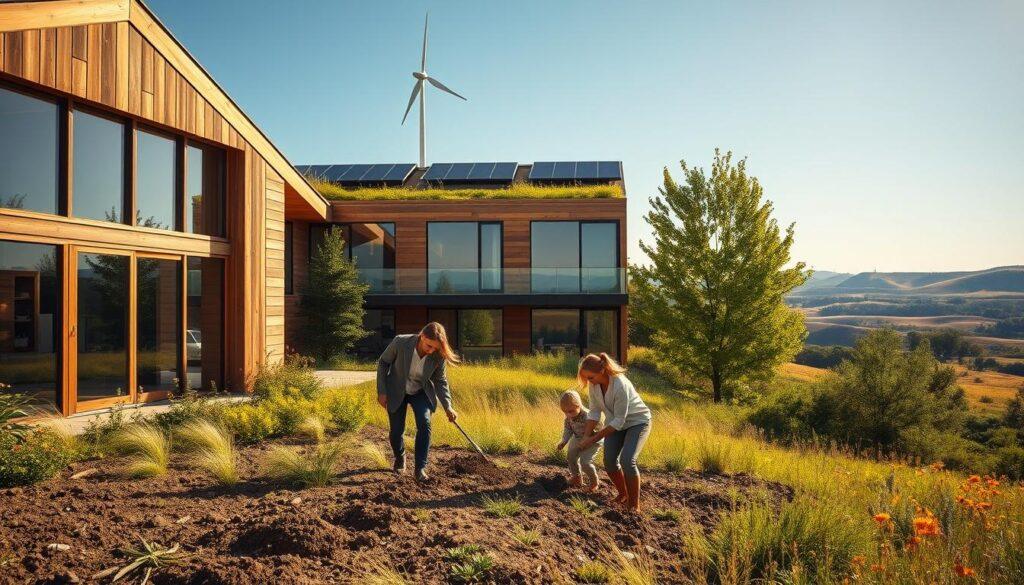
Imagine windows that block out too much sun. Smart systems that know when you’re awake. But the real magic is in the materials.
Using local timber or stone is more than just green. It’s a way to connect with nature. Materials like rammed earth or insulated concrete forms are old but effective.
Insulation is key for comfort and saving energy. It’s a blend of new tech and old wisdom. Natural lime plaster works well with smart homes. For more on this, check out these sustainable homes.
This mix of new energy systems and natural materials is smart. It’s shown in sustainable villa design. The future of living is wise and green.
Cost-Effective Climate Solutions
Let’s talk about the elephant in the room: cost. Many think bioclimatic design is only for the rich. But I’m here to show that’s not true.
Wasting money on heating and cooling for years is the real luxury. It’s like paying for a service you never wanted.
This isn’t about spending more. It’s about spending wisely. We should look at the cost of features like shading or thermal mass. They work for free, forever. That’s a great return on investment.
Studies on biophilic and bioclimatic design show real benefits. For homes, it means higher values and quicker sales. For businesses, it means happier employees and lower costs.
So, building without thought is the expensive choice. A smart, climate-aware home is a smart investment. It’s a way to ensure comfort for years to come.
Measuring Environmental Impact
Good vibes are great. Data is divine. But how do you know your sustainable villa design really works?
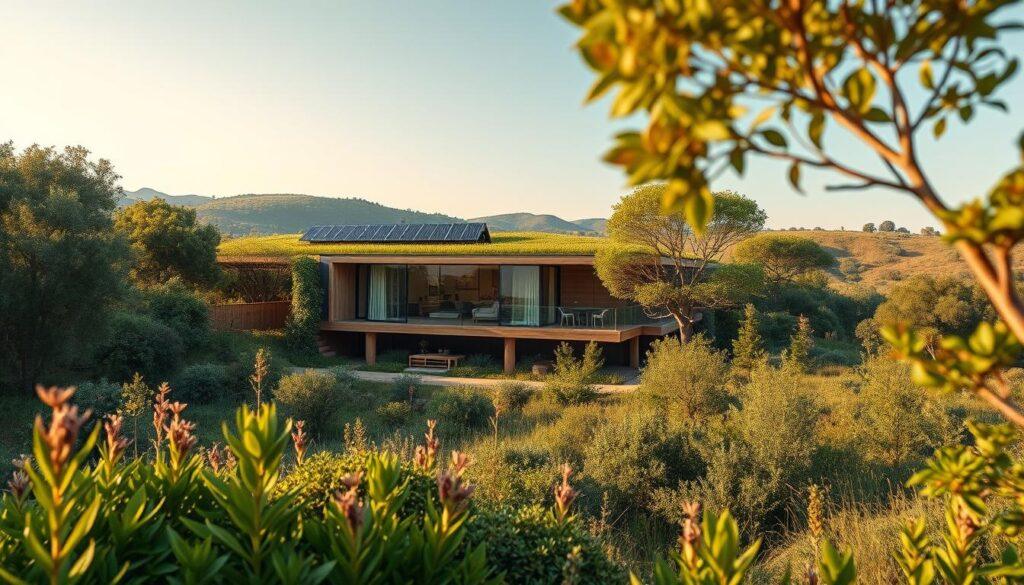
Success isn’t just saving energy. It’s about better air, comfort, and natural light. Studies show green views and sunlight can reduce stress and help our sleep.
We use both gadgets and people’s feelings to measure success. Sensors track the physical stuff. Surveys capture how people feel.
This way, we can make our homes better. It’s like playing a fine instrument, with real results to show for it.
Regional Climate Adaptations
What’s the secret to a truly resilient home? It’s not a one-size-fits-all solution. Real climate architecture means designs that work in Seattle won’t cut it in Phoenix.
Hot, arid zones call for thick walls and shaded courtyards to cool down naturally. In humid climates, we focus on cross-ventilation and breathable materials to handle moisture.
Biophilic design also gets a local twist. We choose drought-tolerant plants for green spaces in dry areas. This approach isn’t just about looks; it’s about building in resilience. It’s all about understanding the local environment, as highlighted by contextual knowledge in building.
The key takeaway is simple yet powerful. Your home should feel like it was born from the land, not dropped from a design magazine. It should reflect the site’s unique climate and cultural story. That’s the essence of climate architecture.