

Einstein was onto something. He said everything is relative—time, space, even your appreciation for crown molding. I had my own relativity moment as a kid in Papillion, Nebraska. Watching the Harvey Shank family home move down the road on wheels was a desperate, glorious attempt to cheat time.
In today’s throwaway culture, that act seems almost radical. Yet, here we are, in a quiet renaissance. We’re realizing these old structures are fixed points in our chaotic timeline.
Choosing a place like Austin’s Caswell House for a wedding isn’t just nostalgia. It’s a statement. We’re not just saving old bricks. We’re preserving narratives and craftsmanship, a tangible sense of “before.”
Choosing to restore is a vote against architectural amnesia. It’s saying the past has value, even if—specialy if—it requires a modern toolkit to sustain it. This is the core of any thoughtful historic building restoration.
Rise of Heritage Villa Appreciation
The way we see old villas has changed. They’re now seen as valuable assets, not just old buildings. This change is not just about looks; it’s about their real worth. Investors are now looking at them with a careful eye.
Let’s look at four key reasons why these villas are now more valuable. These reasons go beyond just how big a house is or what it’s made of.
Culture: The Physical Archive
A villa is more than a house; it’s a piece of history. Every part of it tells a story. It’s like a book that never ends.
These old buildings have unique features that make them special. Things like mosaics and stained glass add to their value. In a world filled with digital things, people want something real.
Education: The Living Textbook
Learning from old buildings is different from books. They teach us about engineering and craftsmanship. It’s like getting a hands-on lesson from history itself.
These buildings are like textbooks that teach us about the past. Losing one is like losing a valuable resource. They help us learn skills we’ve forgotten.
There’s a smart way to make money from old buildings. Restoring them makes them popular places to visit. This boosts local businesses and creates jobs.
It’s not just about the house itself. It’s about the whole community. This makes old buildings more than just homes; they’re economic engines.
Environment: The Ultimate Green Act
Restoring old buildings is a green choice. It’s like recycling on a big scale. It saves resources and reduces waste.
Choosing to restore a building is good for the planet. It helps keep cities from growing too big. It’s a smart choice for our environment.
| Pillar | Core Value | Tangible Impact |
|---|---|---|
| Culture | Authentic connection to history and unique narrative. | Increased property desirability and cultural capital. |
| Education | Living resource for craftsmanship and historical techniques. | Preservation of skills and community historical literacy. |
| Economy | Destination creation and premium experience. | Boosts tourism, creates jobs, elevates local commerce. |
| Environment | Inherent sustainability through reuse and waste reduction. | Limits sprawl, reduces carbon footprint from new materials. |
So, when you see a heritage architecture project, think of it as more than a renovation. It’s a smart investment. The value is real, based on solid reasons.
Strategic Restoration Planning Process
You wouldn’t perform heart surgery without a diagram; why would you touch a historic villa without a detailed plan? This is where old-world charm meets the reality of structural engineering. Before you start, you need a solid plan. It’s like a battle plan against decay and budget overruns.
The first rule? Know your terms. Historic preservation is not just one thing. It’s a range of goals, and your project depends on your choice. Are you aiming for Preservation? This means keeping the building as it is, with all its charm.
Or maybe you want Restoration? This is like taking a time machine back to a specific moment in history. It requires a lot of research and detail.
Rehabilitation is a good middle ground. It makes the space work for today while keeping its history. The Cork Factory Hotel in Lancaster is a great example of this.
Reconstruction is about rebuilding missing parts, like a lost veranda. It’s based on old photos or documents.
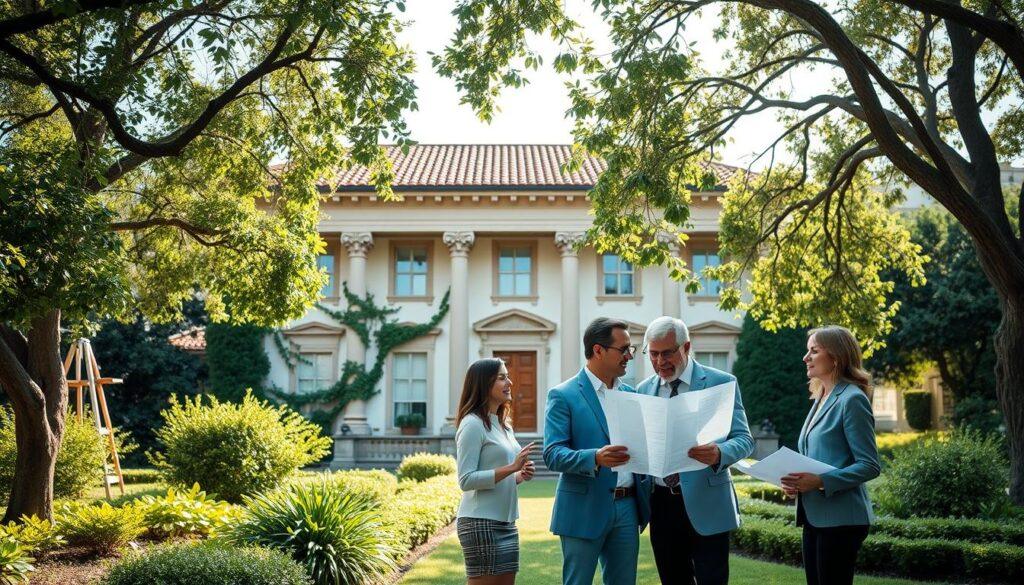
Your plan must be detailed and realistic, not just a list of dreams. It starts with historical research. What was here in 1895? What materials were used?
Then comes the structural analysis. This often finds more problems than you thought. It’s like a real diagnosis.
Next, you face the challenge of finding the right materials. Where can you find old horsehair plaster or historic brick today? The team behind the Fairfield Inn Madison fixed over a million bricks, showing the importance of material planning.
A phased budget is essential. It’s like a financial shield. It assumes every wall will have surprises. This budget changes as the project goes on.
Without a plan, you’re not restoring. You’re just causing damage. A good restoration plan is what makes a project succeed or fail.
Balancing History with Modern Needs
The art of renovation design is about finding harmony between old and new. Our homes today are far from the formal spaces of the past. We now crave open-plan areas for work and relaxation.
The parlor can become a modern home office. And that butler’s pantry? It’s perfect for a coffee bar. It’s all about updating while keeping the charm.
It’s not about erasing the past. It’s about giving old spaces new life. Keep the Venetian blinds and the story-telling wallpaper. But update the plumbing and insulation for today’s needs.
Projects like La Posada de Santa Fe show how it’s done. They added a spa and conference space without losing the mansion’s charm. The Inn at Leola Village also blends old and new beautifully.
Keep the features that make a house special. Think soaring ceilings and grand fireplaces. Update the rest to make the home feel modern yet timeless.
For more ideas, check out classic villa interiors. They show how to mix old elegance with modern comfort.
The best renovation design finds a balance. It lets you enjoy today’s comforts while appreciating yesterday’s craftsmanship. That’s true elegance.
Technology in Preservation & Updates
The true spirit of villa restoration isn’t about freezing time; it’s about wiring history for the future. Let’s shatter a persistent myth. Historic does not mean technologically ignorant. The original builders were the innovators of their day, solving problems with the best tools they had.
Consider the Belle Meade plantation in the 19th century. They didn’t just have horses; they had a system. Manure was processed to produce methane, which then fueled the estate’s gas lamps. That’s a circular economy avant la lettre. They were tech pioneers.
Today, our tools are just flashier. The modern restoration toolkit is a detective’s dream. We use non-invasive tech to understand what we’re saving.
- 3D Laser Scanners: They map every crack and curve of a crumbling facade with millimeter precision, creating a “digital twin.”
- Thermal Imaging Cameras: These find hidden moisture, air leaks, and failing insulation behind priceless plaster walls without touching them.
- Digital Cataloging Apps: Every original door hinge, floorboard, and piece of cornicing gets logged, photographed, and tracked in real-time.
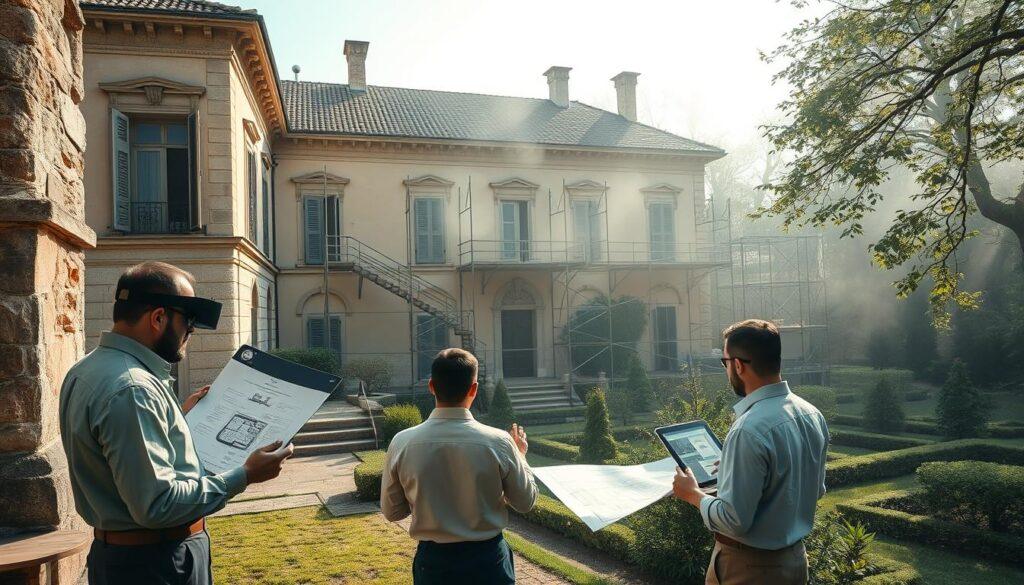
This is where the truly clever work happens. The magic is in the invisible update. It’s the seismic retrofitting hidden within walls, protecting the structure from earthquakes it was never designed to withstand.
It’s the spray-foam insulation tucked behind original lath and plaster, making the villa energy-efficient without altering a single visible surface. You can have a voice-activated smart-home system so discreet it would make a Gilded Age butler jealous.
The goal is a villa that feels entirely historic but performs like a modern home. The technology isn’t there to shout its presence. Its purpose is to serve, protect, and ensure the history survives another century of dinner parties and, yes, even doom-scrolling. For a deeper dive into the science behind material preservation, recent scientific analysis of material decay offers fascinating insights.
This philosophy extends to safety and comfort. Modern villa restoration seamlessly integrates discreet, integrated security systems that protect without compromising aesthetic integrity.
| Technology Type | Historical Example (19th C.) | Modern Equivalent | Core Purpose |
|---|---|---|---|
| Energy Systems | Methane gas lamps from manure (Belle Meade) | Geothermal heat pumps, solar roof tiles | Sustainable operation |
| Structural Analysis | Visual inspection, manual probing | 3D laser scanning, ground-penetrating radar | Non-invasive diagnosis |
| Climate Control | Thick walls, transom windows, shade trees | Smart HVAC zoning, humidity sensors in walls | Preservation of materials |
| Documentation | Hand-drawn plans, ledgers | Cloud-based BIM models, digital archives | Future-proofing knowledge |
Scaling Restoration Projects Successfully
So, you’ve got the hang of fixing up one villa. Now, the big dream is to grow that idea. Can the same methods that save one building work for a whole area?
Check out the adaptive reuse hotels on the Historic Hotels of America list. They’re the ultimate lesson. El Convento Hotel was once a convent. The Cork Factory Hotel was a factory. These projects turned old giants into lively new spots.
This is where renovation design and urban planning meet. The Cork Factory didn’t just save a building. It became the heart of a mixed-use community. The Ledges Hotel, from a glass factory, became a top spot. This approach turns heritage architecture into a key for economic growth.
The best renovation design finds value in the overlooked. It blends history with today’s needs on a big scale. A saved cotton mill can become a Fairfield Inn, sparking a neighborhood’s rebirth.
Scaling up means your project becomes a hub. It shows that saving heritage architecture is smart, not just sentimental. It’s a way to build a future that honors its past.