

Imagine 15th-century Italian nobles sipping wine and debating philosophy in gardens that looked like math puzzles. Their classical villa architecture was more than just marble columns. It was a way to show off their power and culture.
These estates turned otium, the Roman idea of leisure, into a three-dimensional game of power. Maybe even Machiavelli wrote his famous book under a loggia with frescoes of naked gods.
Today, tech billionaires build underground bunkers with panic rooms and helipads. But do their homes have the same cultural impact as a Medici summer retreat? The renaissance villa architecture mixed geometry with poetry, creating spaces that felt like art.
Modern luxury homes take inspiration from these designs. But can we truly recreate the essence of a Florentine masterpiece today? Our “grottos” have Wi-Fi and Sonos systems, but we’ve lost the boldness to make our ceilings tell stories. The villas of old were not just homes but statements of what humanity could achieve.
The Birth of the Renaissance Villa
Imagine Jeff Bezos rebuilding ancient Rome during a stock market crash. That’s what the Medici did after the 1450s banking crisis. They used frescoes and fresh air instead of rocket ships. They created the first work-from-villa lifestyle, mixing business, philosophy, and fresh air.
Italian Renaissance Context
The 15th century was more than just David statues and plague masks. Architects followed Vitruvius’ principles, and bankers like Cosimo de’ Medici funded them. Pliny the Younger’s letters, like Architectural Digest, were key for building the idea and invention of the.
Medici villas were more than houses. They were power moves in stucco. Here’s a comparison:
- Medieval palazzos: Dimly lit tax shelters with all the charm of a dragon’s hoard
- Medici Careggi: Countryside campus featuring private chapels, rotating philosophers, and Europe’s first proper home office
Social and Cultural Factors
Bankrolling Brunelleschi’s dome was just the start. The real innovation was turning villas into intellectual speakeasies. You’d find:
- Humanist scholars debating Plato over Chianti
- Artists painting pagan myths on chapel ceilings
- Bankers discreetly moving florins between vineyard tours
This wasn’t just la dolce vita – it was a real estate revolution. The Villas of the Medici became 3D-printed manifestos of Renaissance values. They combined functional spaces with classical temples. It was like having your torta and eating it too.
Major Influences and Architects
While TikTok influencers seek fame, Renaissance architects earned commissions that lasted centuries. Here, geometry meets glory as stone and proportion became symbols of power. Let’s explore the original architects who transformed country estates into lasting symbols of wealth.
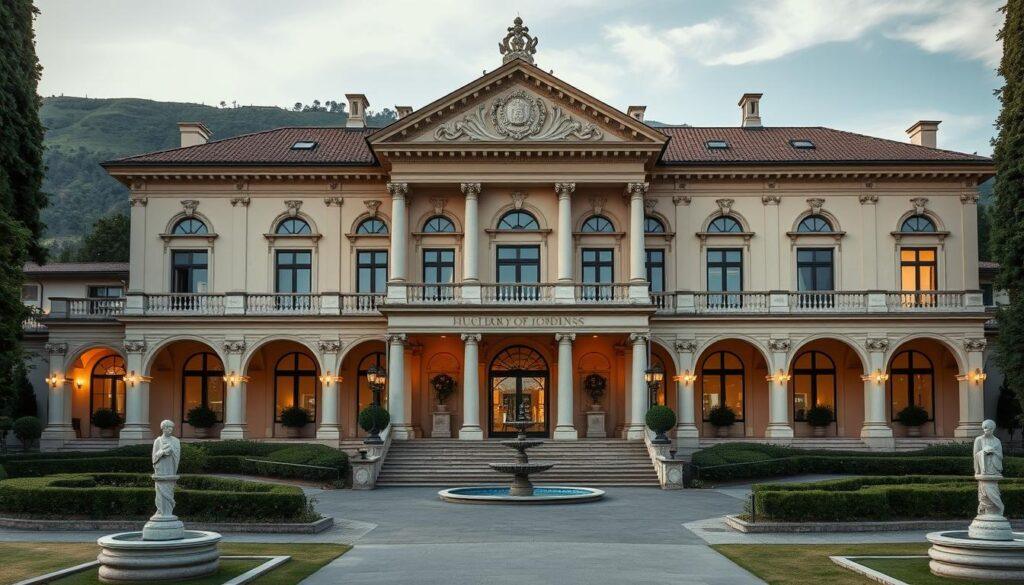
Andrea Palladio: The Beyoncé of Blueprints
Palladio would have topped the Renaissance architecture charts with six platinum albums. His 1570 book, I Quattro Libri dell’Architettura, was a game-changer. Villa Rotonda, with its four identical facades, set a new standard. Today, modern homes echo Palladio’s designs.
| Palladio Principle | 1570 Application | 2024 Adaptation |
|---|---|---|
| Perfect Symmetry | Villa Rotonda’s squared circle | Nashville McMansion entryways |
| Portico Power | Grand columns for arriving guests | Suburban “Tuscan” driveway covers |
| Proportion Rules | Mathematical room ratios | Open-concept sight lines |
| Landscape Fusion | Hillside terracing | Infinity pool placements |
Medici Villas: Original Influencer Mansions
The Medici family turned 15th-century Tuscany into their personal Instagram grid. Their Poggio a Caiano villa was the ultimate party venue. The central salon’s frescoes featured mythological scenes with Medici faces Photoshopped in.
These estates were revolutionary for three reasons:
- Multipurpose design: Working farms downstairs, philosophical salons upstairs
- Branded architecture: Family crests carved like Renaissance hashtags
- Tech integration: Cutting-edge hydraulics for garden “water theaters”
Today, luxury homes from Shanghai to Malibu draw inspiration from these designs. The question remains: Will Zillow soon list homes as having “Palladian vibes”?
Architectural Characteristics
If Renaissance architects had TikTok accounts, their “design hacks” would go viral. They built villas with math so precise, modern homes look like they were made of LEGO. Let’s explore how these structures were designed, where every detail whispers geometry.
Loggias, Columns, Courtyards
The Renaissance villa’s key feature? Turning shade into art. Loggias were more than walkways; they were 3D Instagram filters showing off views. Architects used columns in different styles, creating a rhythm like Bach’s music.
Courtyards were like outdoor living rooms where philosophers debated. Fountains provided a soothing background noise.
Floor Plans, Symmetry, Gardens
Palladio’s room proportions were more than math tricks; they created a unique spatial feel. Try comparing a square room to Villa Rotonda. You’ll see the difference.
The gardens were like Bob Ross’s paintings. Terraced hills at Villa d’Este featured 500+ fountains, creating a hydraulic symphony. Lemon groves were used for both fresh limoncello and showing off wealth.
| Renaissance Feature | Design Principle | Modern Adaptation |
|---|---|---|
| Loggias | Transitional spaces blending indoor/outdoor | California-style patio covers with smart glass |
| Courtyard symmetry | Central axis alignment | Open-plan homes with sightlines to pools |
| Terraced gardens | Controlled water displays | Infinity pools with LED-lit waterfalls |
Those “romantic” gardens were actually a form of warfare. The Medici used their villas’ layouts to visually conquer the countryside. Today, Renaissance design revivals aim for that balance, with modern touches like Wi-Fi-enabled irrigation.
Interiors and Lifestyle
Forget what you think you know about open-concept living. Renaissance architects were mixing indoor and outdoor spaces long before HGTV. They combined grandeur with practicality in their designs.
Let’s explore 16th-century Italian glamour. Frescoes were more than just art; they were a way to show off.
When Walls Were Canvases (and Flexes)
Paolo Veronese didn’t just paint ceilings; he made them look like the sky. A single fresco could show off a family’s wealth and status quickly. Today, you can get a similar look without the artist in your guest room.
Try these modern tricks:
- Mural wallpapers that look like real frescoes (no scaffolding needed)
- Laser-cut plaster medallions instead of hand-carved ones
- Terrazzo countertops as a modern mosaic option
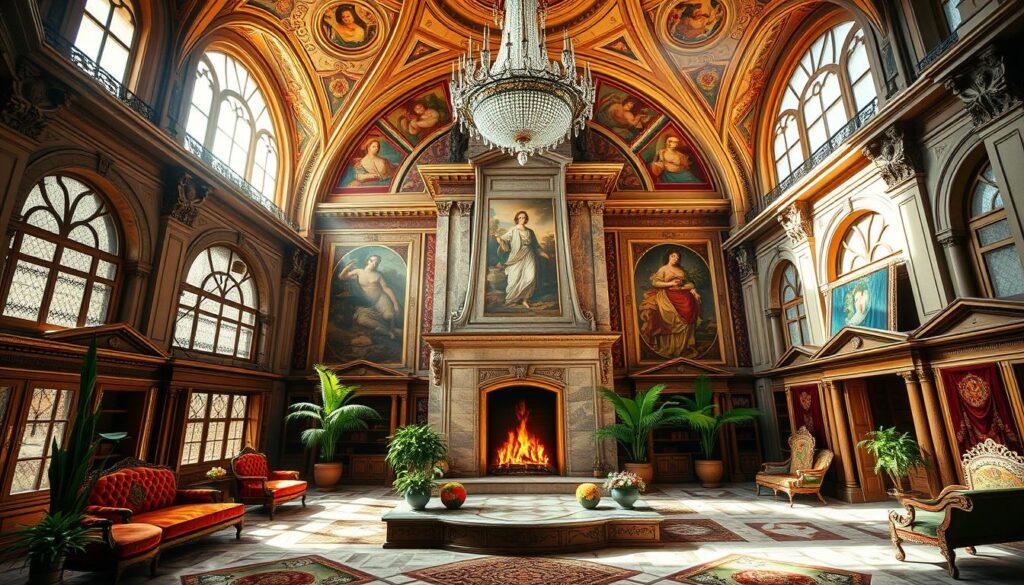
Place your “faux fresco” above eye level. It hides many flaws. For more Renaissance interior design tips, steal like an artist (with better plumbing).
Architecture’s Original Flow State
That 1560s villa with retractable citrus grove windows? It’s way ahead of today’s bi-fold doors. Renaissance homes treated nature as living decor:
- Loggias framing vineyards like organic tapestries
- Courtyard fountains doubling as ancient AC units
- Stone thresholds worn smooth by centuries of passeggiata
Today, install French doors between your kitchen and herb garden. If your rosemary bush lasts longer than your phone, you win.
Notable Existing Renaissance Villas
If Renaissance villas were rockstars, they’d ask for marble columns and Egyptian obelisks. These buildings mix mathematical precision with drama. They’re like reality TV, but in architecture. Let’s look at two famous ones that share secrets through their design.
Villa Rotonda: Palladio’s Puzzle Box
Andrea Palladio built this 16th-century wonder near Vicenza. It’s not just about looks; it’s a structural magic trick. The dome is a marvel that engineers today can’t fully explain.
Recent scans showed hidden brick patterns that help the dome stay up. The villa’s four sides face the compass points, creating stunning light shows. But here’s a secret: the loggias are slightly tilted outward to avoid tricks of the eye.
Villa Medici: Where Popes Stole the Show
The Medici Villa in Rome is like a heist movie. Cardinal Ferdinando de’ Medici took an ancient Egyptian obelisk in 1576. This move inspired Louis XIV and made the Vatican suspicious.
In 2022, restorers found hidden grotesque frescoes under old plaster. These frescoes show the Renaissance’s lighter side, with scenes like mermaids playing chess with satyrs.
- Structural shocker: Underground tunnels connect to multiple Roman aqueducts
- Design flex: First European garden with automated water features
- Modern cameo: Staircase copied in NYC’s Met Museum European Wing
These villas are more than just buildings. They’re a bridge between the past and today. Next time you see a modern house with fake columns, think of the real ones with their own stories.
Renaissance Revivals and Modern Luxury Villas
Imagine looking at Zillow and seeing a listing that says: “16th-century Italian grandeur meets 21st-century tech bro extravagance.” Welcome to the world of fusion villa design. Here, Palladio’s style meets Silicon Valley’s tech. Today’s architects blend Renaissance ideals with modern innovation and modernist villa simplicity.
Case Study 1: Malibu’s Earthquake-Proof Time Machine
This California home sits on a Pacific cliff. It’s a mix of Michelangelo’s style and Elon Musk’s tech. The outside uses real Pietra Serena sandstone, like in Florence’s Medici Chapels. But it also has Tokyo’s seismic dampeners.
Inside, solar power heats the floors through terrazzo. The courtyard is like a mix of Boboli Gardens and a sustainable villa design showcase. It has native plants and a rainwater pool, all hidden in a Renaissance design.
Case Study 2: Dubai’s Algorithmic Arcadia
In the Arabian Desert, a 40-room palace shows AI’s love for symmetry. A crypto billionaire with a humanities PhD wanted fusion villa design that beats the desert. So, a courtyard uses AI to control shade and mist.
The surprise? The columns hide vertical hydroponic gardens. Instead of wine cellars, this villa grows saffron. Palladio would either be amazed or start coding.
These projects show a funny truth. Our modernist villa dreams always come back to Renaissance values. We value both beauty and function. Harmony with nature is key, just like Alberti said in 1450. The more we innovate, the more we connect with those old debates over design.
Homeowner Inspiration: Bringing Renaissance Elegance Home
Why settle for boring McMansions when you can have Renaissance elegance? You don’t need marble floors or Botticelli’s phone to add villa interior decor ideas to your home. Turn your tract home into a Medici-worthy retreat without the dampness.
Decorating and Landscaping Tips
Pro tip: Renaissance design is about strategic grandeur, not copying museums. Here’s how to achieve it:
- Fake it till you make it: Use trompe l’oeil wallpaper on a blank wall to mimic arched loggias. Instant depth, no masonry costs.
- Tree columns: Trim pencil cypresses into obelisk shapes for your driveway. Nature’s version of Corinthian pillars, minus the crumbling.
- Pool house pediments: Top your cabana with a simplified entablature. Think of it as a baseball cap for your chlorine sanctuary.
| Renaissance Feature | Modern Adaptation | Budget Hack |
|---|---|---|
| Formal gardens | Boxwood parterres in raised planters | Use PVC trim for crisp edges |
| Frescoed ceilings | Removable mural decals | Focus on one accent wall |
| Stone grottos | Terrazzo-patterned concrete accents | Seal with mold-resistant epoxy |
Landscaping secret? Renaissance gardens were outdoor architecture. Recreate the vibe with geometric herb beds and crushed limestone paths. These villa landscaping ideas will even get HOA approval.
And about those grottos: Swap damp moss for iridescent tiles and LED lighting. You’ll keep the mystery without the mildew. The Medici didn’t have Clorox, but you do.
Conclusion
Renaissance villa architecture asks a question our open-concept kitchens can’t answer: What if homes existed to elevate thought, not just property values? The Medici didn’t commission Palladio for resale. They built stages for humanist debates beneath frescoed ceilings. Today’s luxury market sells smart homes; these villas sold enlightenment.
We’ve traded loggias for LinkedIn backgrounds, courtyards for Zoom grids. But the DNA of renaissance villa architecture persists in design fundamentals. Symmetry calms our chaos, gardens force us outdoors, and spaces demand face-to-face conversation. Your marble countertop’s veining nods to Villa Rotonda’s floors, whether you recognize it or not.
The real challenge isn’t replicating trompe l’oeil walls (though that’s trending on Pinterest). It’s designing spaces that spark discourse beyond Twitter threads. Next time you rearrange furniture, ask: Would Boccaccio hold a Decameron-style storytelling session here? Could Brunelleschi critique your sightlines?
Modern luxury villas borrowing renaissance principles prove the style’s adaptability. But true renaissance villa architecture was never about historical cosplay. It weaponized beauty to shape minds. Your home office needs that ambition more than another muted beige accent wall. Start by replacing one virtual background with actual bookshelves – progress, not perfection.