
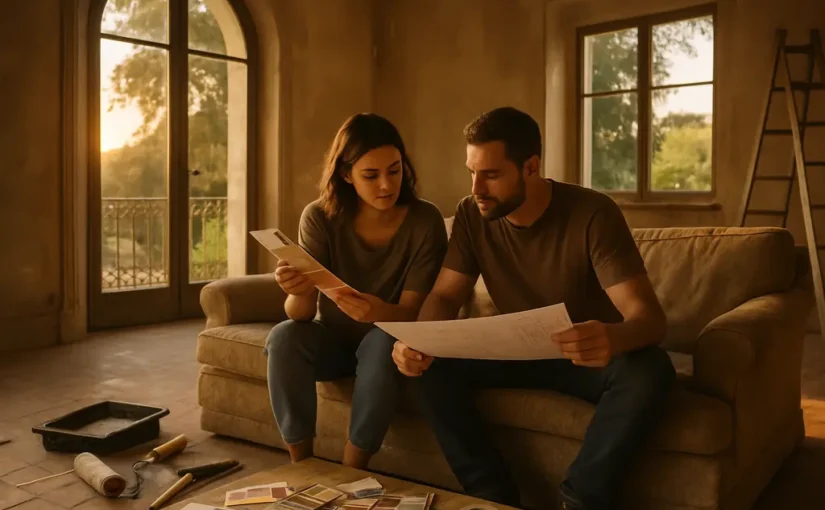
Renovation Over Moving has become a practical choice for many villa owners who like their address, their neighbors, and the bones of their home, but need better function. A Redfin survey conducted in November 2025 with 4,000 U.S. residents found that 43% of Americans renovated their home in the past year, and 33% planned renovations in the next year; among recent renovators, 65% said they improved their current home instead of moving Redfin survey.
That pattern fits what I see in villa planning: owners are not always chasing a larger house. They are often trying to make an existing one safer, calmer, and more useful. A shaded dining terrace, a better primary bath, a less slippery entry path, or storage that reduces daily clutter can change how a home works without requiring a new address.
Why Renovation Over Moving Is Gaining Ground
Housing Friction Makes Staying Sensible
The decision to stay is not purely sentimental. Buying another home can mean a new mortgage, moving costs, inspection uncertainty, and the risk of leaving a location that already works. Redfin also reported that 71% of people planning renovations in the next year described remodeling as the alternative to buying a new place. That does not mean remodeling is always cheaper or easier. It means the comparison has shifted: owners are judging renovation against a move that may carry its own cost, disruption, and compromise.
Houzz data points in the same direction. In 2024-2025, Houzz reported that 54% of homeowners undertook renovation or decorating projects each year, while only about 4% chose new home construction in that period Houzz renovation trends. For villa homeowners, that is a useful caution. Improvement activity is common, but building new is far less common. A remodel should therefore be planned as a serious construction decision, not as a casual design refresh.
Younger Owners Are Changing The Pattern
Redfin reported that 77% of both Gen Z and millennial homeowners had made improvements in the past year rather than relocating. That matters because younger owners often approach a home in phases: first basic repairs, then comfort upgrades, then larger layout decisions. A villa does not have to be remade at once. In fact, phased work often reduces risk because each decision can be tested against actual use.
Set The Villa Scope Before You Spend
Renovation Over Moving Starts With Scope
Scope is where many projects either become disciplined or drift. Before discussing finishes, write down the problem in plain language. Is the terrace too hot at lunch? Is the guest suite underused because the access path is poor? Is the kitchen beautiful but badly lit? A clear problem statement keeps the project from growing into unrelated work.
For villa living, I separate scope into three bands. The first is maintenance: repairs, drainage checks, worn surfaces, and safety issues. The second is function: storage, lighting, shade, seating, privacy, and circulation. The third is finish: stone, tile, paint, cabinetry, and hardware. Finish choices are satisfying, but they should not outrun maintenance and function.
If you are comparing renovation with a possible move, a written scope also helps keep emotion in check. For more on this decision path, the site’s related piece on smarter home choices connects renovation decisions with safety limits and budget discipline.
Use A Small Test Before A Large Commitment
Villa projects often include outdoor rooms, pool-adjacent seating, garden paths, guest entries, and shaded dining areas. Before committing to permanent masonry or built-ins, test the layout with movable furniture, planters, and temporary shade. This is not a substitute for design work, but it can reveal whether a seating zone is too windy, too exposed, or too far from the kitchen.
Treat Renovation Over Moving as a sequence of decisions, not a single purchase. If the first phase solves the daily irritation, the next phase can be smaller. If it exposes a deeper defect, such as water intrusion or inadequate electrical capacity, stop and bring in the right professional before choosing finishes.
DIY Work, Tool Choices, And Professional Boundaries
Reasonable DIY For Villa Owners
Some work is well suited to careful homeowners: repainting a low-risk room, replacing loose cabinet hardware, assembling outdoor furniture, refreshing planters, organizing storage, or installing non-structural decor. These jobs still require eye protection, dust control, clear instructions, and patience. Rushing a small task can damage finishes or create trip hazards.
Tool buying should be conservative. Choose tools based on the actual project, manufacturer instructions, safety features, weight, and whether you can use them without strain. Renting can make sense for one-time tasks, especially if storage is limited. For homeowners comparing hand tools, outdoor gear, and basic project equipment, High Pro Tools is a related resource to review before buying more than you need.
Work That Calls For A Qualified Pro
Do not treat all remodeling work as DIY. Electrical panel work, gas lines, plumbing changes, structural walls, roof work, major waterproofing, balcony repairs, and elevated exterior work should be handled by licensed or qualified professionals as required in your area. The risk is not only personal injury. Incorrect work can create moisture damage, fire risk, code problems, or failed inspections.
For villas, exterior water control deserves special respect. A beautiful patio can become a liability if it slopes toward doors or traps water against the building. If a project touches drainage, waterproofing, retaining walls, pool systems, or exterior steps, get professional input early. It is usually cheaper to correct a drawing than to remove finished stone.
Outdoor Comfort Without Overbuilding

Shade, Seating, And Safe Movement
Outdoor upgrades are often the heart of villa life. The goal is comfort, not excess. Start with shade placement, seating distance, glare, and safe walking routes. A modest pergola, umbrellas, or a tree-based shade plan may solve more than an expensive full rebuild. Night use needs lighting that helps people see steps and edges without creating harsh glare.
Surfaces deserve careful selection. Smooth stone may look refined but can become slick near pools, irrigation spray, or shaded paths. Ask suppliers and installers about slip resistance and suitability for wet areas. If they cannot explain the product’s outdoor use limits, keep looking. Beauty should not outrank footing.
Planting Choices And Maintenance Reality
Planting can soften masonry, cool a dining edge, and create privacy, but maintenance should guide the design. A villa used on weekends needs different planting than a full-time residence. Select plants based on local climate, irrigation needs, debris near pools, root behavior, and access for upkeep. If irrigation, grading, or retaining work is involved, use a professional who understands local conditions.
A restrained outdoor plan can still feel generous. Repeating a few durable materials, keeping furniture clear of door swings, and leaving service access for maintenance often improves daily use more than adding another feature. This is where villa design becomes practical: the space should welcome people and remain manageable after the contractor leaves.
Budget Signals And Resale Caution
Do Not Assume Every Upgrade Pays Back
A renovation can improve daily life, but homeowners should be cautious about resale assumptions. The research shows many owners are improving rather than relocating, but it does not prove that every project returns its full cost at sale. A deeply personal wine wall, outdoor kitchen, or custom bath may delight one household and feel unnecessary to another buyer.
Prioritize repairs, safety, and broad usability before highly personal features. Good lighting, safer entries, durable surfaces, better storage, and shaded outdoor seating tend to serve daily life across many households. That does not make them a promised financial return, but it does make them easier to justify while you live in the home.
Keep Contingency And Documentation
Set aside a contingency for surprises, especially in older villas. Hidden moisture, uneven substrates, outdated wiring, or damaged framing can change the budget once work begins. Ask contractors for written scopes, product names, warranty information, and care instructions. Keep permits, invoices, and manuals together so future repairs are easier to manage.
Good documentation also protects the next phase. If you upgrade an exterior terrace now and plan a kitchen opening later, the next professional should know what was installed below the surface. Photos before covering work can be useful, but they are not a substitute for permits or professional records where those are required.
Renovation Over Moving For Villa Owners
A Practical Way To Stay Put
Renovation Over Moving works best when the project begins with a realistic reason to stay: location, layout potential, outdoor space, neighborhood, or a structure that can support the changes. It works poorly when renovation is used to avoid a hard truth, such as a home that is too large to maintain, a site with recurring water problems, or a budget that cannot support safe repairs.
For villa homeowners, the wisest path is measured. Fix what protects the building first. Improve the spaces used every day. Treat outdoor comfort as part of the home, not as decoration. Do what you can safely do yourself, and hire qualified help for work that affects structure, utilities, waterproofing, drainage, or code compliance. That approach keeps renovation grounded: not a fantasy of a perfect home, but a safer and more useful version of the home you already know.