
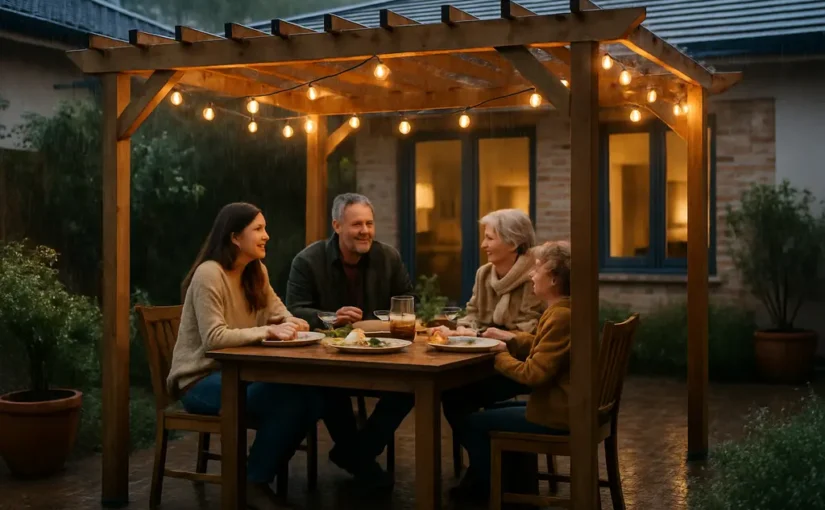
Puget Sound Patios are shifting from fair-weather decks into exterior rooms that need to handle rain, dark afternoons, damp furniture, and shoulder-season chill. Seattle averages more than 150 days per year with measurable precipitation, according to this Seattle patio weather guidance. For a villa owner, that changes the design question. The first concern is no longer whether the terrace looks inviting in July. It is whether the space stays safe, dry enough, and usable when the weather is ordinary rather than ideal.
I would treat year-round outdoor usability as a building performance issue, not a styling exercise. A chair, fire bowl, and string lights may photograph well, but they do not solve water shedding, wind exposure, slippery thresholds, or safe electrical routing. The more useful plan starts with shelter, drainage, lighting, heat, and materials that tolerate damp cycles. Finish choices come after those decisions, not before them.
Puget Sound Patios Need Shelter First
Rain Is A Design Load, Not An Afterthought
A covered exterior room works because it reduces the number of days when cushions, paving, and people are exposed directly to drizzle. That cover might be a roof extension, a freestanding pavilion, a pergola with weather-rated panels, or another structure selected for the specific house. The right answer depends on wind direction, roof drainage, window placement, and how the patio connects to interior rooms.
This is where homeowners often underestimate the risk. Attaching any cover to a villa wall or roof can affect water management and structural loading. That work should be designed and installed by qualified professionals, especially where posts, beams, footings, flashing, or roof tie-ins are involved. DIY effort is better spent documenting where rain blows in, where puddles form, and where people naturally gather before a designer or contractor sets the final layout.
Dry Construction Window Matters
Scheduling is a design tool in the Puget Sound region. June through September are described as the drier stretch for exterior projects, with July and August each averaging under one inch of rain in this Seattle project scheduling source. That does not mean every project must be built in those months, but it does explain why contractors’ calendars tighten during that period.
Good Puget Sound Patios start with realistic sequencing. Hardscape, waterproofing, drainage corrections, and covered structures benefit from dry access and fewer weather interruptions. If you wait until late summer to request bids, your project may slide into wetter months. That can create temporary protection needs, longer cure times for some materials, and more site disruption. Planning in winter for summer work is often more practical than trying to improvise during the dry window.
Comfort Depends On Heat, Wind, And Light
Layer Warmth Without Creating Hazards
Heat can extend comfort, but it should not be treated as a decorative add-on. Gas fire features, built-in heaters, and new exterior circuits bring safety responsibilities. Gas lines should be handled by qualified gas professionals. Electrical work that adds outlets, switches, fixtures, or hardwired heaters should be performed by licensed electricians. Homeowners should not open electrical boxes, alter gas connections, or mount heavy heaters overhead as a weekend experiment.
Portable appliances can still be useful when they are listed for outdoor use and operated exactly as the manufacturer states. Clearance, ventilation, stable placement, and cord condition matter. In a damp climate, storing portable equipment correctly is part of the safety plan. A patio that relies on risky heat sources is not truly more usable; it is simply more exposed to preventable problems.
Design For Early Darkness
Short daylight becomes a design constraint in fall and winter. Lighting should do three jobs: help people move safely, support cooking or serving tasks, and make seating areas pleasant without glare. Path lights, step lights, covered task lights, and soft wall or ceiling fixtures each solve a different problem. One bright fixture near the door rarely works well because it creates contrast and shadows.
Low-voltage lighting kits may be within reach for careful homeowners if they stay within the product instructions and do not require new household wiring. Anything tied into permanent wiring, exterior junction boxes, or smart controls should be assigned to a licensed electrician. Water and electricity are an unforgiving pair, so this is not the place to test guesswork.
Materials That Tolerate Wet Seasons
Frames, Decking, And Fasteners
A plan for Puget Sound Patios should assume long damp periods, not occasional showers. Powder-coated aluminum, teak, and HDPE outdoor furniture are common choices because they are intended for exterior exposure. Still, no material is maintenance-free. Fasteners can corrode, wood can move, and furniture feet can trap moisture against paving or decking.
Before buying tools for assembly, repairs, or seasonal maintenance, review product manuals and match the tool to the task rather than buying by guesswork; practical tool buying criteria can help homeowners think about fit, safety, and limitations. For practical advice, you can explore more criteria at High Pro Tools. For broader planning around seating, shade, and circulation, this related article on practical outdoor living spaces connects well with wet-climate villa decisions.
Fabrics And Storage
Outdoor fabrics should dry quickly, resist mildew, and be easy to remove or store. Cast acrylic and quick-dry cushion systems are often selected for wet regions, but they still need care. If cushions stay wet for long periods, stitching, foam, and zippers may wear before the frame does. That is not a failure of design so much as a predictable maintenance item.
Storage should be designed into the patio rather than added as a plastic box after the fact. A bench with ventilation, a covered closet near the door, or a dry interior landing zone can protect soft goods and reduce clutter. Avoid sealing damp cushions into airtight containers, since trapped moisture can worsen odor and mildew. The practical test is simple: if a resident will not use the storage system on a rainy evening, the design is too fussy.
DIY Scope Versus Professional Scope

Puget Sound Patios And DIY Boundaries
Homeowners can do useful planning before hiring a contractor. The goal is to collect observations, not to take on unsafe work. A careful pre-design review can save money by clarifying what the space must do and where professional attention is needed.
- Photograph puddles, splash zones, moss-prone areas, and wind-driven rain patterns.
- Track where people sit during dry days and where they avoid during damp days.
- Measure furniture clearances without moving railings, stairs, or structural elements.
- List existing outlets and fixtures without opening covers or changing wiring.
- Check whether walking surfaces feel slippery after rain.
- Note storage needs for cushions, grills, covers, and small tools.
Those observations help a designer or builder make better decisions. They also reduce the risk of buying furniture, heaters, or flooring that does not match the way the patio is used.
Work That Deserves A Qualified Crew
Professional help is the safer choice for roofed structures, retaining edges, stair or guardrail changes, hardwired lighting, gas appliances, drainage tied near foundations, and any work that may require permits. The reason is not only workmanship. These systems interact. A new roof cover can change where water lands. A heater can change clearance needs. A step light can require wiring protection. A drainage correction can affect adjacent paving.
For villa owners, the best contractor conversations are specific. Ask how water will leave the covered area, how slippery surfaces will be addressed, how fixtures are rated for exterior use, and what maintenance the owner must perform. If the answer sounds too casual, keep asking. Exterior rooms have to age under real weather, not showroom conditions.
Year-Round Plan For Puget Sound Patios
Prioritize Use Before Finish
The strongest year-round designs usually begin with a covered seating zone, a dry route from the house, safe lighting, durable furniture, and a heat strategy selected with professional input. After those pieces are resolved, finishes can be chosen with more confidence. Stone, concrete pavers, composite decking, or wood decking may all be appropriate in the right context, but each needs a maintenance plan and a slip-resistance discussion.
Cost recovery should be considered cautiously. A patio that works across more months may deliver better daily value to the household, but no design choice can promise resale results. The safer financial question is whether the investment supports the way residents actually live. If the family eats outside often, hosts in shoulder seasons, or needs a covered transition from kitchen to garden, shelter and lighting may matter more than premium surface finishes.
A Practical Villa Specification
For Puget Sound Patios, I would specify performance in plain language: keep the primary seating area sheltered from ordinary rain, provide safe walking light after dark, select furniture that tolerates wet storage conditions, design a place for cushions to dry, and assign gas, electrical, structural, and drainage work to qualified trades. This approach is less glamorous than choosing the perfect lounge chair first, but it is far more likely to produce a patio that residents use in October, February, and April.
The regional shift is clear: outdoor living is no longer judged only by peak-summer comfort. In the Puget Sound climate, the better villa patio is calm, dry enough, well lit, maintainable, and honest about DIY limits. That is how exterior design becomes part of daily living rather than a seasonal accessory.