
Remember when luxury villas felt like museums? You needed permission to relax. Those days are over, thanks to the 2025 mindset.
Goodbye, all-white perfection. We now crave warmth. Spaces should feel alive, personal, and you. It’s a shift from showy opulence to a felt experience.

The classic open floor plans are changing. They’re now “every-occasion living rooms.” These spaces are flexible, perfect for both big gatherings and cozy chats. This evolution is at the core of modern luxury home interiors.
What is luxury today? It’s about warmth, smart layouts, and comfort. Design focuses on craftsmanship and elegance, not just marble. Let’s explore the trends that make this future warm, witty, and livable.
Color trends: earthy neutrals, rich jewel tones, and biophilic palettes
Interior design in 2025 is like a colorful movie after a black-and-white film. We’ve moved from simple colors to warm, earthy tones. This change is not just about decor; it’s a shift towards comfort and natural beauty.
The base of this trend is grounded neutrals. Say goodbye to cold grays. Pantone’s Color of the Year, Mocha Mousse, is a rich brown. It’s joined by creamy whites, terracotta, and chestnut. These colors are not just beiges; they’re complex and warm, like a cozy hug.
On top of these neutrals, we add understated jewel tones. Robin Standefer suggests using colors that add depth harmoniously. Think of muted sapphires, deep emerald greens, and burgundy. These colors are not loud but rich and inviting.
Yellow is also back, but it’s not bright. It’s a golden yellow, like Monet’s kitchen. This leads to the biophilic palette. It’s not just about plants; it’s about connecting colors to nature. We use deep greens, clay reds, and sky blues to create spaces that feel alive and calm. These colors work well with natural materials like oak beams.
| Color Family | Key Hues | Best Use | Mood & Effect |
|---|---|---|---|
| Earthy Neutrals | Mocha Mousse, Terracotta, Creamy White, Chestnut Brown | Primary walls, large furniture, foundational textiles | Warm, grounding, sophisticated comfort |
| Rich Jewel Tones | Muted Sapphire, Deep Emerald, Wine Red/Oxblood, Golden Yellow | Accent walls, statement furniture, art, and drapery | Dramatic depth, sensual discretion, intellectual luxury |
| Biophilic Accents | Forest Green, Clay Red, Sky Blue, Mossy Olive | Accenting walls and textiles alongside natural materials | Organic serenity, vibrant calm, connection to outdoors |
The 2025 palette is all about harmony. Earthy neutrals provide a calm base. Jewel tones add drama. Biophilic accents connect us to nature. It’s a celebration of nuance and natural beauty.
We’ve moved from simple designs to rich, maximist feeling ones. It’s time for your walls to tell a more vibrant story.
Texture and material focus: natural stone, reclaimed wood, and artisanal tiles
The real luxury in modern villas isn’t just about looks. It’s about feeling real. We’re moving from cold marble to warm limestone, and from glossy to handmade tiles. This is design that feels real even with your eyes closed.
Natural stone is at the heart of this change. We’re looking for materials like limestone, which adds a rustic touch. A limestone backsplash is more than a surface; it’s a piece of history. Reclaimed wood, too, is chosen for its story, not just its grain.
Artisanal tiles bring a unique warmth. Forest Glen Construction loves terra-cotta for its warmth. Zellige tiles add a handmade shimmer that’s hard to find in factory-made tiles. These tiles are like wearable art for your floors and walls.
The beauty of 2025 lies in mixing the raw with the refined. Imagine a sleek island next to woven rattan cabinets. This mix is everywhere. A fluted plaster wall looks great with a velvet sofa, creating a cozy feel.
Velvets are now a big deal, not just for throw pillows. We’re seeing more bouclé, tweed, and plush fleece. These fabrics make you want to sink in and relax. They’re an invitation to comfort.
Karen Spector calls this movement “shambolism.” It’s about embracing the imperfect. A crack in a tile or a mix of matte and gloss is celebrated. It’s a way to connect with our spaces in a real way.
Choosing the right elements is key. The following table breaks down the standout natural materials and textures defining the tactile villa of 2025.
| Material/Texture | Primary Character | Best Application | Sensory Impact |
|---|---|---|---|
| Limestone | Rustic, organic, varied | Backsplashes, flooring, accent walls | Cool, solid touch with visual warmth |
| Reclaimed Wood | Historical, narrative, grainy | Ceiling beams, feature walls, flooring | Warm, slightly uneven, connects to nature |
| Terra-Cotta Tile | Earthy, handcrafted, porous | Kitchen floors, patio, bathroom accents | Warm, earthy, authentically tactile |
| Zellige Tile | Artisanal, shimmering, irregular | Kitchen backsplashes, bathroom showers | Smooth with a reflective, liquid light quality |
| Velvet & Bouclé | Plush, inviting, dimensional | Upholstery, drapery, decorative throws | Soft, comforting, encourages physical contact |
The focus on texture and natural materials brings us back to human scale. It’s about creating a space that invites interaction. Whether it’s a reclaimed wood door pull or a bouclé chair, these choices make a villa feel like home. The best custom millwork now pairs with textures to create a truly special space.
Furniture selection: statement pieces vs. functional elegance
A room full of statement furniture feels like a museum. On the other hand, a space with only functional pieces feels like a corporate lobby. The 2025 villa needs a smarter approach, blending bold and subtle elements.
The Statement Piece is like the diva of furniture. It’s the centerpiece that starts conversations. Think of those unique, cloud-like sofas or a sculptural armchair in a rich, jewel-toned bouclé. These pieces are emotional and declare taste.
Functional Elegance is the opposite. It’s about classic, structured furniture making a comeback. Think authentic English and American antiques, not the dark, heavy oak of grandma’s time. This category also includes custom millwork.
Custom millwork, like built-in benches and floor-to-ceiling library walls, adds sophistication. It provides order and a clutter-free space for your statement pieces to shine.
The magic happens when you mix different styles. Design expert Karen Spector suggests combining different wood species and metals for depth. Imagine a vintage Persian rug with a modern sofa and antique chairs. This mix creates a vibe that’s both collected and personal.
To balance this mix, consider the table below. It outlines the key principles for your villa’s furniture selection.
| Criteria | Statement Pieces | Functional Elegance |
|---|---|---|
| Primary Role | Visual anchor & conversation starter | Workhorse utility & structural foundation |
| Aesthetic Vibe | Sculptural, bold, often curvaceous | Structured, classic, quietly authoritative |
| Common Examples | Bulbous sofas, artisanal accent chairs, oversized organic-form coffee tables | Heirloom antiques, tailored sectionals, built-in custom millwork |
| Material Language | Plush velvets, bouclé, lacquered finishes | Solid woods, mixed metals, natural stone tops |
| Resulting Feeling | Dramatic, Instagram-ready, emotionally charged | Timeless, orderly, intellectually reassuring |
The goal is not to match everything perfectly. It’s about creating a dynamic balance. This balance makes your villa feel both curated and casual. It’s like hosting a brilliant dinner party, where both the storyteller and the listener are fascinating.
Lighting design: chandeliers, architectural lighting, and natural light optimization
The Sputnik chandelier’s reign is over. Today, villa lighting is all about being sculptural, layered, and personal. Designer Timothy Corrigan says goodbye to the old ways. Now, lighting is like architectural jewelry, making you feel the room, not just see it.
Statement lighting is the star of the show. It operates as functional sculpture—luminaire as focal point. A bold, geometric chandelier can reference Art Deco symmetry and stepped forms without veering into pastiche. An oversized pendant doesn’t merely provide illumination; it establishes hierarchy, anchors the room’s visual axis, and modulates shadow. This lighting makes you look twice, turning the ceiling plane into a curated gallery.
For deeper context on how lighting design shapes spatial perception and architectural composition, see guidance from Illuminating Engineering Society, which outlines best practices for balancing aesthetics with photometric performance and visual comfort.
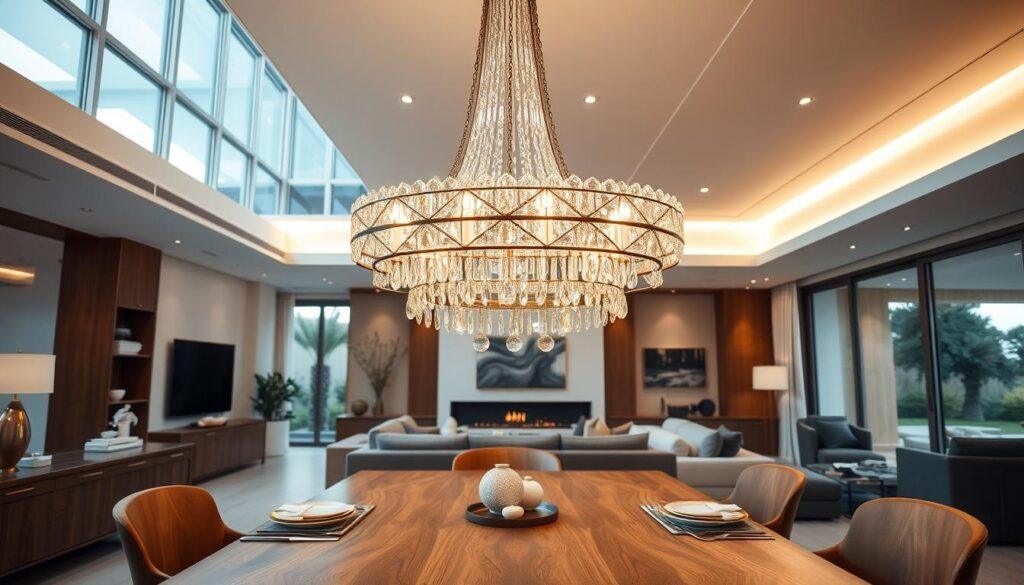
The real magic is in the layers. A single fixture is like a soloist. But a layered lighting plan is like an orchestra. This is where architectural lighting shines.
Discreet cove lights give walls a warm glow. LED strips hide in custom millwork, lighting up bookshelves or staircases softly. Sconces create cozy light for reading or talking. The aim is to avoid harsh shadows and build a warm atmosphere.
Natural light is the ultimate master. It’s all about framing views like paintings. Sheer drapery, like Brigette Romanek suggests, softens the sun’s midday glare. It’s not just for looks; it sets the mood.
The ceiling is also key. A wood-paneled or coffered ceiling, like Miyuki Yamaguchi’s kitchen, adds warmth and depth. It changes how light moves in a room, creating a cozy canopy.
In short, modern villa lighting is a dance. It creates a space that changes with the day and your needs. It’s more than just turning a switch; it’s about crafting an experience. That’s the power of light in 2025.
Art and accessory curation for villa-scale spaces
Minimalism is like a quiet librarian, but the new villa style is more like a charismatic museum curator. It loves drama. The old ‘less is more’ rule is being replaced by a joyful, intentional maximalism. This new style fills spaces with stories, not just things.
Curating a villa is about telling a story through design, not just adding accessories. It’s not about filling space. It’s about creating a narrative.
This change is a move away from the cold, showroom look of big homes. Empty spaces in large homes don’t feel sophisticated; they feel empty. Now, we’re using bold colors, patterns, and textures to tell a story. It’s like creating a visual biography of the people who live there.
Art is no longer just about matching pieces. We’re seeing a shift towards collecting unique items. A big abstract painting might talk to a small vintage portrait. A sculpture and a fossil can share a space. This mix adds excitement and personal meaning.
Accessories are also layered with meaning. Designers like Christine Gachot are using wallpaper on ceilings. A gallery wall can mix family photos, antique maps, and pressed plants. Texture adds a special touch, like a faux leopard print bench.
Gachot believes in mixing things up, not over-curing. It’s okay to surround yourself with things that make you happy, even if they don’t match. Your grandma’s silverware can be next to a modern candle holder. Art books add color and weight. A single Zellige tile can be a tiny masterpiece.
This curated, collected layer turns a house into a home, making it special in luxury home interiors. It adds soul and warmth. The goal is to create a space that feels like you, but even more interesting.
Smart home integration without compromising aesthetics
Adding smart tech to a luxury villa is like adding secret features to a sports car. It should boost performance without changing the look. Homeowners want smart homes but don’t want them to look like sci-fi sets. The answer is in smart design.
The key is concealment. We’ve moved past big, ugly tech boxes. Today’s luxury tech blends in when you want it to.
- Paneled Appliances: Big appliances hide behind custom cabinets, matching your decor perfectly. It’s like magic.
- Hidden Hubs: Voice assistants and routers hide in bookshelves or special spots, out of sight.
- Disappearing Screens: TVs look like art or hide in cabinets with just a button press.
This approach is key for open floor plans. The goal is to keep the space looking smooth. A big tech gadget can ruin the look. By hiding it, the design stays the focus.
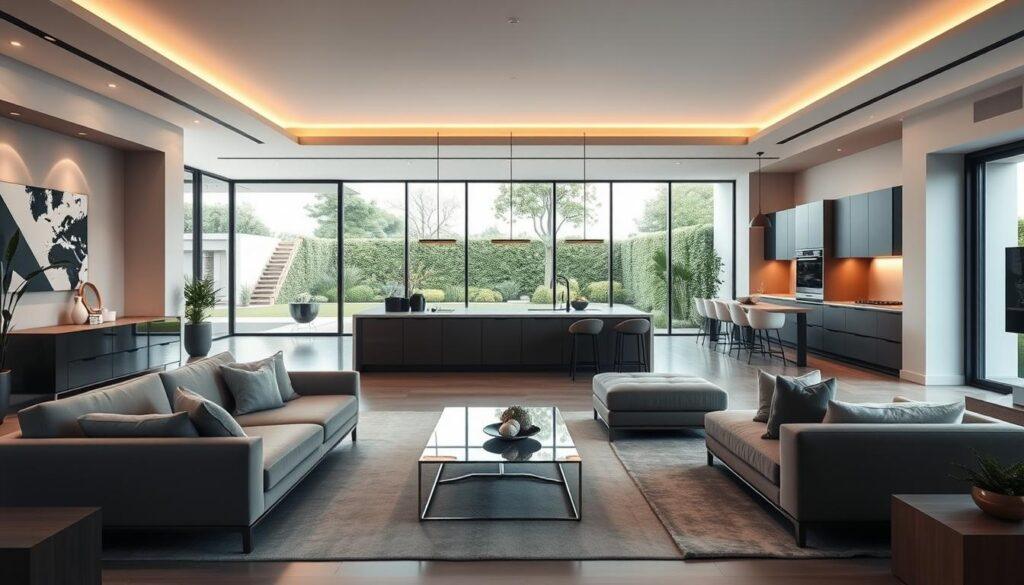
We’re not just hiding tech anymore. We’re making it part of the design itself. It’s like custom-made clothes.
Think of the kitchen. New countertops have embedded wireless charging stations, so your phone charges without a cord. Brands like Cosentino are leading this trend. Even cooking surfaces are changing, with ultra-thin slabs that hide invisible induction cooktops (Caesarstone’s Isobellia is a great example).
The bathroom has turned into a high-tech spa. Systems like Kohler’s Anthem+ control steam, lights, and showerheads from one interface. It’s a luxury experience hidden in a simple design.
The main rule is clear: technology must serve the design, not the other way around. Early smart homes looked like gadget stores. Now, we aim for tech that’s intuitive and quiet. You enjoy the benefits without seeing the tech.
The Jetsons look is out. We’re aiming for a seamless smart villa. The goal is to blend tech into your life so smoothly, you only notice it’s missing. It’s like wearing a suit with hidden pockets for all your needs. The design stays elegant and uninterrupted.
Sustainability in luxury design choices
The biggest statement in luxury homes today isn’t fancy faucets. It’s countertops that don’t harm workers’ health. In 2025, luxury means caring about the planet, fair trade, and emotional durability. It’s not just about looks; it’s about doing the right thing.
Designing a home is now about more than looks. It’s about understanding where materials come from. Natural materials like wood and stone are chosen for their beauty and for being better for the planet. A piece of wood with history has a story and a smaller carbon footprint.
Science plays a big role in sustainable design too. Porcelain countertops are strong and eco-friendly. They’re better for the planet and for those who make them. This is what luxury means today: beauty that’s kind to the earth.
The best choice is one that lasts forever. It’s about making things that will be treasured for years. Investing in custom pieces or restoring old furniture is timeless. These items grow more beautiful with age, adding real value to a home.
So, what do you really buy? You invest in a home that’s good for the planet and looks great. Modern luxury is about feeling good about your choices and having a home that will stand the test of time. That’s a trend worth following.
Room-by-room breakdown: living areas, kitchens, and master suites
Theory is for design magazines. Real luxury is in the details of how we use each room. Let’s make the 2025 trends work for your villa’s main areas.
Living Areas
The modern living area is a social hub. It needs versatile seating for talking and watching. A fireplace is the main attraction.
Connecting to outdoor spaces is key. It’s the perfect room for any occasion. For more ideas, check out signature villa living room designs.
Kitchens
The old, cold kitchen is gone. Today’s kitchen is warm, cozy, and built to impress. Think rich wood cabinets and cozy range alcoves.
Natural materials like limestone make great backsplashes. Hide appliances for a clean look. And, ditch the all-black kitchen for something warmer.
Master Suites
This room is your own wellness retreat. The trend is towards a “shower room” with steam and sauna. Freestanding tubs add a touch of luxury.
True luxury is about personal touches. Think custom millwork like double vanities and built-in benches. It’s all about making it yours.