

Soft yards are not simply a prettier version of the backyard. They are a practical shift from rigid lawn-and-slab layouts toward outdoor rooms that feel easier to use, easier to maintain, and more connected to planting, shade, gravel, and daily routines. For villa homeowners, the useful question is not whether the trend looks current. The useful question is whether the layout will drain well, age well, stay safe under foot, and justify the work involved.
Recent exterior design reporting points to a clear change in homeowner priorities. Yardzen’s 2026 outdoor living trend report, covered by Forbes, describes a 25% year-over-year decrease in traditional lawn areas, with homeowners turning toward native grasses, clover blends, and gravel gardens that require less water and maintenance according to the Forbes trend report. That is useful context, but it should not be read as an instruction to remove every square foot of turf. The right decision depends on climate, household use, soil, pets, children, and how much upkeep the owner can realistically handle.
Planning Soft Yards Around Daily Use
What Soft Yards Change
Soft yards change the geometry first. Instead of a rectangle of grass meeting a rectangle of paving, the plan tends to use curved paths, layered planting beds, gravel areas, and softer edges. The effect is less formal, but the design still needs discipline. A curved path that is too narrow, too steep, or poorly lit becomes a maintenance and safety problem rather than a calming garden feature.
For villa owners, soft yards work best when the plan starts with ordinary habits: where someone drinks coffee, where a chair catches late sun, where guests naturally gather, and where muddy shoes need to pause before entering the house. The research notes show demand for outdoor spaces used every day, including morning coffee areas, edible gardens, plunge pools, and shaded reading corners. That daily-use emphasis is sound, because a yard built only for occasional entertaining often receives less care and reveals design mistakes slowly.
Where Lawn Reduction Makes Sense
Lawn reduction can be sensible where grass struggles, where irrigation is wasteful, or where the household wants more planting diversity. Yet lawn removal is not a purely decorative act. Gravel gardens need edge restraint. Clover blends and native grasses still need establishment care. Planting beds need access for pruning and seasonal cleanup. Before ordering materials, mark the proposed areas with hose lines, builder’s paint, or temporary stakes and live with the layout for a week.
This is a good DIY planning task because it is low risk and reversible. Homeowners can measure sun exposure, watch water flow after rain, and check whether a path feels natural. Excavation, retaining edges near slopes, drainage corrections, and work around buried utilities belong with qualified contractors. If the yard has standing water, erosion, or soil movement, get professional assessment before covering symptoms with gravel or pavers.
Party Patios Connected To The Villa
Doorways, Shade, And Furniture Zones
The “party patio” idea is strongest when it connects directly to the house. The research notes describe outdoor gathering spaces tied to the home through elements such as French doors and large sliding doors. That connection can make serving food, supervising children, and using the space more convenient. It can also create technical issues: thresholds, drainage at doors, glare, heat gain, and furniture clearance.
Changing an exterior opening is not a casual weekend project. Cutting walls, resizing doors, moving electrical elements, or changing structural support should be handled by licensed professionals and permitted where required by the local authority. A safer homeowner role is to plan circulation: leave enough room to open doors, pull out dining chairs, and move from kitchen to patio without crossing a grill zone or a wet pool edge.
For a broader planning approach, the site’s article on practical outdoor living spaces pairs well with this kind of early layout thinking. If resale expectations are part of the discussion, keep the conversation factual and local; you can look to a related real estate site in the same network, Jimmy Guthrie Real Estate LLC, for market context without replacing a contractor’s site-specific advice.
Curved Seating Without Guesswork
Curved outdoor seating is being discussed as a 2026 garden trend, with Livingetc noting its appeal for more sociable garden arrangements in their curved seating trend analysis. The practical value is easy to understand: chairs and benches angled toward one another support conversation better than a long row facing a fence. Still, curved furniture can be awkward if the patio footprint is too small.
Before buying a curved sofa or built-in bench, test the radius with movable chairs. Confirm that knees, side tables, and circulation space do not collide. Built-in masonry seating should be designed with drainage, waterproofing, and long-term comfort in mind. Cushions make hard seating usable, but outdoor fabrics and foam still need storage, cleaning, and drying time. A sheltered cushion box may be a better investment than another decorative chair.
Materials, Drainage, And Maintenance Checks
Paving Choices That Stay Practical
Natural color palettes and tactile materials are part of the current direction, according to the research notes. Aged stone, clay pavers, gravel, and self-binding gravel can sit comfortably beside planting, especially when high-contrast finishes would feel harsh. The caution is that texture must be balanced with safety. A surface that looks warm in dry weather may become slippery with algae, leaf litter, or pool splash.
Ask suppliers for suitability information for exterior use, wet areas, freeze-thaw exposure if relevant, and maintenance expectations. Do not rely on showroom appearance alone. View samples outside, wet them, and check them in morning and evening light. For more material selection thinking, the article on low-maintenance outdoor materials is a useful companion because it keeps the focus on durability rather than novelty.
Planting And Privacy Boundaries
Privacy is another measurable driver in the research notes: requests for privacy-focused design elements rose 10% year over year, after a 22% increase the previous year. Privacy can be created with layered planting, screens, hedges, pergolas, or wall extensions, but each choice has tradeoffs. Planting is softer and habitat-friendly, yet it takes time to fill in. Solid screens are immediate, yet they may need permits, wind-load consideration, and neighbor review depending on the location.
Soft yards benefit from layered privacy because it avoids turning the garden into a walled box. Use lower planting near views you want to keep and taller planting where you need screening. Avoid placing dense shrubs where they block path lighting, door visibility, or safe access around pools and steps.
DIY Scope Versus Professional Work
Safer DIY Tasks
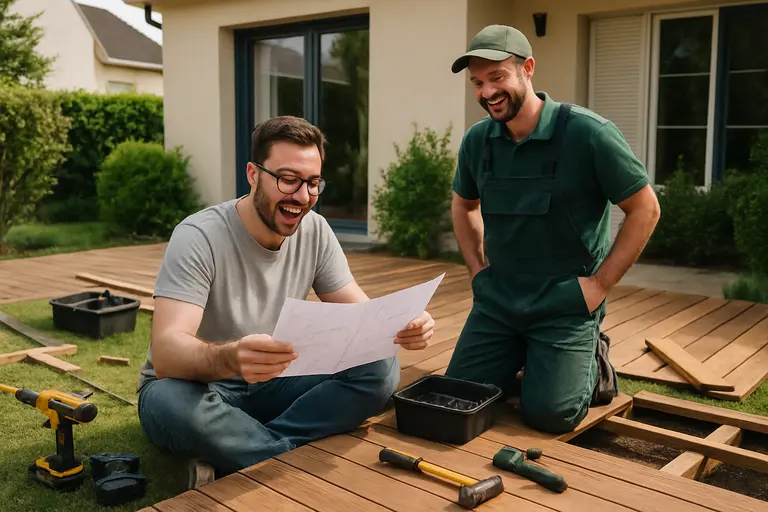
Homeowners can do a great deal before heavy work begins. Good planning reduces waste, call-backs, and impulse purchases. The safest DIY tasks are observational and small-scale: mapping shade, testing furniture arrangements, comparing material samples, and maintaining planting after installation. These tasks help the project become more personal without asking the homeowner to take on unsafe work.
- Reasonable DIY: temporary layout marking, container planting, loose furniture placement, sample review, simple garden cleanup, and routine cushion care.
- Use a qualified professional: exterior door changes, structural pergolas, drainage corrections, retaining walls, electrical lighting circuits, gas lines, pool work, and major grading.
Work Better Left To Licensed Trades
Party patios often invite electrical, gas, plumbing, and structural decisions. Outdoor kitchens, heaters, plunge pools, lighting, and covered structures can improve usability, but they carry risk if poorly installed. Avoid online shortcuts for wiring, gas connections, load-bearing posts, or waterproofing at thresholds. Hire licensed trades, ask for proof of insurance where appropriate, and confirm permit needs with the local building department before work begins.
Cost control is not only about choosing cheaper materials. It is also about avoiding work in the wrong order. Drainage should be resolved before paving. Door thresholds should be planned before patio heights are set. Planting should account for mature size before irrigation or lighting is finalized. A modest patio with correct slope and shade will usually serve a household better than a larger one that traps heat or sends water toward the house.
Soft Yards And Party Patios At Home
A Measured Design Brief
A practical brief for soft yards and party patios should fit on one page before drawings begin. State how often the space will be used, how many people need to sit comfortably, which views should be protected, where privacy is needed, and which maintenance tasks the household will actually do. Include notes on pets, children, mobility, storage, and shade. These ordinary details shape better outdoor rooms than trend images alone.
The strongest projects connect the patio to the villa, soften the surrounding garden, and respect water, sun, and maintenance limits. Soft yards are useful because they ask the exterior to behave less like a display area and more like a living part of the home. Party patios are useful when they support real gatherings without creating drainage, safety, or upkeep problems. Treat both ideas as planning tools, not labels, and the result is more likely to feel natural, durable, and worth the effort.