
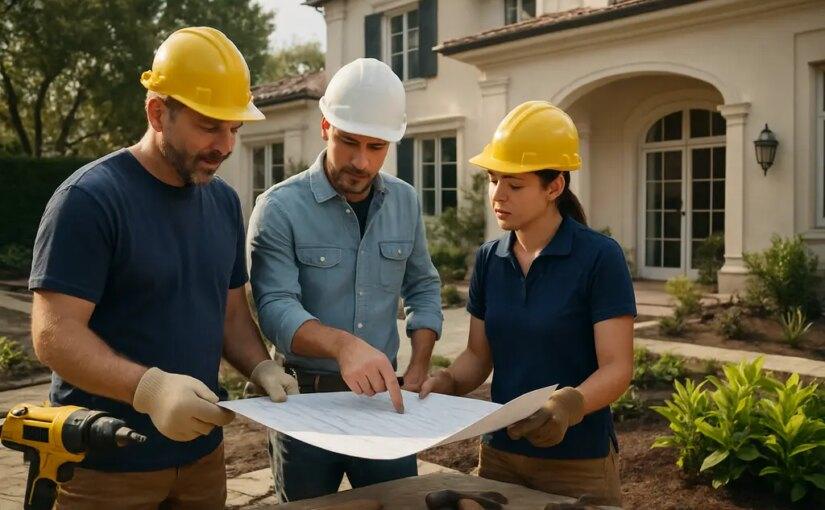
Outdoor renovation pros are becoming a more common part of villa improvement planning, and the reason is not simply taste. Outdoor work now often blends paving, drainage, lighting, irrigation, shade, planting, masonry, security, and sometimes cooking areas. That mix can move a project beyond weekend-level effort, especially where water, electricity, gas, structural support, or local permits are involved.
As an architect, I see the shift less as a rejection of DIY and more as a sign that homeowners are sorting tasks by risk. Painting planters, assembling furniture, choosing container plants, or cleaning a terrace can be sensible owner-led work. Regrading a patio, adding low-voltage systems near wet areas, building retaining walls, or installing heavy pavers is a different matter. The right question is not, “Can I do some of this myself?” It is, “Which parts can I do without creating safety, durability, or resale problems?”
Why Outdoor Renovation Pros Are Being Hired
What The 2026 Data Shows
Houzz reported that 71% of homeowners undertaking outdoor renovations hired a professional in its 2026 Outdoor Trends Study, based on an April-May 2026 survey; that was up from 65% in 2024, according to Houzz outdoor trends. That six-point change is meaningful because outdoor projects are not small decorative exercises for many households. They are often built environments with moving parts: hard surfaces, soil, water flow, planting, shade, access, lighting, and privacy.
For villa owners, the pattern makes practical sense. A villa exterior may have larger thresholds, longer sightlines, courtyards, pool edges, terraces, and guest circulation routes. Small errors can become expensive because they are visible and exposed to weather. A poorly drained paving area can stain walls. A rushed lighting plan can create glare rather than usable evening space. A planting scheme that ignores irrigation needs can become a maintenance burden.
What Outdoor Renovation Pros Usually Handle
The same Houzz data identified stone, paver, and concrete specialists at 20% and masonry specialists at 14% among commonly hired outdoor professionals. Those categories point to the physical weight and technical nature of many projects. Pavers and masonry are not just surface choices; they depend on base preparation, edge restraint, slope, water movement, and compatibility with adjacent walls or thresholds.
This is where outdoor renovation pros can add value before anyone orders materials. A qualified contractor or designer should ask where water will go, how furniture will sit, whether access equipment can reach the work area, and whether the chosen material is suitable for wet feet, sun exposure, freeze-thaw cycles, or heat gain. If that conversation never happens, the homeowner may be buying an image rather than a functioning space.
Cost Recovery And Budget Risk
Cost Recovery Is Not A Promise
There is a reason many owners are tempted to professionalize outdoor work: resale context. This Old House reported that an average professionally completed yard upgrade can recover approximately 100% of its cost at resale, based on its discussion of outdoor living trends. That figure should be treated with care. Cost recovery is not a guarantee for a particular villa, street, buyer, climate, or material package.
What the number does suggest is that buyers can value outdoor usefulness when it is executed well. A shaded sitting area, safe walking surfaces, practical planting, and coherent lighting are easier to understand than a collection of disconnected upgrades. Still, an owner should not assume that every fire feature, pergola, kitchen module, or imported stone finish will return its cost. Spending discipline remains part of good design.
Budget Control Starts With Scope
Professional involvement does not remove budget risk. It can even expose costs that a homeowner did not see at first: demolition, hauling, drainage fixes, retaining conditions, equipment access, soil amendment, lighting controls, or repair of hidden damage. That is not a failure of professional help; it is often the true cost of making an exterior last.
I advise villa owners to separate the project into three categories before asking for proposals: safety and water management, daily comfort, and appearance. Safety and water management come first. Daily comfort includes shade, seating layout, circulation, and usable light. Appearance includes finishes, color, planting character, and furniture style. If money tightens, this order helps protect the parts that affect performance.
DIY Boundaries Before Hiring Outdoor Renovation Pros
Low Risk Owner Tasks
DIY can still be useful. Owners can measure how the terrace is used, note sun and wind patterns, collect maintenance concerns, photograph puddling after rain, and list furniture dimensions. Those observations help a professional price and plan more accurately. A careful owner can also handle simple planting in containers, seasonal cleaning, furniture placement, and finish sampling.
Tool choice matters for these lower-risk tasks. For general product comparisons and homeowner tool research, resources like HighProTools can offer valuable insights to owners, making them better equipped to consider buying criteria before investing in equipment they may use only once. Even then, tool ownership should not be confused with trade competence.
Work That Deserves A Licensed Trade
Some tasks should be treated as professional work because the downside is too high. That includes electrical work, gas lines, structural shade supports, major grading, retaining walls, roof attachments, pool-adjacent systems, and any work governed by local permits. Homeowners should avoid unsafe trial-and-error in these areas.
- Reasonable DIY: documenting site conditions, choosing furniture sizes, cleaning existing surfaces, testing material samples in daylight, and maintaining container plants.
- Professional review advised: drainage changes, paver bases, masonry repairs, irrigation design, exterior lighting layout, and fixed shade structures.
- Hire qualified trades: electrical, gas, structural, roofing tie-ins, retaining walls, and work near pools or steep grades.
If you are unsure where your project sits, use a planning framework like outdoor living contractors to think through coordination before committing to demolition or deposits.
How To Brief A Professional Team
Make The Site Conditions Visible
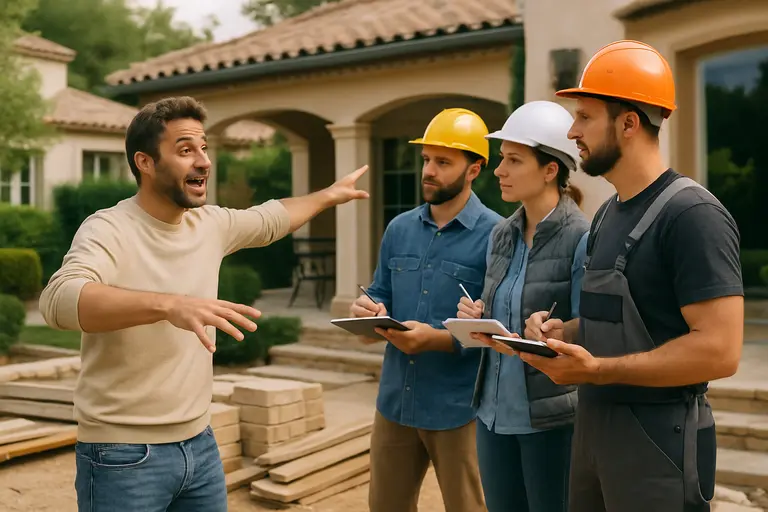
A good brief is not a mood board alone. It should show how the villa is used. Note where guests enter, where children run, where older relatives need stable footing, where rain collects, and where afternoon heat makes a terrace unpleasant. Mark doors that must remain accessible and areas where construction access will be difficult.
Photos after rain are especially useful. So are measurements of existing steps, thresholds, narrow side yards, and furniture that will remain. If the project includes paving, ask the professional to explain slope, base, edge, and drainage assumptions in plain language. You do not need to perform the work, but you should understand the logic well enough to approve it.
Ask For Maintenance Assumptions
Villa outdoor spaces are exposed to sun, moisture, soil, insects, and use. Ask how each material should be cleaned and how often plantings or irrigation need adjustment. Natural stone, concrete pavers, timber, metal, and exterior fabrics age differently. The lowest bid may not be the lowest lifetime cost if it depends on frequent repair or special care.
Outdoor renovation pros should also clarify what is excluded. Common exclusions may include permit fees, utility relocation, hidden damage, furniture, planting establishment, or ongoing maintenance. The exact list depends on the project, but the principle is consistent: vague proposals create disputes. Clear proposals create better decisions.
Topic-Specific Takeaways For Outdoor Renovation Projects
Decisions For Villa Owners
The rise in professional help is best read as a response to project scope, not as a style fad. Outdoor villa projects have become more integrated with daily living, and that raises the standard for safety, comfort, and durability. A terrace is not only a pretty surface. It must shed water, hold furniture steadily, resist slipping, connect to doors, and tolerate weather.
The most sensible path is often mixed labor: homeowners lead observation, priorities, simple upkeep, and aesthetic preferences, while qualified professionals handle risk-heavy work. That division protects the budget better than either extreme. Pure DIY can miss hidden hazards. Full delegation without owner education can lead to choices that do not fit how the villa is actually used.
Outdoor renovation pros are worth considering when the work affects structure, utilities, drainage, masonry, paving systems, or long-term maintenance. For smaller cosmetic updates, a careful homeowner may do well with limited DIY. The durable villa exterior is usually the one planned with restraint: fewer assumptions, clearer roles, safer work boundaries, and materials chosen for the site rather than for a passing photograph.