
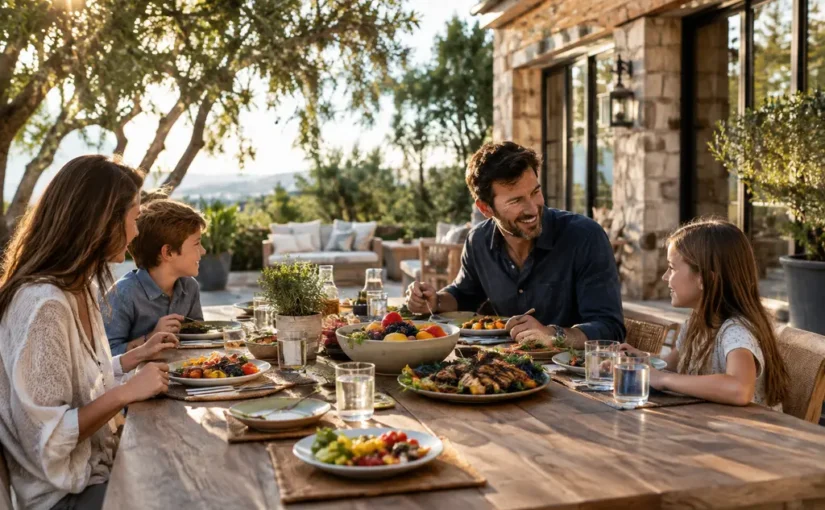
Outdoor Living Zones are becoming less about occasional entertaining and more about ordinary daily use: sitting, eating, reading, gardening, and cooking without making the exterior feel like a second construction project. The most useful lesson from 2026 homeowner research is not that every villa needs every feature. It is that outdoor space works better when each zone has a clear purpose, safe circulation, and realistic maintenance needs.
The 2026 U.S. Houzz Outdoor Trends Study surveyed 1,191 U.S. homeowners from April 25 to May 6, 2026. It found that 83% of renovated outdoor spaces included a lounge or seating area, and 71% included sofas or lounge chairs, according to the Houzz Outdoor Trends Study. That does not mean seating should consume the whole terrace. It means homeowners are treating exterior rooms as places to live in, not just pass through.
Plan Outdoor Living Zones By Daily Use
Outdoor Living Zones Start With Seating
A villa patio often fails because the seating is attractive but poorly placed. A sofa facing glare, a dining table squeezed across the main door path, or lounge chairs stranded far from shade can make a generous space feel inconvenient. Start by mapping daily actions: morning coffee, children crossing from the house to the garden, evening reading, weekend meals, and any cooking that happens outdoors.
Good Outdoor Living Zones usually need one primary lounge area rather than several weak ones. The Houzz data supports this priority, but the design still depends on the site. A narrow side terrace may suit two chairs and a small table. A deeper rear patio may allow a lounge area plus dining without forcing people to walk through the cooking area. For a broader planning view, this related article on practical outdoor living spaces is useful for thinking through seating, shade, lighting, and professional limits.
Dining, Reading, Gardening, And Cooking
The most practical multi-use layouts separate quiet and active functions without building hard barriers everywhere. In 2026, renovated outdoor spaces often supported several everyday uses: 55% included dedicated dining, 53% included quiet or reading retreats, 49% included gardening zones, and 48% included outdoor cooking areas, according to the Houzz Pro trend report. Those figures suggest that dining and lounging are common, but reading and planting areas are nearly as relevant for daily comfort.
For villa living, I prefer to place the calmest use farthest from the loudest one. A reading chair beside planting can feel restful if it is not downwind of the grill or in the route between kitchen and table. A gardening zone can be compact: raised planters, a potting surface, or a strip for herbs near the dining area. The key is to avoid turning every edge into storage. Outdoor rooms lose their usefulness when furniture, pots, toys, hoses, and cooking gear compete for the same square meter.
Lighting, Boundaries, And Comfort After Dark
Layer Light Without Overdoing It
Lighting is one of the easiest features to get wrong. The Houzz study found that 66% of lounge areas in renovated outdoor living spaces incorporated lighting for evening usability. That supports a practical point: night use should be designed, not improvised with one harsh fixture near the door.
For safety, think in layers. Path lighting helps people see level changes. Lower, indirect light around seating reduces glare. Task lighting near dining or cooking should be planned so it does not shine directly into eyes. Homeowners can usually place battery lanterns, solar accent lights, or plug-in lamps rated for outdoor use if they follow manufacturer instructions. Any new hardwired exterior lighting, buried cable, added circuits, or changes near wet areas should be handled by a qualified electrician and permitted where local rules require it.
Use Boundaries That Do More Than Divide
Boundaries should guide movement without making the terrace feel boxed in. A change in paving direction, planter edge, pergola post line, low wall, or furniture grouping can signal where one activity ends and another begins. For Outdoor Living Zones, this matters because too much openness can be as awkward as too many partitions. People need cues: where to sit, where to walk, where children can play, and where cooking heat or smoke will occur.
Comfort also depends on shade and exposure, but the research supplied here does not give enough detail to judge which shade structure fits a specific climate. A villa in a hot, dry region needs different decisions than one in a humid coastal area. Before adding a heavy shade structure, confirm wind exposure, drainage, anchoring, and whether permits are needed. Attaching loads to a wall, roof, deck, or balcony is not a casual DIY task.
DIY Limits And Professional Help
Separate Styling From Risk Work
The safest project plan divides work into low-risk styling tasks and higher-risk construction tasks. Homeowners can often test furniture placement with temporary pieces, mark dining clearances with painter’s tape, move planters, compare outdoor fabrics, and evaluate where sun and shade fall across the day. These are worthwhile DIY steps because they help you make better decisions before paying for permanent work.
Higher-risk work belongs with licensed or qualified professionals. That includes gas lines for outdoor cooking, plumbing for sinks, new electrical circuits, structural deck changes, major drainage correction, retaining walls, and heavy paving where poor base preparation could create trip hazards or water problems. The research notes show professional help reached 71% of homeowners hiring pros for outdoor renovations in 2026, up from 65% in 2024. That does not prove every project needs a full design team, but it does show many homeowners are not treating exterior renovations as simple decoration.
- Reasonable DIY: furniture layouts, container planting, loose rugs rated for exterior use, portable shade, and non-permanent decor.
- Call a pro: electrical work, gas, plumbing, structural attachments, deck alterations, drainage changes, and large paving installations.
- Pause before buying: measure door swings, walking routes, furniture clearances, and storage needs before ordering large pieces.
Budget Decisions Should Follow Use
Function over resale is a notable shift. The research notes show motivation to make outdoor spaces more accommodating rose to 25% in 2026, while renovation for improving resale value dropped to 15%. This is a useful caution for villa owners: spend first on what you will use often, not what looks impressive in a listing photograph.
If the family eats outdoors twice a week, a durable dining surface and shade may matter more than a large outdoor screen. If reading and quiet mornings are the main habits, comfortable seating, glare control, and planting may offer more daily value than a complex cooking setup. If you are comparing how outdoor plans relate to local property priorities, the related network site Jimmy Guthrie Real Estate LLC can provide additional insights and serve as a general reference point, but it should not replace design advice, valuation advice, or local permitting checks.
Planting And Low-Maintenance Edges

Design Planting Around Care Capacity
Planting is often treated as the soft part of the plan, yet it can decide whether a villa exterior remains usable. A gardening zone appeared in 49% of renovated outdoor spaces in the research notes, which suggests homeowners still want contact with plants, not just paved terraces. The caution is maintenance. A planted edge that needs constant clipping, watering, or leaf cleanup may work for an enthusiastic gardener and fail for a household that uses the villa only on weekends.
Keep planting zones legible. Use pots where soil access is limited. Keep thorny or brittle plants away from narrow circulation paths. Avoid placing messy planting directly over dining surfaces or pale cushions unless you are prepared for frequent cleaning. If irrigation is needed, hire a qualified installer for permanent systems, especially where water lines, timers, and exterior power interact.
Materials Should Match Traffic And Weather
Multi-use exterior zones place more stress on materials than decorative patios. Dining chairs scrape paving. Cooking areas collect grease. Reading corners need dry, comfortable footing. Lounge spaces need fabrics and frames that can tolerate exposure. The research supplied here does not compare material durability, so any product choice should be checked against manufacturer instructions, slip resistance information, warranty terms, and local climate.
For villas, I usually advise testing samples outdoors before committing. Look at them in morning and evening light. Wet the surface and consider slip risk. Place a chair on the sample if possible to see whether legs catch in joints or grooves. These small checks are not glamorous, but they prevent expensive mismatches between design intent and daily use.
Outdoor Living Zones For Villa Decisions
Build The Plan In Phases
The safest way to create Outdoor Living Zones is to phase decisions from lightest to most permanent. Start with observed use: where people already sit, where shade lands, where wind makes dining uncomfortable, and where the easiest route from kitchen to table occurs. Then test furniture groups before installing fixed counters, lighting, paving, or shade structures.
This approach is less dramatic than a full exterior rebuild, but it reduces waste. It also helps homeowners understand which features deserve professional design or construction help. A villa exterior should support real habits: a chair that gets used, a dining table that is easy to reach, a safe path after dark, and planting that the household can maintain. If a proposed zone does not answer a daily need, it may be better left unbuilt.