

Low-maintenance landscapes are not just about doing less work. The better goal is to reduce repeated mowing, watering, hauling, and replanting while keeping the yard safe, usable, and visually connected to the home. As an architectural styles consultant and planting specialist, I look at these projects in layers: water demand, plant fit, surface materials, drainage, access, and the homeowner’s real tolerance for weekend chores.
The evidence supports a cautious shift away from high-water turf in the right locations. A 9-year Utah State University comparison found that a water-wise yard saved 83% of water, produced 56% less green waste, and required 68% less maintenance compared with a high-water-use lawn USU water-wise yard study. Those figures do not mean every property will match that result. Soil, rainfall, plant establishment, irrigation condition, shade, slope, and household use all matter. Still, the study gives homeowners a credible reason to question whether every square foot of lawn is earning its keep.
Why Low-Maintenance Landscapes Start With Water
Water is often the quiet cost in a yard. It affects plant survival, utility bills, runoff risk, and the time spent adjusting sprinklers. The U.S. EPA has estimated that yard watering is typically 30% to 50% inefficient because of evaporation, runoff, overwatering, and related losses; the agency points to better design, plant selection, mulch, and irrigation management as ways to cut outdoor water use EPA irrigation guide.
Low-Maintenance Landscapes And The Lawn Question
A lawn is not automatically wrong. It can be practical where children play, pets need open space, or a simple green plane supports the architecture. The issue is oversizing. Turf placed on narrow side yards, steep banks, hot parkways, or fragmented corners often becomes the most demanding surface in the yard. These areas can be candidates for drought-tolerant planting, mulch, gravel paths, or garden beds, provided drainage and access are handled correctly.
Before removing turf, map how the yard is used. Keep lawn where it has a clear job. Reduce it where it mainly consumes water and weekend time. A measured approach is safer than stripping an entire yard in one season and discovering later that the new plan lacks shade, sitting space, or a practical route for bins and tools.
Planting Choices That Reduce Weekly Work
Plant selection should begin with local conditions, not a shopping cart of attractive nursery tags. Sun exposure, mature plant size, soil drainage, reflected heat from walls or paving, and winter lows all shape maintenance. A shrub that fits the space at maturity usually needs less pruning than one forced into a tight foundation bed. A plant matched to local rainfall patterns usually needs less corrective care after establishment.
Native And Drought-Tolerant Planting
Native and drought-tolerant plants are often discussed together, but they are not identical. A native plant can still fail if it is placed in compacted soil, deep shade, or a wet area that does not match its needs. A drought-tolerant plant may still need careful watering during establishment. The maintenance advantage comes from matching the plant to the site and grouping plants with similar water needs.
For homeowners comparing project ideas, an internal review of drought-resistant yard planning can help frame water use, safer phasing, and when outside help is sensible. Additionally, for more insights into home design planning, you can visit the related site J. Siemering Homes, which offers resources on how exterior choices coordinate with the overall architectural theme of your home.
Low-maintenance landscapes still need early care. New planting usually requires observation, watering adjustments, weed control, and replacement of occasional failures. The realistic promise is not no work. It is less repetitive work after the planting has settled and the irrigation pattern is corrected.
Irrigation, Mulch, And Surface Choices
Irrigation is one of the places where a modest mistake can repeat itself every day. A sprinkler zone that hits pavement, a controller set for the wrong season, or overspray against siding can waste water and create maintenance problems. Homeowners can safely observe coverage, note runoff, and check for wet pavement after a cycle. Repairs that involve main water connections, backflow devices, electrical controls, or trenching near utilities should be handled by qualified professionals.
Mulch And Hard Surfaces
Mulch can reduce exposed soil, moderate surface conditions, and make beds look settled, but it has to be used with care. Keep it from piling against siding, posts, or tree trunks. Deep mulch against wood can hold moisture where the building does not want it. Around trees, a broad ring is usually more sensible than a mound at the trunk.
Hard surfaces can reduce mowing, yet they are not maintenance-free. Gravel migrates, pavers can settle, and large paved areas may increase heat or runoff if poorly planned. Use hard surfaces where they solve a use problem: a grill pad, a clean route to a gate, a sitting area, or a landing near doors. If slopes, retaining edges, drainage paths, or step heights are involved, bring in a pro before materials are ordered. Correcting a poorly drained patio after installation is far more disruptive than planning it carefully at the start.
DIY Scope, Safety, And Hiring Decisions
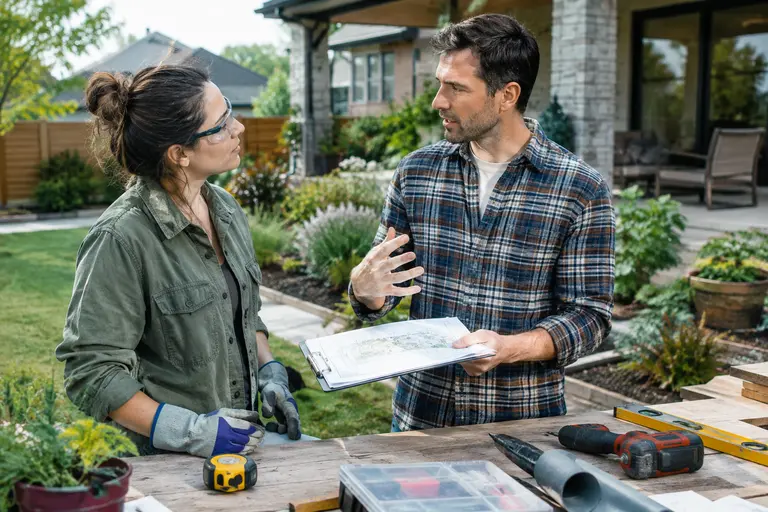
Many yard upgrades are suitable for careful DIY work: removing small turf sections, sheet mulching, planting manageable shrubs, spreading mulch, placing small stepping stones, and adjusting seasonal watering schedules within the manufacturer’s guidance. The safer DIY projects are visible, shallow, and reversible. They do not depend on hidden utilities, structural walls, or drainage calculations.
Projects Better Left To Pros
Hire qualified help for retaining walls, major grading, drainage tied to the house, irrigation backflow work, outdoor electrical components, large tree removal, and heavy stone or concrete installation. These jobs carry safety, property, and water-management risks. A homeowner can still stay involved by setting priorities: less mowing, lower water demand, easier access, safer footing, and a planting style that suits the house.
Cost should be judged across time, not only by the first invoice. A cheap plant that needs constant pruning may be a poor buy. A bargain surface that becomes slippery or shifts underfoot may create safety concerns. A phased plan can control spending without forcing hasty decisions. Start with water waste, unsafe surfaces, and high-labor zones. Decorative refinements can wait until the functional plan proves itself through a full growing cycle.
Sustainable Low-Maintenance Landscapes For Homeowners
Sustainable low-maintenance landscapes work best when they are specific to the house, climate, and household routine. The strongest plans usually keep useful lawn, replace difficult turf with well-chosen beds or practical surfaces, improve irrigation efficiency, and protect the building from moisture problems. They also leave room for maintenance access, seasonal change, and plant growth.
For today’s homeowner, the cautious path is to reduce the most demanding areas first rather than chasing a complete yard remake. Measure what you water, observe where runoff occurs, and choose plants that fit mature space and local conditions. Low-maintenance landscapes succeed when they reduce chores without creating new risks at the foundation, walkway, or property edge.