

Let’s be honest—most resorts claim to be authentic but often fall short. But stepping into a real villa compound is different. It’s not just about looks; it’s about feeling connected to something deeper.
In this tropical paradise, culture and climate dance together beautifully. You’ll find open pavilions, frangipani-lined paths, and a unique way to enjoy the humidity. Every detail, from gates to ponds, has a special meaning, mirroring the Balinese Hindu universe.
The Pavilions Bali shows this philosophy in action. Each villa is a world unto itself, yet close to Sanur’s calm beaches. It’s like having your own spiritual retreat, with butler service included. Design choices here reflect a deep worldview, from family temples to living areas.
Key Takeaways
- Authenticity in design goes beyond aesthetics.
- True villas reflect a cultural and spiritual alignment.
- Layout influences both privacy and accessibility.
- Every element serves a purpose in the Balinese universe.
- Luxury can coexist with cultural integrity.
Roofs and structures alang alang thatch terracotta shingles bamboo hardwood frames
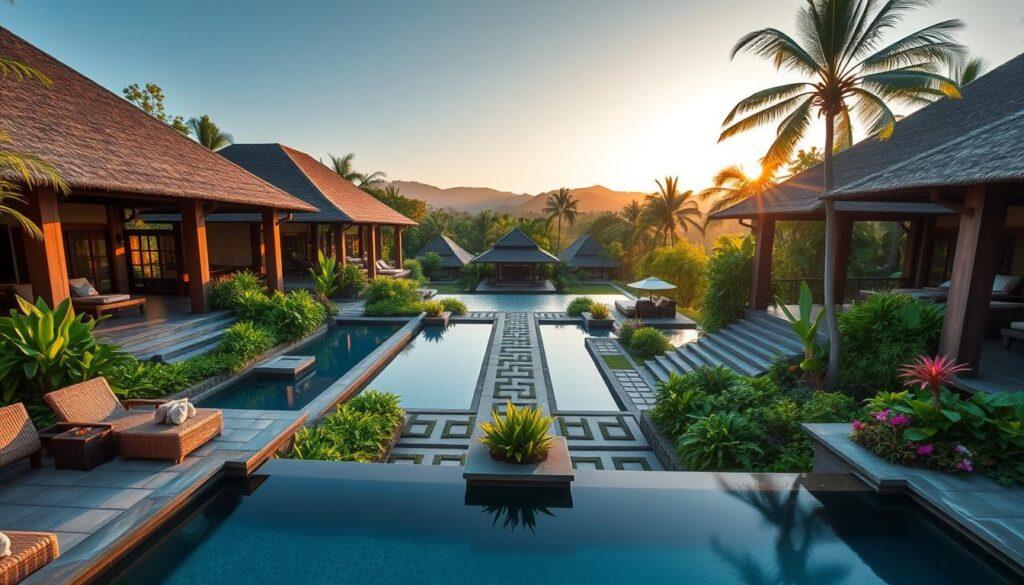
If roofs were fashion statements, Balinese villas would flaunt an alang alang thatch like a haute couture piece. These roofs are not just stylish; they keep interiors cool without air conditioning.
The alang alang, a type of grass, forms a dense, insulating blanket. It sheds tropical downpours like a duck’s back. Sitting under one during a monsoon is like the original ASMR experience.
But, alang alang roofs need upkeep. Modern resorts often pair them with terracotta shingles or synthetic replicas for durability. The structures beneath are made of bamboo and hardwood frames, crafted without nails.
The Pavilions Bali uses these traditional forms in their villas. The Plantation Pool Villa is a great example. Its duplex layout features an upper-floor bedroom that shows off these materials, whispering “heritage”.
Adapting this style for non-tropical settings requires careful consideration. Think about snow loads and building codes. The design’s essence is in its proportion and texture: deep overhangs, visible framing, and a roof that looks like it grew there.
Thresholds carved gates bale pavilions bridges stepping stones
In Bali, crossing a threshold is like entering a story filled with culture and spirituality. Thresholds are more than just doors; they are gateways to new experiences. The carved gates, called candi bentar, divide the entrance and represent the cosmic mountain. Crossing this threshold is believed to cleanse your spirit, a fascinating idea when you think about all the negative vibes outside.
Inside these magical places, you’ll find bale pavilions. These are not just gazebos, but special spots for meditation. With their unique joglo roofs, they offer a place to think deeply or enjoy a morning coffee. The Two Bedroom Pool Villa at The Pavilions Bali has an open-air dining area that captures this spirit, mixing tradition with modern comfort.
Bridges and stepping stones add to the Balinese experience. They’re not just for walking; they encourage you to slow down and be mindful. Imagine walking over a koi pond on a stone path. It’s a reminder to pause and see the beauty in life’s busy moments.
When creating a Western garden, don’t just add a prefab pergola. The beauty comes from the craftsmanship—hand-carved details, natural stone, and a balance between structure and nature. It’s not just about looks; it’s about creating a space that touches your soul.
Water as cooling device lotus ponds reflecting pools and wet edges
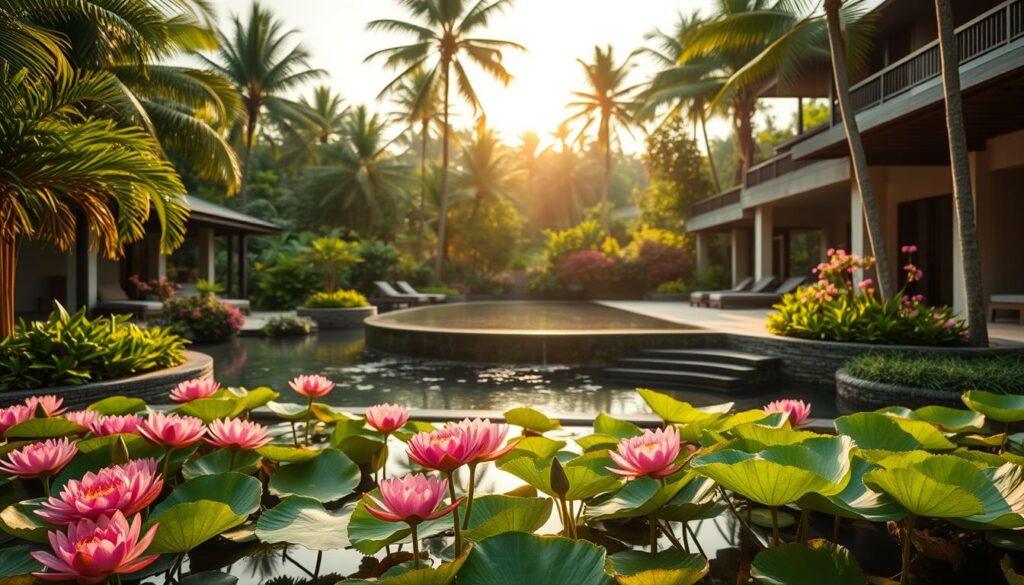
Imagine a world where water cools and captivates. Welcome to the heart of Balinese architecture. In Bali’s tropical villas, water features are key. They boost comfort and beauty, from lotus ponds to reflecting pools.
Lotus ponds are more than just pretty. They’re microclimate engineers. They cool the air and home to fish that eat mosquito larvae. It’s amazing how one feature can do so much.
Reflecting pools are a Balinese design staple. They’re placed near pavilions to enhance the view. The water’s reflection of the sky is magical, like a Rothko painting. The cool breeze over these pools makes outdoor time even better.
Wet edges, or infinity edges, make it seem like water flows into the jungle. This modern touch plays with our minds and water flow. Even small pools can be perfect for a romantic float under the stars.
Creating your own tropical oasis? Water features don’t have to be huge. A small stone basin with a fountain can cool the air. Just be ready for the occasional frog guest. In colder places, a heated plunge pool is a better choice. Hypothermia is not part of the Balinese vibe.
Open air bathrooms privacy screens stone basins rain showers
Why limit bathing to just walls when nature calls? An open air bathroom is more than a trend; it’s the crown jewel of balinese tropical villas. Picture showering under the sky, with leaves whispering in the wind. It turns bathing into a peaceful ritual.
The Garden Villa at The Pavilions Bali shows off this luxury with an outdoor rain shower. Warm water and a tropical breeze mix, feeling like a dream. In the Plantation Pool Villa, couples enjoy an outdoor shower and tub, making every moment special.
Privacy is key, achieved through smart design. Plants, screens, and walls keep your shower private. No unwanted shows for your neighbors!
Stone basins, made from volcanic andesite, bring a natural touch. They add elegance that matches the lush setting. The rain showerhead feels like a monsoon, refreshing without the storm.
Adapting this idea to colder places is a challenge. An outdoor shower in Minnesota in January might be too cold. Yet, the essence of an open-air bathroom can be kept. Use semi-enclosed spaces with roofs that open or greenhouses that let in light but keep out snow. The goal is to connect with nature, not just the weather.
| Feature | Benefit | Example |
|---|---|---|
| Open Air Design | Enhances relaxation | Showering under the stars |
| Privacy Screens | Ensures seclusion | Dense plantings or decorative walls |
| Stone Basins | Natural aesthetic | Carved from volcanic andesite |
| Rain Showers | Refreshing experience | Mimics monsoon rains |
For more on creating calm in your space, see this guide to Balinese villa design.
Material palette teak and suar woods andesite lava stone rattan fabrics
Exploring Balinese tropical villas reveals their stunning material palette. It’s not just about looks; it’s a mix of nature’s best. Teak and suar woods are key, with teak resisting harsh weather and suar wood adding dramatic flair.
Touching a suar wood table feels like exploring a rainforest. It connects you to the earth. Andesite lava stone, dark and cool, reminds you of Bali’s volcanic heart.
Rattan fabrics and woven bamboo bring lightness. They keep spaces cool and airy. Pavilions Bali blends these to create spaces that are both rustic and elegant. Living rooms filled with Balinese artifacts tell stories of culture and tradition.
When choosing materials, avoid fakes. Real teak and rattan are essential for authenticity. Use these materials to weave a story, not just follow trends.
Passive cooling cross breezes stack effect shaded verandas fans over AC
Why use AC when Bali’s breezes cool better? In Balinese tropical villas, passive cooling is key. These villas use nature to cool, a method modern tech often misses.
Cross breezes are the hidden gems of these designs. They use wind to cool the villa, making it feel like a divine breeze. It’s not just cool; it’s a way to connect with nature.
The stack effect is another clever trick. Hot air goes up and out, bringing cooler air in. It’s like a natural AC, perfect for Bali’s heat.
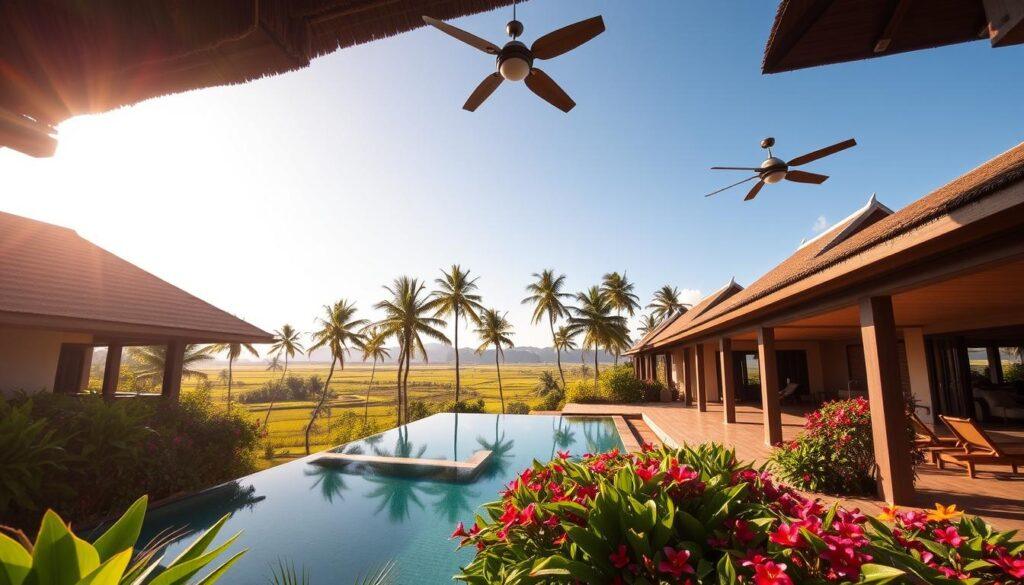
Shaded verandas act as cool barriers. They keep the sun out, letting you enjoy the outdoors without heat. These spots are great for relaxing or reading.
And don’t forget ceiling fans. They help move air, making breezes feel stronger. The Balinese way is to work with nature, not fight it.
These ideas work in any climate. Just face your building to catch breezes and use deep eaves for shade. The Balinese knew this long ago, and we’re catching up.
“In Balinese tropical villas, the art of passive cooling transforms the living experience into something magical.”
Landscape grammar frangipani heliconia palms edible beds lighting rituals
Welcome to a garden that’s more than just plants. It’s a mix of beauty and function. In balinese tropical villas, every plant has a story. The frangipani, with its beautiful flowers, is the star.
Its scent makes even simple tasks feel like a spa visit. Heliconia adds drama with its bright, lobster-claw flowers. These plants grab your attention and make you wonder.
Palms are the garden’s backbone, casting shadows that feel like a movie. Their gentle movement shares secrets of the tropics. This adds to the beauty of balinese tropical villas.
The edible beds mix garden and kitchen. They feature banana, lemongrass, and chili. This shows that food can also be beautiful.
At dusk, the garden changes. Low-voltage lights and oil lamps create a warm glow. This lighting makes shadows play and invites you to relax.
For gardens in different climates, use hardy plants. Magnolias can replace frangipani, and canna lilies can stand in for heliconia. The garden’s beauty stays, even with different plants.
Building responsibly termites moisture wind and coastal conditions
Building in paradise comes with big challenges, like in Bali. Termites can destroy buildings in no time. Moist air and coastal winds add to the problem, making things even harder.
The Balinese have learned to build wisely. They use materials like teak and andesite stone that fight off pests and moisture. Thatch roofs also help by keeping buildings dry. But, these materials need care too, like replacing alang alang every decade and treating wood often.
The Pavilions Bali knows how to handle these issues. They have a team that keeps the villas looking great without too much work. If you’re building in tough conditions, remember to choose good materials and design smart.
In colder places, you face different problems like freezing and snow. But the main idea is the same: build with nature, not against it. A little planning can save your dream home from becoming a termite feast.
| Material | Benefits | Maintenance Frequency |
|---|---|---|
| Teak | Insect-repellent | Every 2-3 years |
| Andesite Stone | Humidity-resistant | As needed |
| Thatch Roofs | Breathable, rot-preventing | Every 10 years |
For more insights on sustainable design, check out sustainable villa design.
Translation tips adapting the look for non tropical climates
Want the calm of Balinese tropical villas but in a cold place? You can get that relaxed feel without being out of place. The key is in the principles, not just looks.
Begin with the roof. Use deep overhangs and visible rafter tails to bring tropical vibes. Swap thatch for metal, like cedar shakes or synthetic thatch, to avoid mold.
Turn your open-air bathroom into a cozy sunroom. Add operable skylights and heated floors. This way, you avoid cold showers. Use local stone and reclaimed wood for a warm feel that stands up to frost.
Outdoor design matters too. Use layered plants, ornamental grasses, and a water feature for a beautiful space. The idea of indoor-outdoor living works everywhere, even in snowy places.
The Pavilions Bali shows how to respect its setting. Your design should do the same. Don’t try to make Boise like Bali. Instead, focus on craftsmanship and creating a peaceful space. This approach works in any climate, if you’re open to it.