

Welcome to the forensic accounting of your landscape. Nothing says “adulting” quite like mapping your water flow patterns.
I’ve seen more homeowners shocked by their irrigation audit results than by their first property tax bill. We’re talking pressure tests that reveal whether your system has the gentle persistence of a British butler or the chaotic energy of a firehose at a frat party.
Zone mapping isn’t just drawing pretty lines on your property survey. It’s about understanding which plants are high-maintenance divas and which are drought-tolerant minimalists.
Your smart sprinkler controller becomes a personal water sommelier. It ensures each plant gets precisely what it needs, not a one-size-fits-all approach.
This isn’t just about saving water. It’s about giving your garden the tailored care it deserves while avoiding those shocking utility bills.
Drip vs rotor vs micro‑spray selection
Choosing the right irrigation system is not about finding the “best” one. It’s about picking the right tool for your landscape. Using a firehose on a bonsai tree is absurd. Yet, I’ve seen homeowners make similar mistakes that waste water.
Let’s look at the three main options. Each has its own strengths and weaknesses. They can either save or waste your water bill.
Drip irrigation is like a precise scalpel for water. It delivers water directly to plant roots with almost 90% efficiency. Clients often have a revelation when they see how drip zones cut their water bills and improve plant health.
Drip systems are great for garden beds and vegetable patches. They reduce evaporation and runoff. They work quietly while everyone sleeps.
Rotor systems are like broad-stroke artists. They cover large areas well, like football fields and lawns. They’re perfect for uniform watering.
These systems work at high pressures and flow rates. They’re great for watering up to 50 feet away. They’re the hardworking irrigation heroes.
Micro-spray systems are the Goldilocks option. They offer targeted watering for medium-density plantings. They’re perfect for ground covers and container plants.
Micro-sprays create a gentle mist like natural rainfall. They’re between precise and broad coverage.
| System Type | Efficiency Rating | Best Use Cases | Water Pressure Needed |
|---|---|---|---|
| Drip Irrigation | 90-95% | Garden beds, vegetable patches, dense plantings | 15-30 PSI |
| Rotor Systems | 75-85% | Large turf areas, sports fields, open spaces | 45-60 PSI |
| Micro-Spray | 80-90% | Ground covers, flower beds, container plants | 20-40 PSI |
| Soaker Hoses | 85-90% | Row plantings, foundation watering | 10-25 PSI |
Using different systems together is the key. I often use drip zones for beds and rotors for lawns. This way, each plant gets what it needs without wasting water.
Remember, the right spray vs rotor selection depends on your landscape. There’s no one-size-fits-all solution. It’s like choosing the right utensil for every meal.
Your irrigation system should be smart, not hard. Choose wisely, and your plants and wallet will appreciate it.
Controllers, sensors, and weather data
Welcome to irrigation’s smart revolution. Your sprinkler system now has a PhD in meteorology. These Wi-Fi-connected controllers analyze weather forecasts like a pro.
I’ve seen these systems save thousands of gallons by not watering when rain is coming. It’s amazing how simple it is to avoid watering during thunderstorms.
The soil sensors are the real game-changers. They monitor moisture levels underground. It’s like having a personal plant therapist for your lawn.
Rain and freeze sensors add more intelligence. They adjust schedules when temperatures drop or it rains. No more icy sidewalks or watering in the rain.
Mobile app integration lets you control everything from your phone. It’s irrigation management in your pocket. Perfect for busy professionals who want smart solutions without hassle.
These systems use weather data, soil sensors, and smart algorithms. They create watering schedules that make sense. It’s like your irrigation system went to college and majored in environmental science.
The best part? They learn and adapt over time. Your system gets smarter with each season. It fine-tunes its approach based on actual conditions, not guesswork.
Hydrozones and plant‑based scheduling
Water needs vary like opinions at family gatherings. Succulents drink like fine whiskey, while hydrangeas drink like college freshmen. It’s not just preference—it’s their nature.
Hydrozoning groups plants by their water needs, not looks. It’s like irrigation districts based on water sources, not property lines. I’ve set up zones for Mediterranean herbs and thirsty annuals, each getting the right amount of water.

Plant-based scheduling matches watering with each plant’s natural cycle. Some like morning water, others evening. It respects their natural rhythms, not our schedules.
The rain garden is a perfect example. It captures runoff and slowly feeds the soil. These gardens are living art, cutting water use by up to 30%.
When designing hydrozones, use these water need categories:
| Plant Type | Water Needs | Irrigation Frequency | Native Examples |
|---|---|---|---|
| Xeric (Drought-Tolerant) | Low | Every 14-21 days | Agave, Lavender, Sage |
| Moderate | Medium | Every 7-10 days | Manzanita, California Poppy |
| High | Abundant | Every 3-5 days | Ferns, Rhododendron |
| Rain Garden Species | Variable | Natural rainfall only | Switchgrass, Blue Flag Iris |
Drought-tolerant native plants are key to smart hydrozoning. They thrive on local rainfall, like locals know the area well.
During droughts, hydrozoning shines. While others’ plants suffer, your landscape stays green. It’s like triage, saving the most important areas.
A rain garden is the best example. It turns problem spots into water managers, habitats, and beauty. It’s like finding common ground with opponents, making the system stronger through diversity.
Gray‑water and rain capture options
Did you know the answer to your irrigation needs is in the drain? Gray-water and rain capture systems turn waste into a valuable resource. It’s like a recycling dream come true.
Rain barrels are a great start to saving water. They catch roof runoff, preventing pollution. One inch of rain on a 1,000 square foot roof gives you 600 gallons of free water. It’s like a free water delivery for your plants.
But why just stop at rain? Gray-water systems use water from showers, sinks, and washing machines for your garden. Your morning shower can water your roses. Your laundry can feed your fruit trees. It’s a clever way to reuse water.
These systems are amazing for several reasons:
- They cut down on municipal water use by 30-50%
- They lower your water bill and help the planet
- They give plants water without chlorine
- They work well with french drains for managing water
French drains and gray-water systems are like a superhero duo. French drains handle excess water in storms. Gray-water systems provide water during dry times. Together, they keep your garden hydrated.
Setting up these systems can be simple or complex. You can do it yourself or get a professional to install a full system. These systems can store thousands of gallons underground, like your own private water source.
But remember, gray-water isn’t safe for drinking. Don’t use water from toilets or kitchen sinks. And skip the fabric softener if you’re watering plants you eat. Your kale doesn’t need to smell like April Fresh.
You’ll start saving money in 2-5 years. After that, you’re basically gardening for free. It’s like discovering your favorite band before they became famous.
These systems are a win-win. You save money and help the environment. It’s like finding money everywhere, but it’s water management.
Drainage: grading, swales, french drains, dry wells
While everyone focuses on water delivery, the real secret is what happens next. Proper drainage is key to creating the perfect soil moisture for plants. It’s not just about avoiding puddles. It’s about making sure plants thrive, not just survive.
Grading is your first defense, guiding water to your plants’ roots. If you get it wrong, your landscape is doomed. The slope of your land decides if water helps or harms your plants.
Swales are like nature’s contour lines, guiding water flow elegantly. These shallow channels help water flow smoothly, without the look of traditional drains. They’re the key to controlled watering, not flooding.
French drains are the secret heroes of drainage. They work underground, keeping moisture away from roots. With the right french drains, your plants can stay healthy.
Dry wells catch excess water, like stormwater drivers. They collect water and slowly release it into the soil. This prevents flooding during heavy rains. They’re the safety net for your drainage system.
Together, these elements create a drainage system that keeps soil moisture perfect. Remember, the difference between great landscaping and bad often lies beneath the surface. It’s where water becomes a blessing or a curse.
Hardscape runoff to plantings
Why let rainwater leave your property? It could help your plants grow. Hardscape runoff management turns water-wasting areas into systems that feed plants.
Your patio can be more than a place to hang out. It can collect rainwater and send it to plants. I’ve made designs where granite patios collect water and send it to plants.
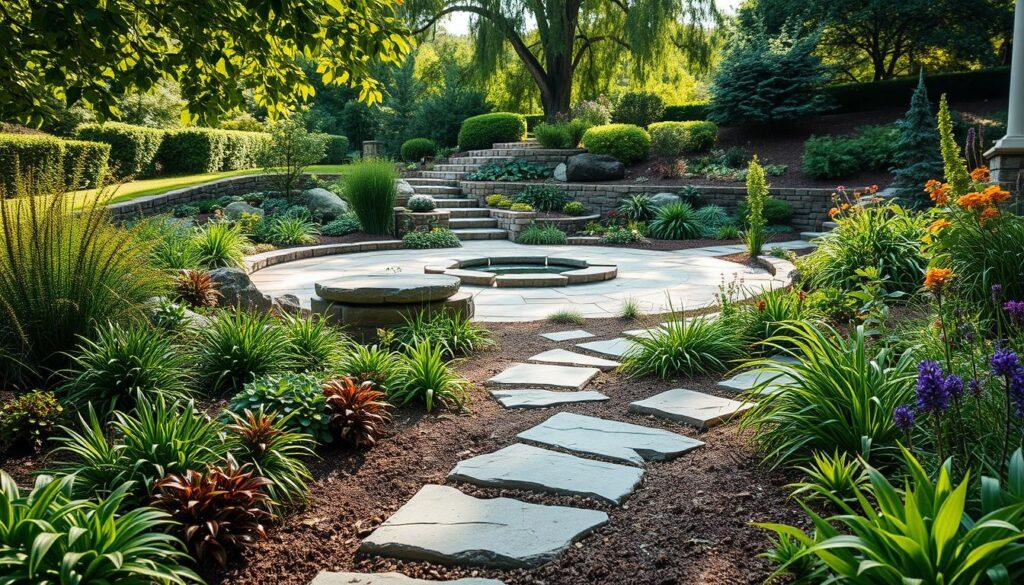
The rain garden concept is key here. These areas catch runoff and look great. It’s like using every part of the buffalo – nothing goes to waste.
For hilly areas, this method is super helpful. Water is directed to plants, not down slopes. This means less watering and healthier plants.
Here’s how different hardscape materials handle runoff:
| Material Type | Runoff Coefficient | Best Application | Maintenance Level |
|---|---|---|---|
| Permeable Pavers | 0.15-0.30 | Driveways & Walkways | Moderate |
| Concrete | 0.80-0.95 | Patios with Drainage | Low |
| Gravel | 0.25-0.40 | Pathways & Borders | High |
| Natural Stone | 0.50-0.70 | Decorative Features | Moderate |
This system does two things at once. It manages water and makes your landscape stronger. Your rain garden becomes a key part of your landscape.
Setting it up doesn’t need a big change. Just adjust the slope and add plants. Your plants get water, and you save on water bills.
Good design solves many problems at once. A rain garden manages water, cuts down on watering, and looks good. It’s the best of all worlds in landscape design.
This idea works for any size property. From small city lots to big estates, it’s the same idea. Use rainwater to help your plants.
Freeze/storm strategies and winterizing
Winterizing your irrigation system is more than just maintenance. It’s a way to protect your system from harsh winter weather. Imagine your landscape in a deep freeze until spring arrives. Without it, you might face a disaster of burst pipes and flooded areas.
The smart sprinkler controller is your first defense. It adjusts watering schedules when it gets cold. These devices act like a weather forecast machine, stopping water when it’s too cold.
Winterizing involves three key steps:
- Shut off the main water supply completely – no half measures here
- Open all drain valves to eliminate standing water
- Use compressed air to blow out remaining moisture from lines
Rain and freeze sensors help in the cold weather. They stop watering when it’s already raining or freezing. This prevents your lawn from turning into ice.
Insulate above-ground parts like a polar bear insulates itself. Pipes, valves, and preventers need wrapping to survive the cold. I’ve seen how freezing can turn irrigation systems into art.
The smart sprinkler controller does more than adjust schedules. It gives you data on temperature and moisture. This helps you decide when to start and end winterizing.
Winterizing is not just a good idea. It’s a way to avoid expensive repairs. Emergency plumbing costs in February are a bad sign of poor planning.
Monitoring/leak alerts and maintenance
Modern irrigation systems have a secret weapon: monitoring technology. It saves water, money, and your weekends. It’s like having a license to save, but better.
Flow sensors are the heroes of irrigation. They find leaks or broken heads quickly. This saves a lot of water and money, making it very valuable.
Mobile apps turn your phone into a control center. They send alerts fast, helping you fix problems quickly. These apps also give detailed analytics, showing where your water is going.
Soil sensors tell the truth about your soil. They measure moisture levels accurately. This means you water your plants just right, not too much or too little.
Maintenance is now about making your system better, not just fixing it. Check your irrigation system often during the growing season. In spring, do a thorough check-up.
Professional maintenance services are like having a personal assistant. They handle everything, from regular checks to emergency repairs. This gives you peace of mind and saves money in the long run.
But sometimes, you need to get your hands dirty. Cleaning clogs and adjusting spray patterns is important. It connects you to your garden in a special way.
Sample zone diagrams and rebate tips
Creating irrigation diagrams is like making a treasure map. It shows where each drip zone is. These sketches turn vague plans into clear blueprints, showing where each emitter goes.
Smart zoning keeps thirsty plants separate from those that don’t need much water. This makes efficient drip zones that water plants just right. These diagrams also plan for future growth, because gardens change over time.
Many places offer rebates for installing efficient systems. I’ve helped clients get these rebates, which can cut costs in half. These rebates show that saving water benefits everyone.
Long-term, saving water through smart zoning and technology can save a lot of money. The initial cost of well-planned drip zones leads to lower water bills and healthier plants. It’s a win-win for both the planet and your wallet.