
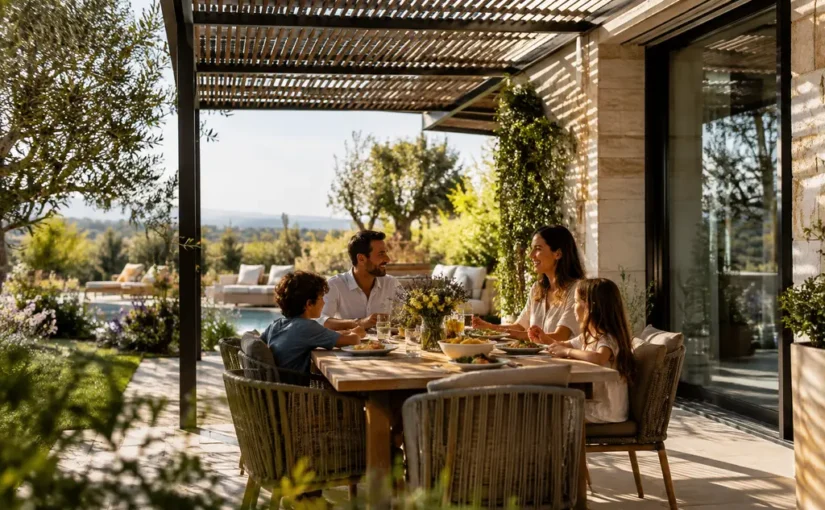
A villa without sufficient shade may have admirable proportions, handsome paving, and noble doors, yet offer little invitation at three o’clock on a hot afternoon. Shade structures deserve a place early in exterior planning because they affect comfort, furniture placement, surface heat, glare, and how often a patio is used. A pretty pergola added as an afterthought can be rather like a bonnet chosen after the ball has begun: charming, perhaps, but not always useful.
Why Shade Structures Belong In The Plan
The case for planned shade is no longer only a matter of taste. In 2026, Houzz reported that 35% of homeowners undertaking structural outdoor projects added shade structures such as pergolas, awnings, or covered patios, up 15 percentage points from 2024; decks remained the most common structural upgrade at 43% 2026 Houzz outdoor remodeling trends. Those figures do not prove that every villa needs a new cover, but they do show a clear shift in homeowner priorities.
For villas, the practical question is not whether shade looks gracious. It is whether the shaded area supports the way the household actually lives. A west-facing terrace may need afternoon protection more than a breakfast patio. A poolside seating area may need broad, predictable cover rather than a decorative lattice that throws only delicate shadows. An outdoor dining zone may call for enough clearance around chairs, serving paths, and door swings before any column or post is fixed in place.
Shade Structures For Dining And Sitting
A dining terrace asks for different treatment than a lounge. Dining needs steady shade over the table, but it also needs space for people to pull out chairs without striking a post. A lounge can tolerate a softer edge, particularly if sofas, side tables, and planters can be moved with the seasons. Think of the structure as a host: it should make the company comfortable without demanding attention at every turn.
Before buying a kit or approving a custom build, mark the proposed posts with cones or temporary stakes. Sit there at the hour you most expect to use the space. Watch where glare falls, where rain might blow in, and whether the covered area blocks a cherished view from the interior. This small trial costs little and may save a homeowner from a handsome mistake.
Choosing Shade Structures By Exposure And Use
Exposure should lead the design. South and west orientations often need deeper protection, while an east-facing breakfast spot may only need lighter cover. The research from Scottsdale’s 2025-2026 Shade and Tree Plan is useful even beyond Arizona because it distinguishes natural tree canopy from built shade; the plan states that shade infrastructure is needed where trees alone cannot provide enough coverage, and that shade can help reduce air and surface temperatures, limit UV exposure, and improve year-round use of outdoor areas Scottsdale Shade and Tree Plan.
That does not mean a villa owner should cover every courtyard. Full enclosure can darken adjacent rooms, trap heat if poorly ventilated, and complicate drainage. The same Houzz report noted that among homeowners upgrading outdoor structures, 44% of outdoor kitchens were fully covered and 30% were partly covered. Partial shade can be quite sensible near cooking areas, where smoke movement, appliance clearances, and heat require careful planning.
Materials should be selected with the home’s architecture in mind. A stucco villa may suit a plastered masonry arcade, while a lighter garden pavilion may prefer timber or metal. Fabric awnings can be useful where seasonal adjustment is desired, but they require attention to wind ratings, fastening, cleaning, and storage. Wood has warmth, but it also asks for periodic care. Metal can look crisp, but its connections, corrosion resistance, and heat gain should be reviewed before purchase.
Safety, Permits, And Professional Boundaries
Few exterior projects begin with danger in mind, which is precisely why homeowners should be cautious. A pergola, covered patio, or fixed awning is not merely decoration once it is attached to a house, founded in soil, or expected to withstand wind and rain. Loads, footings, flashing, drainage, and fasteners matter. So do local permit rules and homeowners association requirements, where they apply.
DIY Tasks That Fit Homeowners
Homeowners can often handle the early design work safely: measuring the patio, photographing sun patterns, listing furniture sizes, comparing finish samples, and identifying where water already collects after rain. They may also assemble small freestanding shade products if the manufacturer’s instructions allow it and if the work does not involve unsafe ladders, structural fastening, electrical lines, or gas connections.
A modest, non-permanent umbrella may be a reasonable trial before a larger project. Weighted bases should match manufacturer guidance, and the umbrella should be closed during unsuitable weather. This is not glamorous counsel, but then neither is retrieving a wind-tossed umbrella from a neighbor’s hedge.
Work Better Left To Licensed Pros
Hire qualified professionals for attached patio covers, structural pergolas, roof penetrations, masonry footings, electrical lighting circuits, ceiling fans, motorized awnings, gas heaters, outdoor kitchens, and any work near service lines. Homeowners should ask for drawings, product specifications, footing details, flashing plans, and written warranty terms. A good contractor will not be offended by these requests; a poor one may reveal himself by impatience. For a comprehensive overview of property decisions, turn to a related site such as Jimmy Guthrie Real Estate, especially when considering how outdoor improvements align with the broader scope of home and market value without assuming a guaranteed financial return.
Comfort Details Around Seating And Lighting
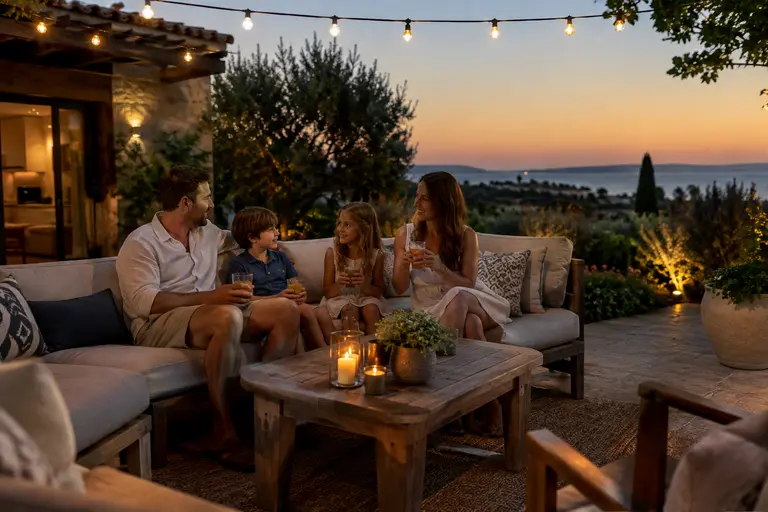
Comfort is made from small decisions, not from one grand purchase. Seating should sit where shade falls at the hour people gather. Tables should be close enough for drinks and books, but not so numerous that they interrupt walking paths. Cushions should be chosen for outdoor use and stored where sudden weather will not spoil them. A villa patio is at its best when it behaves like a drawing room with better air.
Lighting deserves special care. Low-voltage lighting, overhead fixtures, and fan-rated boxes can improve evening use, but electrical work outdoors carries real risk. Wet-location ratings, protected circuits, cable routing, and fixture support should be reviewed by a qualified electrician. Homeowners can plan the mood and fixture locations; they should not improvise wiring. For a related planning discussion, see these practical notes on outdoor comfort renovations.
Partial Cover For Outdoor Kitchens
Cooking areas are often where ambition outruns prudence. A grill under a low cover can create heat, smoke, and clearance concerns. Manufacturer instructions for grills, heaters, fans, and appliances should govern the design. If the kitchen includes gas, plumbing, fixed electrical service, or a heavy countertop, it is no place for guesswork. A partly covered layout may protect the dining or prep side while leaving heat-producing equipment in a safer position, subject to professional review.
Maintenance, Materials, And Long-Term Fit
A shade project should come with a care plan. Painted metal may need inspection for chips and corrosion. Timber may need cleaning and recoating at intervals set by the product and local exposure. Fabric may require removal during severe weather or seasonal cleaning. Gutters, if included, must discharge water away from the house rather than toward thresholds or foundations.
Ask for maintenance instructions before signing a contract. If no one can explain how the material ages, how it is cleaned, and what voids the warranty, pause. A villa’s exterior should age with dignity, not become a collection of surprises. Samples viewed indoors are not enough; inspect them outdoors in sun and shade, against the wall color, paving, and planting. Good design is often less about novelty than about refusing mismatches that will annoy the household for years.
Shade Structures For Enhanced Outdoor Living
Treat shade structures as part of the villa’s daily manners: they should protect, flatter the architecture, and make ordinary use easier. Begin with exposure, seating, and walking routes; then consider material, attachment, maintenance, and professional scope. A thoughtful shade plan will not promise miracles, but it can make a terrace more usable, reduce avoidable discomfort, and help the house and garden converse with greater civility.