
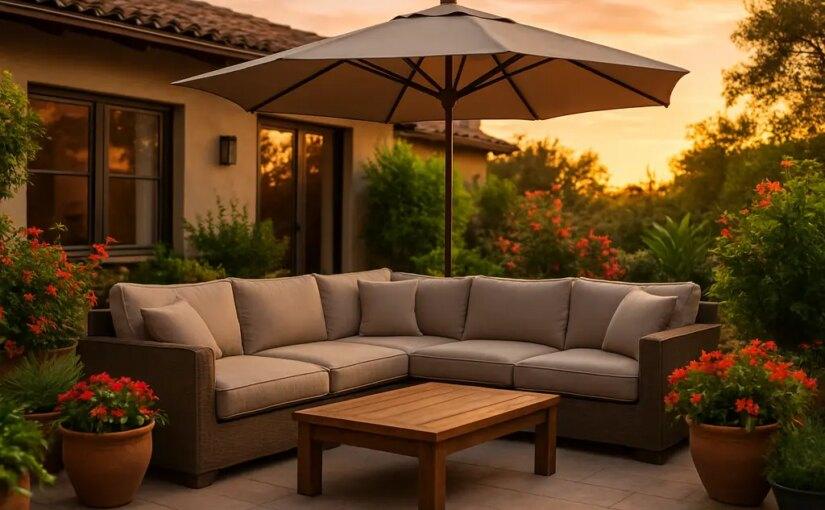
Outdoor comfort renovations now deserve a place beside kitchen and bath planning, not as a decorative afterthought but as a daily-use decision. A villa terrace, like a drawing room with less ceiling and more weather, must earn its keep through shade, seating, lighting, safe circulation, and sensible maintenance. The 2026 data suggests homeowners are placing comfort ahead of resale alone, yet prudence still asks a quieter question: which improvements can be done safely by an owner, and which belong in professional hands?
Outdoor Comfort Renovations And 2026 Priorities
The shift is measurable. In the 2026 U.S. Houzz Outdoor Trends Study, surveyed in April and May 2026, 25% of homeowners said making outdoor spaces more accommodating triggered their renovation, up 3 percentage points since 2024. By contrast, 15% cited improving resale value, down 3 points, according to the Houzz outdoor trends study. That difference is not an invitation to spend with abandon. It is evidence that many households are judging exterior work by daily usefulness: a place to sit, read, dine, cool down, and move without mishap.
For villa owners, this has a particular charm and a particular danger. The charm is obvious: broad doors, garden-facing rooms, and deep terraces can make outdoor rooms feel natural to the house. The danger is that comfort language can disguise technical work. A shaded dining area may involve footings. Lighting may involve electrical systems. A new patio surface may alter drainage. The agreeable result may be a calm afternoon; the route to it should be planned with more discipline than romance.
Outdoor Comfort Renovations Over Resale Alone
Outdoor comfort renovations should not ignore resale value, but they should not be ruled by it either. If a family uses a terrace four evenings a week, a well-sited seating area may carry more practical value than a feature chosen only for a future buyer. At the same time, comfort-led work benefits from restraint: avoid overbuilding, leave clear access for maintenance, and choose finishes that suit local weather rather than a showroom fantasy.
There is a useful middle path. Homeowners can plan zones by function before discussing materials: quiet seating, dining, cooking support, circulation, storage, and planted edges. This order prevents a common mistake, in which one purchases handsome furniture before knowing where shade falls at 3 p.m. or how rainwater leaves the terrace. A villa should appear gracious, certainly, but it should not ask its owners to carry cushions through a storm because no storage was considered.
Seating, Shade, And Lighting As Practical Comfort
Houzz reported that 83% of renovated outdoor spaces in 2026 included a lounge or seating area; 71% included sofas or lounge chairs; 66% had outdoor lighting; and 55% featured a coffee or side table. These figures point to a plain truth: people are not merely dressing the exterior for view from the kitchen window. They are furnishing it for occupation.
Seating is the gentlest place to begin because it carries little structural risk when placed on a sound surface. Yet even here, caution is useful. Check whether the existing patio is level enough for chairs, whether edges are visible at dusk, and whether furniture blocks door swings or emergency routes. Shade is equally practical. Umbrellas and freestanding shade pieces may suit small changes, while pergolas, awnings, and fixed structures require more care because wind loads, attachment points, permits, and drainage can become serious matters.
Comfort Without Creating New Hazards
A comfortable exterior must not trade one inconvenience for another. Low tables can become trip points in narrow passages. Dark stone may become hot underfoot. Smooth tile can become slippery after rain. Lighting that dazzles the eye may make steps less safe rather than more visible. In my view, the best outdoor room behaves like a considerate host: it guides movement, offers rest, and never startles a guest at the stair.
Lighting deserves particular care. Low-voltage path lights and solar fixtures may be reasonable DIY choices for some owners if installed according to manufacturer instructions. Hardwired fixtures, new circuits, exterior outlets, and any work near pools or wet zones should be handled by qualified electrical professionals. The distinction is not a matter of taste. Outdoor electricity faces moisture, soil contact, physical damage, and code requirements. A lovely sconce is a poor bargain if installed unsafely.
Where DIY Ends And Professional Work Begins
One of the most useful findings for homeowners is the rise in professional participation. Houzz found that 71% of homeowners hired professionals for outdoor renovations in 2026, compared with 65% in 2024, and that landscaping contractors were the most frequently hired specialists at 26%. This does not mean every cushion, planter, or side table requires a tradesperson. It does suggest that more owners are recognizing the technical side of exterior comfort.
Safe DIY work may include arranging furniture, selecting outdoor-rated textiles, placing portable planters where they do not obstruct paths, refreshing loose accessories, and assembling manufacturer-approved furniture on stable ground. Medium-risk work deserves pause: paver repairs, privacy screens, heavy planters, overhead shade, and water features can create drainage, anchoring, or lifting concerns. High-risk work should be left to qualified professionals, including structural decks, retaining walls, gas lines, hardwired lighting, major grading, roofing attachments, and any work that may affect water moving toward the home.
- DIY-friendly: furniture layout, cushion storage planning, freestanding planters, and nonwired decorative lighting used as directed.
- Discuss with a pro: pergolas, awnings, drainage changes, built-in seating, masonry, irrigation, and heavy paving.
- Hire qualified trades: structural work, electrical circuits, gas appliances, retaining walls, and elevated decks.
Owners comparing comfort with resale may find useful context in comfort over resale outdoor renovations, especially when deciding whether a modest seating improvement is wiser than a grander but less used feature.
Villa Planning With Flexible Outdoor Rooms
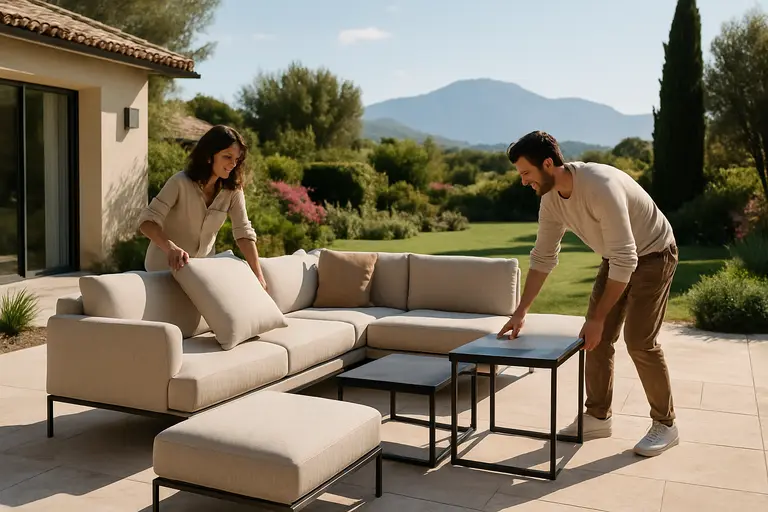
The American Institute of Architects reported in its Q3 2026 Home Design Trends Survey that demand for outdoor living spaces rose by 10% from 2025, more than any other special-function room type in that report, as noted by the AIA home design trends survey. The word “flexible” matters. A terrace that serves morning coffee, children’s drawing, evening conversation, and a quiet supper is more valuable than one arranged for a single theatrical use.
For villas, flexibility begins with adjacency. A dining terrace near the kitchen is used more readily than one placed for symmetry alone. A reading corner needs shade and a view, not necessarily the largest footprint. A conversation area benefits from a coffee table or side tables because comfort is often measured by where one may set a glass, a book, or a pair of spectacles. Here, graciousness and utility are not rivals; they are sisters, provided neither is permitted to dominate foolishly.
For homeowners seeking broader exterior inspiration without confusing it with technical direction, related home design ideas can be useful as a starting point. Still, every villa site differs. Soil, slope, wind, drainage, sun exposure, and local rules can make the same feature sensible in one garden and troublesome in another.
Cost Discipline For Comfort-Led Choices
Outdoor comfort renovations can expand beyond their first intention if the plan begins with objects rather than habits. Before pricing a pergola, ask how many months it will be used, what time of day the area is uncomfortable, and whether a simpler umbrella, tree canopy, or retractable shade would answer the problem. Before adding lighting, identify the unsafe dark spots: steps, thresholds, changes in paving, and the path between door and seating. Before buying a large outdoor sofa, measure circulation with chairs pulled out and doors open.
Cost discipline also includes maintenance. Cushions need storage. Timber needs care suited to the product. Metal may weather. Pale paving may show stains. Dark paving may hold heat. None of these facts forbids a material, but each asks the owner to decide whether the required upkeep suits the household. Jane would advise, gently but firmly, that elegance requiring constant rescue is not elegance but employment.
Outdoor Comfort Renovations For Daily Villa Use
The strongest lesson from the 2026 research is not that resale has vanished from homeowners’ minds. Rather, comfort has become a more visible measure of success. Outdoor comfort renovations work best when they make ordinary days easier: a shaded chair at the right hour, a safe path after dusk, a table within reach, and materials that do not quarrel with the climate.
A cautious plan may feel slower, but it protects both household and home. Begin with use patterns, then assess safety, drainage, shade, lighting, and maintenance. Keep owner-installed work to low-risk improvements and call qualified professionals for structural, electrical, gas, major drainage, or elevated work. A villa exterior should invite its occupants outside with composure. The finest result is not the loudest feature, but the space that is used often, cared for readily, and entered without a second thought.