
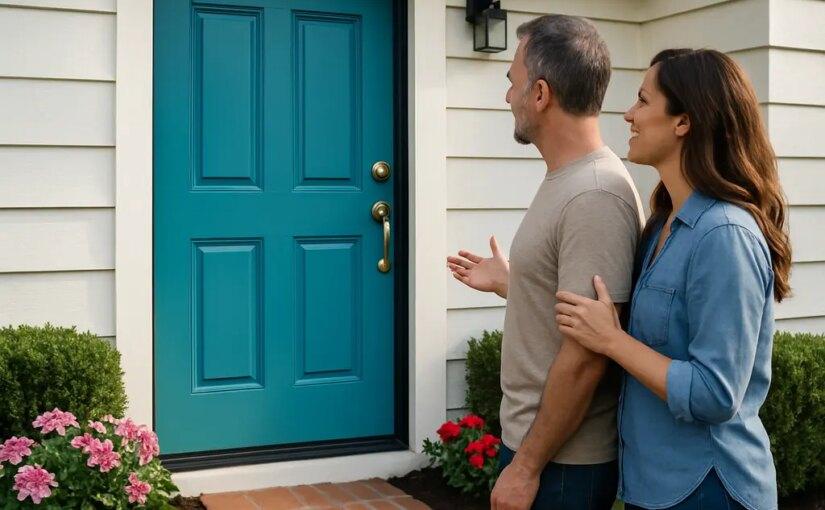
For villa owners weighing resale value against renovation cost, curb appeal upgrades deserve careful attention before a deep interior remodel. The 2025 Cost vs. Value data does not promise a specific sale price for any individual home, but it does show a clear pattern: smaller, visible exterior replacements often recovered more cost than larger, more expensive renovations. That makes the front elevation, entry sequence, garage face, and exterior material condition a practical starting point for owners who want to spend with restraint.
Why Curb Appeal Upgrades Outperform
Exterior work has an advantage that is easy to underestimate: buyers see it before they enter the house. A clean entry door, sound garage door, and well-proportioned façade repair can signal care before anyone studies the kitchen counters. That does not mean every exterior project is a wise investment. It means the first question should be whether the project corrects a visible weakness, supports weather protection, and fits the home’s existing architecture.
Exterior Replacements Are Visible Before A Showing
The 2025 Cost vs. Value project data reported striking national averages for several exterior replacements. Garage door replacement had an average cost of $4,672 and added $12,507 in resale value, for a reported 267.7% return. Steel entry door replacement cost about $2,435 and added about $5,270 in resale value, for a 216.4% return. Manufactured stone veneer, used to replace portions of siding or façade, cost about $11,700 and added about $24,300 in resale value, for a 207.9% return, according to the 2025 Cost vs. Value project data.
These numbers are national averages. They should be read as planning evidence, not as a substitute for local market advice, contractor bids, or a condition review of the house. A villa with water-damaged trim, poor flashing, or failing paint may need repair before any cosmetic change can perform well. A beautiful new door set into a deteriorated frame is not a value strategy; it is a short-term patch.
Curb Appeal Upgrades With Reported Returns
The strongest curb appeal upgrades in the 2025 report shared three traits: moderate cost, strong visibility, and a clear relationship to the home’s first impression. They also avoided expanding the house, moving walls, or changing high-risk systems. That narrower scope is one reason they can show higher percentage returns than larger renovations.
| Project | Average Cost | Resale Value Added | Reported Return |
|---|---|---|---|
| Garage door replacement | $4,672 | $12,507 | 267.7% |
| Steel entry door replacement | $2,435 | $5,270 | 216.4% |
| Manufactured stone veneer | $11,700 | $24,300 | 207.9% |
| Minor kitchen remodel | Not specified in the research notes | Not specified in the research notes | About 113% |
| Composite deck addition | About $25,000 | Not specified in the research notes | About 88.5% |
Zonda’s 2025 report also stated that eight of the top 10 projects with the highest ROI were exterior replacement or curb-appeal projects, a useful signal for homeowners comparing scope before committing funds to a remodel Zonda report.
How Smaller Projects Compare With Big Remodels
Large renovations can improve daily life, solve layout problems, and repair worn systems. They should not be dismissed. The caution is that cost recovery is a different question from comfort. A primary suite addition or upscale kitchen renovation may make sense for a household planning to stay for many years, but the research notes indicate that some major interior projects often returned 30% to 60% of cost, while upscale kitchen renovations were often in the 50% to 60% range or lower.
Cost Recovery Is Not The Same As Enjoyment
A villa owner who cooks daily may value a kitchen remodel far beyond its resale return. A family that needs safer circulation or better storage may have good reasons to renovate inside. Still, if the main goal is resale-minded spending, smaller exterior replacements can be easier to justify. They cost less, take less time in many cases, and do not usually require the same level of disruption as a whole-room rebuild.
The Cost vs. Value comparison between a minor kitchen remodel at about 113% return and larger upscale work at substantially lower recovery illustrates the scale problem. As scope grows, costs can rise faster than the market is willing to recognize at resale. This is especially relevant for villa owners tempted to over-customize finishes. A buyer may appreciate a refined interior, but may not pay back the full cost of imported stone, specialty cabinetry, or layout changes that reflect one household’s habits.
Use Scale Before Style
Use curb appeal upgrades as part of a repair-first plan rather than a surface-only refresh. Start by asking whether the garage door is dented, noisy, poorly sealed, or visually out of step with the façade. Then study the entry door for weathering, poor fit, weak hardware, or a color that fights the exterior palette. If masonry veneer is being considered, confirm that the project includes proper water management details and compatible transitions with the existing wall system.
For a closer look at doors, siding, decks, patios, and exterior value comparisons, see this related discussion of outdoor value recovery. The same cautious principle applies: the best project is rarely the largest one. It is the one that solves a visible problem without creating hidden maintenance risk.
DIY Boundaries For Exterior Work
Some curb-focused improvements are reasonable for careful homeowners. Others belong with qualified trades. The distinction is not about pride or convenience; it is about injury risk, water intrusion, code requirements, and long-term performance. Exterior projects are exposed to wind, rain, heat, impact, and daily use, so poor installation can damage more than appearance.
Safer Owner Tasks
Homeowners can often handle low-risk planning and preparation tasks, provided they stay at ground level, use basic protective gear, and follow product labels. Reasonable owner tasks may include documenting damaged trim, washing siding from a safe position, comparing door colors with large samples, tightening visible non-structural hardware where allowed by the manufacturer, or replacing a mailbox mounted at accessible height. If outdoor lighting is involved, limit DIY work to bulb selection or fixture cleaning with power off only where the fixture is safely reachable; wiring should be left to a qualified electrician.
- Do not adjust garage door springs, cables, tracks, or openers unless you are trained and equipped for that work.
- Do not cut structural framing, alter exterior wall openings, or remove load-bearing components without a qualified professional.
- Do not install stone veneer without understanding flashing, drainage, and manufacturer requirements.
- Do not perform electrical, gas, or plumbing work as part of an exterior refresh unless you are licensed where required.
- Do get written scopes, product documentation, warranty terms, and permit guidance before work begins.
Projects That Usually Need Qualified Trades
Garage door replacement is one of the clearest examples of a high-return project that should not be treated as a casual weekend task. Springs and moving door assemblies can cause severe injury if mishandled. Entry door replacement can also affect security, air sealing, water shedding, and threshold performance. Manufactured stone veneer requires proper substrate preparation and drainage details; mistakes can trap moisture behind the cladding.
While tools can aid in achieving great results, they aren’t a replacement for proper training. For information on equipment, High Pro Tools offers resources and inspirations. However, always adhere to manufacturer instructions and consider hiring licensed trades for high-risk work. A safer renovation plan recognizes the line between preparation and installation.
Planning A Resale-Minded Exterior Budget

A practical exterior budget starts with condition, not decoration. Walk the approach to the villa as a buyer would: driveway, path, garage face, entry, porch, siding transitions, and visible trim. Note anything that looks tired, damaged, mismatched, or poorly maintained. Then separate defects from preferences. A rotten threshold is a defect. A door color you dislike may be a preference unless it weakens the home’s presentation.
Start With Defects Buyers Can See
Visible neglect can make buyers wonder what else has been deferred. That is why a modest exterior correction can have outsized value. A new garage door on a prominent front-facing garage may change the whole elevation. A steel entry door can sharpen the arrival point. A limited stone veneer application can add texture if the existing design supports it. None of these choices should be made from a showroom sample alone. View samples in natural light, compare them with roof color and paving, and ask how the material will age.
Check Local Fit Before Spending
National ROI figures are a starting point. They do not account for every local market, climate, architectural style, or buyer expectation. A coastal villa, a desert home, and a wooded hillside property place different demands on finishes. Salt air, sun exposure, freeze-thaw cycles, and wind-driven rain can all affect material life. Before signing a contract, ask contractors how the selected product performs in your region and whether permits or inspections apply.
Also avoid spending the entire budget on one dramatic feature while leaving obvious maintenance undone. A refined entry door will not compensate for failing gutters, stained stucco, or unsafe steps. If funds are limited, prioritize repairs that protect the building enclosure first, then choose visible upgrades that reinforce the home’s existing character.
Smaller Curb Appeal Upgrades And ROI Choices
The 2025 data supports a restrained lesson: curb appeal upgrades can outperform larger renovations on reported percentage return, especially garage doors, steel entry doors, and manufactured stone veneer. That does not make them automatic choices for every villa. The better decision is to match the project to the home’s condition, the local climate, and the owner’s time horizon.
For many villas, curb appeal upgrades work best as precise corrections rather than decorative spending. Replace what is failing, simplify what looks dated, and bring the entry sequence into better proportion. Leave dangerous mechanisms, electrical work, structural changes, and water-sensitive cladding details to qualified professionals. A smaller project with sound installation is usually more defensible than a larger remodel built around uncertain resale hopes.