
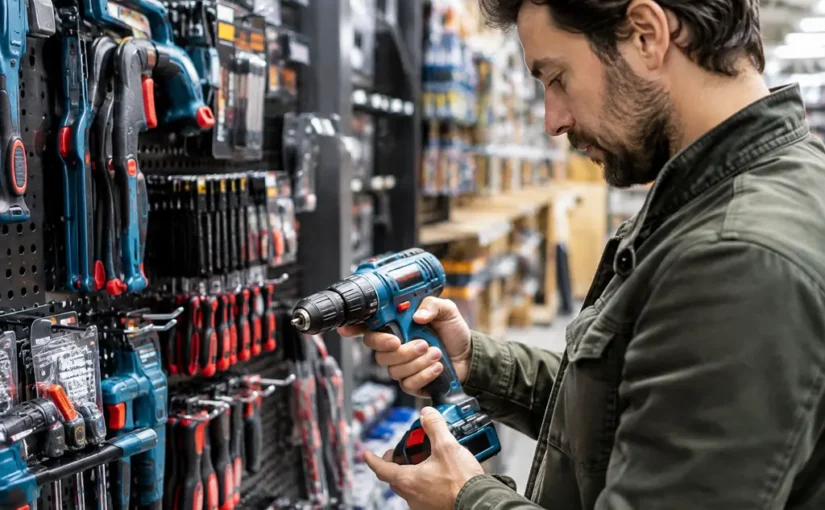
For villa owners planning repairs, outdoor upgrades, or material-heavy remodeling, tool buying trends in 2026 point to a more careful kind of shopper. Homeowners are not simply chasing the lowest shelf price. They are comparing quality, durability, availability, safety, and whether a tool is suitable for the actual work ahead. That shift matters because a villa project often involves heavier materials, weather exposure, and finishes that can be costly to repair if the wrong tool damages them.
Tool Buying Trends And The Quality Shift
The clearest signal from the 2026 data is that quality has moved ahead of price for many homeowners. In Q3 2026, HIRI reported that 70% of homeowners named quality as their top purchase factor for home improvement products, statistically ahead of price at 63%; durability declined from 57% in Q2 to 54% in Q3 HIRI Q3 tracker. This does not mean homeowners stopped caring about cost. It means the cheapest tool is less attractive if it feels likely to fail, slow the work, or create avoidable mistakes.
These tool buying trends are especially relevant for building materials. Cutting trim, fastening decking, drilling masonry, or sanding exterior patchwork all place different demands on a tool. A low-duty tool may be acceptable for occasional assembly work, but it may be the wrong choice for dense hardwood, stone veneer, cement board, or repeated outdoor use. Homeowners should read the product manual, understand rated uses, and avoid assuming that a tool advertised for one task can safely handle another.
Quality Is Not The Same As A Premium Label
A quality purchase is not always the most expensive model. The better question is whether the tool fits the material, the project duration, and the skill level of the user. For a homeowner installing shelves into standard wall framing, a modest drill may be enough. For drilling into masonry, working around brittle tile, or fastening structural connectors, tool choice becomes more demanding and the risk of damage rises. If the task affects structure, weatherproofing, electrical systems, gas lines, roofing, or major plumbing, the safer decision is to hire a qualified professional rather than buy a tool to attempt it once.
For practical comparison, homeowners can review related tool categories on a valuable tool reference site, then verify any model against the manufacturer’s manual before purchase. The manual matters more than marketing copy because it defines intended use, limits, maintenance, and protective requirements.
Tool Buying Trends By Project Risk
Project risk should shape the shopping list. A villa owner repainting trim, assembling storage, or replacing cabinet hardware can usually stay within low-risk DIY territory if they use basic protective gear and follow instructions. Work that alters guardrails, stairs, load-bearing framing, waterproof assemblies, service panels, gas appliances, or roof surfaces is different. In those cases, the tool purchase may be a false economy because the main need is trade knowledge, permitting awareness, and liability protection.
Functionality Before Aesthetics
Functionality has become more than a convenience feature. It affects fatigue, accuracy, material waste, and whether a homeowner can finish a project without improvising unsafe methods. The best tool for a villa project is often the one that helps the user work within safe limits: stable handling, clear controls, compatible accessories, available replacement parts, and support from the manufacturer or retailer.
For building-material projects, compatibility deserves close attention. Blades, bits, sanding pads, fasteners, batteries, dust collection attachments, and chargers can affect performance. A saw that looks like a bargain may become expensive if compatible blades are hard to find. A cordless platform may be convenient, but only if the batteries are available and suitable for the expected workload. Homeowners should check the total system cost, not only the tool body price.
Match Tools To Materials
Villa materials are rarely forgiving. Natural stone can chip, porcelain tile can crack, hardwood can burn during poor cutting, and exterior cladding can lose its weather protection if fastened incorrectly. Before buying, identify the material first, then confirm what tool type and accessory the manufacturer allows. If a material warranty requires specific installation methods, that requirement should take priority over a DIY shortcut.
This is also where planning reduces waste. Buying a tool after the project starts often leads to rushed decisions. A better method is to list each project step, identify the materials involved, and mark the points where a professional should take over. For smaller tasks, the site’s discussion of small-project tool planning gives a useful frame for keeping purchases proportionate to the job.
Availability And Maintenance
Availability is not only about whether a tool is on the shelf. It includes blades, belts, filters, batteries, chargers, repair support, and safety accessories. A tool that cannot be maintained may become a disposable purchase. That is not ideal for budgets or for sustainable villa living, where durability and repairability should carry weight.
Homeowners should also consider storage conditions. Outdoor sheds, garages near salt air, and humid utility rooms can shorten the life of tools and accessories. Protective cases, dry storage, battery care according to the manual, and routine inspection can extend usefulness without turning a simple tool kit into an oversized workshop.
Price Pressure And Delayed Upgrades
Price pressure still shapes buying behavior. A 2026 VEVOR report distributed through PR Newswire found that more than 1 in 3 Americans, reported as 35%, had a tool or appliance upgrade on hold; among those delaying, 44% cited price as the reason, and 20% reported plans to upgrade or replace power tools specifically VEVOR report. That hesitation is understandable, particularly when homeowners face material costs and uncertain project scope.
Delaying a purchase is not always a problem. If the current tool is safe, appropriate, and functioning, waiting can prevent unnecessary spending. But there are clear warning signs: damaged cords, cracked housings, unreliable triggers, loose guards, missing safety components, overheating, or batteries that do not charge as expected. A questionable tool should not be used simply to avoid replacement cost.
Where Waiting Makes Sense
Waiting can make sense for low-frequency tools, especially if the project is still conceptual. Renting may also be reasonable for some specialty tools, provided the homeowner receives basic operating guidance and reads the instructions. For example, a one-time landscaping or surface-preparation task may not justify ownership if storage, maintenance, and accessory costs are high.
There is a caution: renting or buying does not make a high-risk job safe. The presence of a tool does not replace trade experience. If a project requires electrical diagnostics, gas connection work, structural alteration, roofing access, or major waterproofing judgment, the correct purchase may be professional labor rather than equipment.
Safer Buying Criteria For Villa Projects

A sensible tool purchase starts with scope. Define the project, the material, the frequency of use, and the consequences of a mistake. A villa owner repairing a gate hinge has a very different need from one altering exterior cladding or cutting large-format tile. The more permanent or weather-exposed the work, the more conservative the buying decision should be.
- Fit to material: Confirm the tool and accessory are rated for the material, not merely similar work.
- Safety features: Look for guards, stable grips, clear controls, and manufacturer instructions that match your skill level.
- Repair path: Check whether parts, batteries, blades, filters, and service support are available.
- Total cost: Include accessories, protective equipment, storage, maintenance, and possible rental alternatives.
- DIY boundary: Hire qualified professionals for structural, electrical, gas, roofing, or major plumbing work.
This approach supports sustainability as well as safety. A durable tool that is actually used, maintained, and repaired is often a better household asset than a cheap tool discarded after one frustrating project. Yet restraint is part of good design practice. A villa does not need a commercial workshop for occasional maintenance; it needs the right tools for safe, realistic tasks and skilled tradespeople for the work that carries higher risk.
How To Read Claims Before Buying
Homeowners should treat broad claims with caution. Words such as heavy-duty or pro-grade are less useful than measurable information in the manual or product specifications. Check intended materials, accessory compatibility, warranty terms, battery platform details, and maintenance requirements. If the documentation is vague, that is a reason to pause rather than assume the tool will perform well.
Tool Buying Trends For 2026 Villa Decisions
Reading tool buying trends through a villa lens leads to a practical conclusion: buy fewer tools, but choose them with more discipline. Quality matters, but only when it is tied to the task. Functionality matters, but only when it improves safety, accuracy, and maintainability. Price matters, but a low upfront cost can disappear quickly if the tool damages materials or encourages work beyond a homeowner’s safe skill range.
The strongest buying decision is evidence-based and project-specific. Start with the material, confirm the scope, read the manual, and decide honestly whether the job belongs in DIY territory. That process may lead to a purchase, a rental, or a call to a qualified contractor. Any of those can be the right decision when the goal is a safer, longer-lasting villa upgrade.