
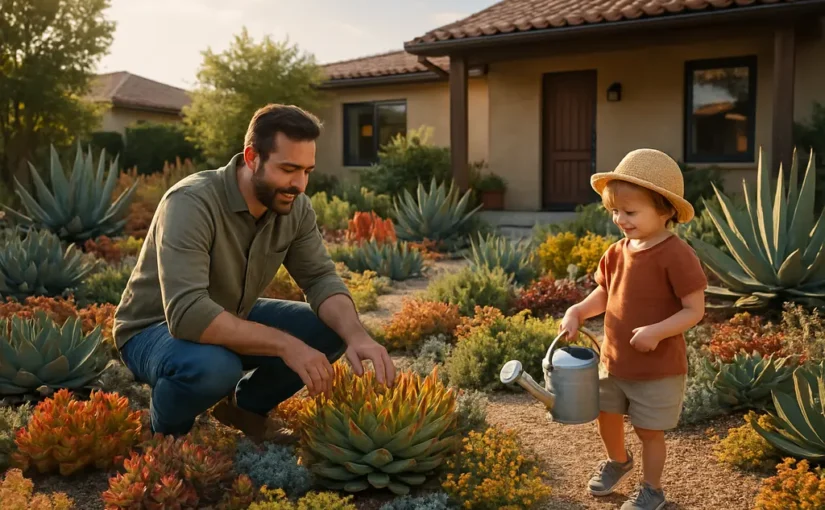
Drought-resistant landscaping is no longer a niche choice for dry-region homeowners. It is a practical design response to water cost concerns, hotter planting beds, and the need for outdoor spaces that do not require constant rescue. From my work advising homeowners on exterior style and planting plans, the strongest projects start with a sober question: how much yard can you maintain safely, affordably, and consistently?
The value case is not only about resale. It is also about reducing avoidable watering, cutting back on high-maintenance turf, and making the exterior read as intentional rather than neglected. A Mediterranean villa, a stucco ranch, or a modern courtyard home can all support lower-water planting, but each needs a different balance of paving, shade, soil preparation, and irrigation.
Why Drought-Resistant Landscaping Holds Value
Drought-Resistant Landscaping And Water Risk
The most persuasive reason to rethink a thirsty yard is water demand. The EPA notes that U.S. households use nearly 30% of total household water outdoors, mostly for irrigation, and that outdoor use can reach about 60% in dry climates, according to EPA WaterSense outdoor water guidance. That statistic should change how homeowners budget for curb appeal. A planting bed that looks good for one spring but struggles by late summer is not a value project; it is a maintenance liability.
For homeowners thinking in design terms, the shift is from decorative planting to performance planting. The front approach still matters. The entry path still needs structure. Materials still need to match the architecture. But the planting plan has to respect the site’s water reality. Drought-resistant landscaping works best when it looks designed from the start, not when it appears to be a turf replacement afterthought.
What The 2026 Drought Data Shows
The early part of 2026 gave homeowners a clear warning. Across the contiguous United States, drought coverage increased from about 40.3% on December 9, 2025, to about 54.9% on March 3, 2026, as reported in USDA’s March 31, 2026 Prospective Plantings report. That does not mean every neighborhood had the same conditions, but it does support a cautious approach: design for dry periods before they become an emergency.
Homeowners should avoid copying a planting palette from a distant region or a social media photo. A gravel garden in one climate may overheat a small courtyard elsewhere. A native meadow may need establishment care before it can carry itself. A good plan starts with local exposure, slope, soil texture, irrigation access, and how the family actually uses the yard.
Design Moves That Reduce Water Demand
Planting Zones Before Plant Lists
Plant selection gets most of the attention, but zoning is the quiet structure behind a successful plan. Grouping plants by water needs makes the yard easier to irrigate and easier to diagnose. If a low-water shrub sits beside a thirsty annual bed, one of them is likely to be stressed. If the patio edge, foundation beds, and street-facing strip each have distinct exposure, they should not be treated as one uniform planting area.
This is where style and restraint meet. A villa-style home may benefit from clipped forms, pale stone, and silver-green foliage. A cottage-style exterior may accept looser drifts and softer textures. A modern home often needs fewer species, repeated carefully. The common thread is not a specific look; it is a coherent water strategy.
Irrigation Choices Worth Pricing
Drought-resistant landscaping does not always mean no irrigation. New planting typically needs establishment watering, and even mature plantings may need help during severe dry spells. The more useful question is whether the irrigation is targeted, adjustable, and appropriate for the planting zones.
Drip irrigation, rain sensors, smart controllers, and rainwater storage can all be part of a water-aware plan, but they are not equally simple to install. A homeowner can often manage basic hose-end watering schedules and simple mulch refreshes. Tying irrigation into existing systems, altering pressure zones, or adding pumps should be priced with qualified installers. Improper irrigation can waste water, damage hardscape edges, or create damp areas near foundations.
Materials, Architecture, And Outdoor Comfort
Hardscape That Does Not Create New Problems
Replacing lawn with paving can reduce mowing, but it can also add heat, glare, and runoff if handled poorly. I advise homeowners to treat hardscape as architecture, not filler. Pavers, decomposed granite, stone bands, and gravel should relate to the home’s exterior materials. A cool-toned concrete path beside warm stucco can look accidental unless another element ties the palette together.
Water-smart design also needs safe surfaces. Walking routes should be stable, slip-conscious, and well edged. Loose gravel may be attractive, but it can be difficult for strollers, walkers, and some mobility devices. Stepping stones need consistent spacing and firm bedding. If the project affects drainage near the house, do not guess. Bring in a qualified contractor or drainage professional before water starts moving toward doors, crawl spaces, or retaining walls.
Shade, Soil, And Usable Space
A lower-water yard still has to be comfortable. Shade from trees, pergolas, or well-placed structures can make a patio more usable and reduce stress on nearby plantings. Soil preparation also matters. Compacted soil can shed water before roots can use it, while poorly amended planting holes can create uneven moisture pockets.
For broader planning ideas that pair outdoor comfort with lower upkeep, I would compare your scope with climate-smart landscaping for villa yards. The same principle applies across home types: make the yard easier to live with before adding decorative layers.
DIY Scope Versus Professional Work
Safer DIY Tasks
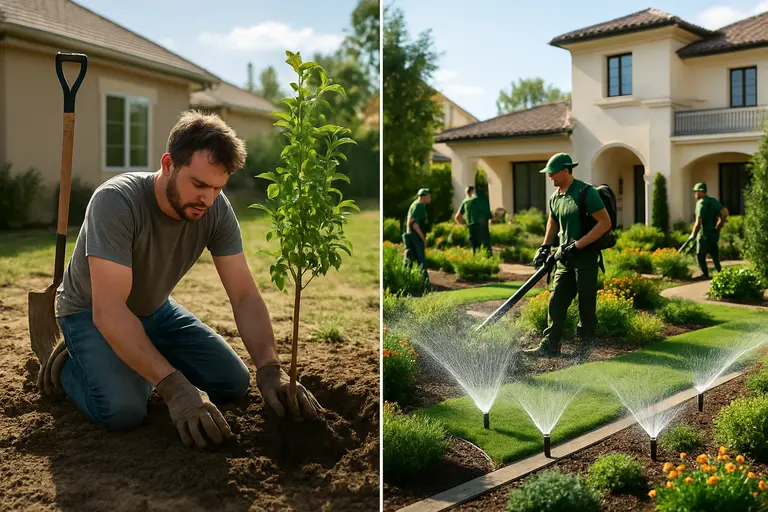
Many homeowners can contribute meaningfully without taking on risky work. The safest DIY role is often planning support and light installation, not major grading or utility-adjacent work. Before digging, homeowners should use local utility-marking services and confirm any homeowner association or municipal rules that apply to front yards, parkways, fences, or drainage changes.
- Reasonable DIY tasks: measuring sun exposure, removing small annual beds, spreading mulch, placing container plants, and tracking irrigation run times.
- Use caution: digging near utilities, moving heavy stone, operating unfamiliar power equipment, or working on slopes.
- Hire help: drainage correction, retaining walls, large tree work, irrigation tie-ins, greywater systems, and any work requiring permits.
Projects That Need A Qualified Pro
Professional help is not a failure of thrift; it is risk control. Retaining walls can fail. Poor drainage can damage structures. Large boulders and trees can injure people during installation. Greywater reuse, where allowed, may involve plumbing rules and health safeguards. These are not good trial projects for a weekend.
If you are comparing a landscaping scope with other exterior improvements, it can help to review how home projects are presented by related design and construction resources such as J. Siemering Homes. This site offers insights into related resources to aid your decision-making. The useful habit is the same: define the scope, identify risk, and match the task to the right level of expertise.
Planning Drought-Resistant Landscaping For Your Site
The best time to plan drought-resistant landscaping is before the yard is stressed. Start with a simple site audit: where water collects, where plants scorch, where foot traffic cuts across beds, and where the house needs shade or clearer access. Then price the project in phases. Turf reduction near the street, shade planting near the patio, and irrigation updates do not all have to happen at once.
Be cautious with promises about payback. A water-smart yard may reduce irrigation demand and maintenance pressure, but actual savings depend on climate, local rates, plant choices, and how the system is managed. Value is strongest when the design fits the architecture, protects the structure, and stays manageable for the people who live there.
For most homeowners, the wise path is a blended one: DIY the observations and light finishing work, then hire licensed or qualified professionals for drainage, irrigation, heavy materials, and regulated water systems. That balance keeps the project grounded. Drought-resistant landscaping should not feel like a sacrifice; it should feel like a yard finally designed for the conditions it has to face.