
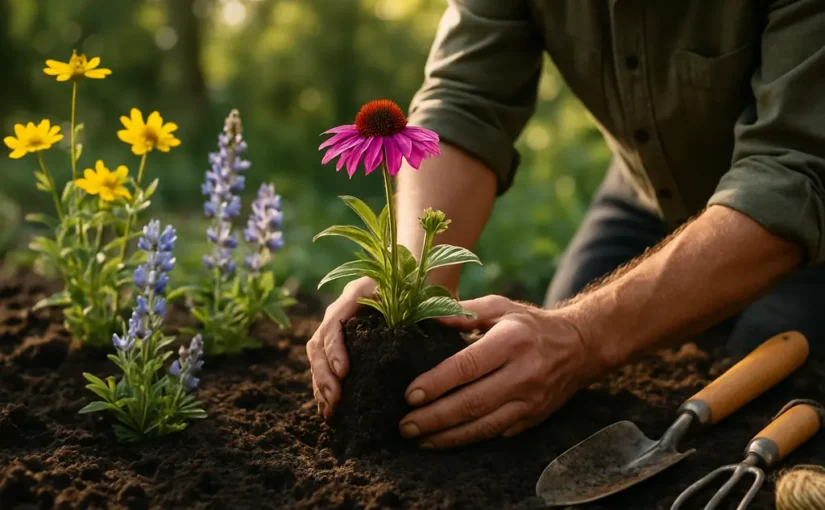
For villa owners, low-maintenance landscaping works best when it is treated as a home-improvement decision, not just a planting trend. Native and pollinator-friendly plants can reduce routine upkeep in many yards, but the results depend on region, soil, irrigation condition, sun exposure, and the way the outdoor rooms connect to the house.
I approach this type of project as a designer by starting with use patterns. A villa yard often has dining zones, shaded sitting areas, guest paths, pool edges, and service access. Planting should support those spaces without creating trip hazards, blocked sightlines, drainage issues, or an unrealistic maintenance burden. The goal is not a wild yard with no plan. It is a measured planting strategy that uses the right plants in the right places and keeps higher-risk work in professional hands.
Why Low-Maintenance Landscaping Is Gaining Ground
What The Trend Actually Supports
The strongest evidence behind low-maintenance landscaping is practical rather than decorative. Research cited in 2025 found that diverse native plantings reduced irrigation by 79% compared with weekly irrigation of conventional plantings, while still supporting floral abundance and pollinator diversity. The same research recorded 156 different pollinator species visiting native plant plots. Those findings support a cautious design lesson: plant diversity and local adaptation can matter as much as the label on a plant tag.
Consumer interest also appears real. A University of Florida publication based on a survey of 1,243 consumers reported that 69% of gardening households expressed interest in buying ornamental plants that benefit pollinator insects, while 50% were already buying pollinator-friendly plants and 35% primarily bought native plants according to UF IFAS. That does not prove every homeowner will maintain a pollinator garden well, but it does show that many buyers recognize ecological value in plant choices.
Why Villa Yards Need More Than Plant Lists
Villa outdoor spaces often ask plants to do several jobs at once: soften architecture, frame views, cool paved areas, screen service zones, and reduce mowing. A native grass that works beautifully in a meadow strip may be wrong beside a narrow entry walk if it flops into the path. A flowering shrub may support insects but still be a poor fit near a dining terrace if it drops fruit or attracts heavy bee traffic close to seating.
Start with zones. Keep active surfaces clear and stable. Use taller plantings where they will not block windows, lighting, or security views. Place flowering pollinator plants where people can enjoy them without crowding door swings, steps, pool coping, or grill areas. If you are coordinating garden work with remodeling, the related homebuilding resource J. Siemering Homes can help frame outdoor decisions alongside broader house planning, providing a seamless integration of indoor and outdoor spaces.
Plant Choice, Water Demand, And Pollinator Value
Native Does Not Mean No Care
Native plants are not automatically maintenance-free. A plant native to one part of a state may struggle in another part with different soil, rainfall, salt exposure, elevation, or heat. Homeowners should match plants to site conditions rather than buying from a generic native list. The first year can also require attention while roots establish. Mulch depth, watering frequency, weed control, and spacing all affect whether the planting becomes lower-care later.
Water savings are possible, but they are not magic. In the El Paso, Texas, turf replacement program described by Texas Water Resources Institute, homeowners replaced 3.4 million square feet of grass with water-efficient planting and saved 130 million gallons of water per year in the reported program outcomes. That is a strong signal for dry-region planning, but it should not be copied blindly into humid, shaded, or poorly drained yards. The better lesson is to reduce high-input turf where it is not needed and select plants suited to the local water pattern.
Pollinator-Friendly Placement
Pollinator-friendly plants need more than flowers. They need reduced pesticide exposure, bloom sequence, shelter, and a setting where they will not conflict with daily use. For villas, I prefer to place higher-flower-density beds near garden edges, side-yard corridors, or view areas rather than directly beside the busiest dining table. This keeps the planting visible and useful without creating avoidable friction between people and insects.
Layering matters. Groundcovers can reduce bare soil. Perennials can supply seasonal bloom. Shrubs can give structure so the yard does not look empty in dormant periods. Trees, where space allows, can shade patios and reduce heat on paving. For a deeper planning angle on plant selection, this site’s article on low care villa gardens pairs well with the same cautious design approach.
DIY Scope, Safety, And Professional Boundaries
Low-Maintenance Landscaping Safety Checks
A safe low-maintenance landscaping project starts before anyone lifts a shovel. Homeowners should identify irrigation lines, drainage outlets, lighting cables, tree roots, and underground utilities before digging. Keep soil and mulch below siding and weep areas to reduce moisture risk at the building edge. Do not pile mulch against trunks or foundation walls. Avoid placing dense shrubs where they block dryer vents, equipment access, or required service clearances.
DIY work is reasonable for many small tasks: removing small lawn sections by hand, planting container-grown perennials, spreading mulch, placing drip tubing above grade where allowed by the system design, and documenting plant locations for future care. Even then, use basic personal protection such as gloves, eye protection when cutting or chipping debris, and safe lifting habits. Homeowners with allergies or sting sensitivity should plan pollinator beds with extra care.
When Hiring A Professional Is The Safer Choice
Hire qualified help when the work changes grading, directs water near the house, alters hardscape slopes, connects to pressurized irrigation, affects retaining walls, or requires electrical lighting. These are not good trial projects. Poor drainage can send water toward slabs, crawl spaces, doors, and neighboring properties. Badly set steps or stones can become fall hazards. Incorrect irrigation changes can waste water or damage plants.
A professional can also help read the site before plant money is spent. Soil compaction, reflected heat from walls, deer pressure, salt spray, and wind corridors can all change the plant list. For villa properties, a designer should coordinate planting heights with window views, outdoor furniture layouts, and night lighting so the yard supports daily living rather than fighting it.
Cost, Care, And Villa Design Fit
Budget Where Failure Would Be Expensive
The cheapest plant layout is not always the least expensive over time. Small plants may save money at purchase, but if they are spaced too far apart, weeds can fill the gaps and increase labor. Large specimens can give faster structure, but they may need more careful watering during establishment. Spend more where failure would be costly: drainage correction, soil preparation, main pathways, shade trees, and irrigation adjustments.
Cost recovery should be treated carefully. A well-planned yard can improve daily use and curb appeal, but no planting scheme should be treated as a promised resale return. The more reliable value is functional: less mowing where turf is not serving a purpose, more shade where paving overheats, and plantings that need fewer chemical inputs once established.
Maintenance Calendar Before Installation
Before buying plants, write the care calendar. Who will water during establishment? Who will cut back perennials, inspect irrigation, renew mulch, and remove weeds before they seed? If the answer is unclear, reduce the plant count or simplify the design. A smaller native bed maintained well usually performs better than an ambitious installation neglected after the first month.
- Good DIY scope: small planting beds, mulch refreshes, plant labels, simple hand weeding, and seasonal observation.
- Use caution: sod removal near tree roots, digging near utilities, heavy stone edging, and changes near door thresholds.
- Hire a pro: grading, drainage, retaining walls, wired lighting, complex irrigation, and large tree work.
Low-Maintenance Landscaping For Native Pollinator Yards
A Practical Villa Plan
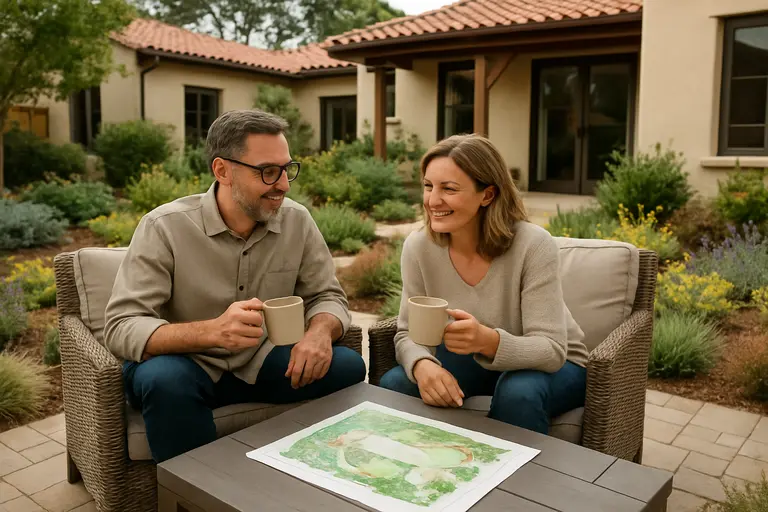
A good low-maintenance landscaping plan for a villa starts with a measured drawing, even if it is simple. Mark doors, windows, utilities, downspouts, hose bibs, AC equipment, seating areas, and paths. Then decide where turf still earns its keep. A small play area or pet zone may justify grass. Narrow leftover strips, steep corners, and hot side yards often make better candidates for native groundcovers, shrubs, gravel bands, or mulched planting beds.
Next, choose plants by mature size and maintenance behavior. Ask whether each plant will need frequent pruning to stay in bounds. Check whether it reseeds heavily, needs deadheading, or drops debris near drains and pools. Group plants by water need so irrigation can be reduced without stressing thirsty species. Keep a written plant list and care notes for future owners, gardeners, or family members.
The trend toward native and pollinator-friendly yards is useful because it pushes homeowners to question high-input lawns and fragile ornamental beds. Still, the safest results come from site-specific choices. Start small, observe for a season, and expand only after the first area proves manageable. That patient approach gives villa outdoor living a calmer, more durable foundation without pretending that any garden takes care of itself.