
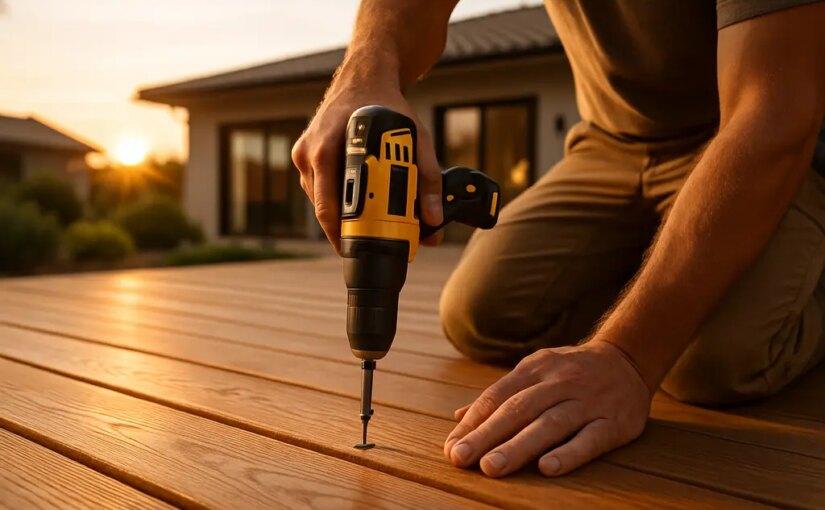
The trusted power tool brands conversation in 2026 was not just about loyalty to a yellow, red, blue, or green case. For villa owners, the better question was how consumer trust, price position, battery commitment, and safe project boundaries should shape a tool purchase. A well-chosen drill or saw can support small outdoor living upgrades; the wrong purchase can sit unused, cost more than planned, or encourage a homeowner to take on work better left to a licensed trade.
Trust rankings are useful, but they are not a substitute for project planning. A villa courtyard, pool-adjacent deck, pergola repair, or built-in storage wall may look simple in a mood board. In practice, materials, fasteners, dust control, water exposure, and code-sensitive connections decide whether a job belongs in a weekend DIY plan or in a professional scope. I look at power tools the way I look at outdoor furniture: buy for fit, upkeep, and honest use, not for showroom appeal.
Trusted Power Tool Brands In 2026
Trusted Power Tool Brands And Survey Context
The clearest consumer-trust signal in the available research came from Lifestory Research. In its 2026 America’s Most Trusted Power Tools study, DeWalt ranked first with a Net Trust Quotient score of 119.7 and a five-star rating. The study surveyed 14,452 U.S. consumers who had actively shopped for power tools during the previous 12 months, according to Lifestory Research.
The same 2026 ranking listed the top 13 brands as DeWalt, Craftsman, Bosch, Milwaukee, Makita, Stanley, Black+Decker, Kobalt, Ryobi, Hilti, Ridgid, Husky, and Irwin. DeWalt also continued a five-year run from 2022 through 2026 as the top-ranked brand in that study. That pattern is useful because a single strong year can reflect advertising, a product cycle, or retailer visibility. A multi-year pattern suggests more stable consumer perception, though it still does not prove that every tool from that brand is the right tool for every homeowner.
For villa owners, the practical reading is narrow: the ranking can help you form a shortlist, not make the full buying decision. A trusted brand may still offer entry-level, midrange, and heavy-duty models that differ in weight, battery cost, warranty terms, and comfort. A compact drill for assembling teak dining chairs is a different purchase from a rotary hammer for masonry work, and the second example may require a professional depending on the wall, fastener, and building conditions.
Reading Trust Beside Market Share
Unit Share Is Not The Same As Dollar Share
Market share adds another layer to the story. OpenBrand’s Q4 2025 power tool sales data showed DeWalt and Ryobi each at 19% unit share. The same data showed a wider gap in dollar share: DeWalt held 28%, while Ryobi held about 11%. Milwaukee held about 13% unit share and 22% dollar share in that period, based on OpenBrand data.
This matters because unit share and dollar share describe different buyer behavior. Unit share can indicate broad reach. Dollar share can reflect higher average selling prices, product mix, or stronger sales in higher-priced categories. It would be too strong to say that a higher dollar share proves better quality. The safer interpretation is that many buyers were willing to spend more on certain brands or tool lines.
That distinction is useful for villa lifestyle projects. A homeowner who only needs a drill, driver, inflator, and light-duty sander may not benefit from paying into a professional-grade system. A homeowner maintaining several outdoor zones, cabinetry, gates, storage rooms, and garden structures may value batteries, chargers, and accessories that remain useful across multiple tools. The right answer depends on the work you actually do, not the most visible brand at the store.
| Brand Signal | What The Research Shows | How A Homeowner Should Use It |
|---|---|---|
| Consumer trust | DeWalt ranked first in the 2026 Lifestory study. | Use trust as a starting point for a shortlist. |
| Repeated ranking | DeWalt held the top Lifestory position from 2022 through 2026. | Read this as steady perception, not a universal fit. |
| Unit share | DeWalt and Ryobi each held 19% in Q4 2025 sales data. | Look at popularity, but compare tool class and battery cost. |
| Dollar share | DeWalt held 28%; Milwaukee held 22%; Ryobi held about 11%. | Recognize pricing differences before assuming value. |
Matching Brands To Villa Projects
Battery Families Before Single Tools
A common mistake is buying one attractive kit before deciding what future tools will share its batteries. For many homeowners, batteries and chargers become the real platform. If the first purchase is a drill-driver kit, the next purchases may be a circular saw, oscillating tool, blower, work light, or sander. Buying across unrelated systems can leave you with several chargers, incompatible batteries, and more replacement cost than expected.
This is where trusted power tool brands should be judged against your likely project list. A villa owner who maintains planters, storage benches, screens, and outdoor furniture may need lighter tools with good ergonomics more than maximum power. A property with masonry walls, larger gates, or frequent contractor-grade tasks may require heavier-duty tools, but that does not mean the homeowner should personally perform every task.
If you are comparing batteries, motors, and warranties before a purchase, the site’s related discussion of battery and motor choices is a useful companion to brand research. It helps keep the decision grounded in what you will own and maintain, not only what you will buy on day one.
DIY Limits For Outdoor Living Work
Power tools can make small villa upgrades cleaner and more efficient, but they can also make risky work look approachable. I would keep DIY work to tasks where you understand the material, can secure the workpiece, can use the tool as the manufacturer intends, and can stop without leaving the home exposed to weather or safety hazards. Furniture assembly, light sanding, simple shelving, and some non-structural repairs may fit that category for a careful homeowner.
By contrast, work involving electrical systems, gas, plumbing, structural framing, major masonry attachments, waterproofing at occupied spaces, roof work, or elevated exterior work should be treated cautiously. Hiring a qualified professional is not a design failure. In a villa setting, it is often the difference between a tidy upgrade and a repair that damages finishes, drainage, or safety. For property decisions beyond tools and finishes, it’s helpful to explore related real estate guidance for more informed ownership choices.
Buying Without Overspending
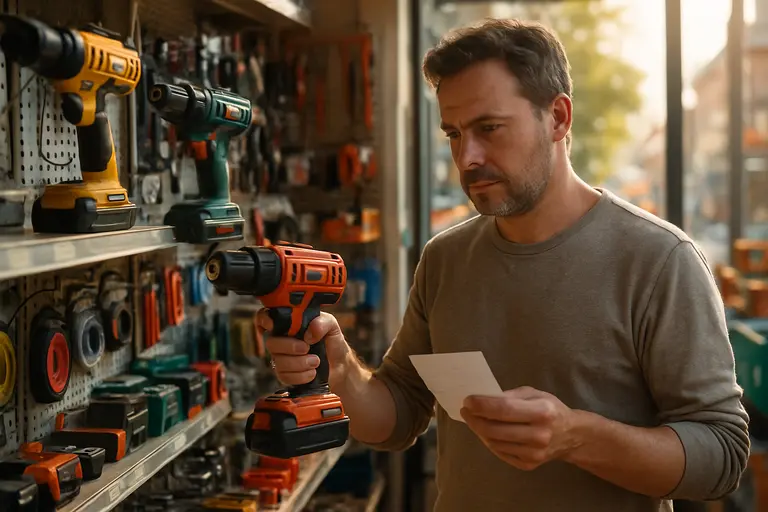
A Practical Shortlist
The research supports a shortlist that starts with DeWalt, Craftsman, Bosch, Milwaukee, and Makita because they occupied the top five positions in the 2026 Lifestory trust ranking. Ryobi also deserves attention for homeowners who see its wide unit presence as a sign that many buyers choose it for everyday tasks, though the OpenBrand dollar-share data shows it sat in a different price position than DeWalt and Milwaukee during Q4 2025.
From there, narrow the field with a calm checklist:
- Start with the project list: Name the next five jobs you realistically expect to do, not the fantasy workshop you may never build.
- Choose a battery path: Avoid mixing platforms unless there is a clear reason.
- Handle the tool before buying: Weight, grip, balance, and trigger control matter during repetitive work.
- Read warranty terms: Brand trust is not the same as coverage for your exact tool, battery, or charger.
- Set a hire-out boundary: Decide in advance which tasks belong to electricians, plumbers, roofers, masons, or carpenters.
This approach helps separate status buying from useful buying. A premium kit can be sensible if you will use the tools often and stay within safe limits. A lower-cost kit can be sensible if your work is light and occasional. What is rarely sensible is buying the highest-priced line because it feels more luxurious, then using it twice a year for tasks a modest tool could handle.
Trusted Power Tool Brands For Villa Owners
For villa owners, the best reading of the 2026 data is careful rather than dramatic. DeWalt had the strongest trust position in the cited consumer study and also led Q4 2025 dollar share in the cited market data. Craftsman, Bosch, Milwaukee, and Makita also appeared high in the Lifestory trust ranking. Ryobi matched DeWalt’s 19% unit share in the OpenBrand Q4 2025 data, which makes it relevant for homeowners watching budget and breadth of use.
The more useful decision is not “Which brand wins?” It is “Which system fits the way this home is maintained?” A villa with refined outdoor rooms, stone paths, shaded terraces, and custom storage deserves tools chosen with the same restraint as furniture and planting. Buy enough capability to do safe, clean work. Do not buy so much capability that it tempts you into unsafe tasks.
That is the balanced value of trusted power tool brands: they reduce some uncertainty, but they do not remove the need for judgment. Use the rankings to begin the comparison. Use your project list, comfort level, battery plan, and professional boundaries to finish it.